The bank called me during my hospital shift and said I was three months behind on a $623,000 mortgage. I told them they had the wrong person — I had never owned a house in my life.



My name is Heather Wilson. I am twenty-nine years old. Before that phone call, I thought betrayal looked loud — screaming, slamming doors, obvious hatred you could see coming from across the room. I was wrong. Sometimes betrayal wears a cream blouse. Brings chocolate mousse cake. Calls you “sis” with genuine warmth in its voice. And destroys your entire financial life in less than a year while smiling over the lasagna it made for you.

I was working a Tuesday shift in the pediatric ward when everything started. Room 214. A seven-year-old boy named Tyler had just asked me if taking off his bandage would hurt. I told him the truth: “A little. But I’ll be fast.” That was who I was. A nurse. Calm hands. Steady voice. The person other people trusted when they were scared and the hospital felt too big and too cold. My phone vibrated in my scrubs pocket. I normally never answered during patient care, but my elderly neighbor had been admitted the night before and I thought it might be news about her. So I stepped into the hallway. A man’s voice — professional, flat, cold: “Miss Wilson, this is Craig Donovan from Washington Mutual Bank. I’m calling about your missed mortgage payments.” I frowned. “My what?” “Your mortgage. You are currently three months behind.” I actually laughed. Not because it was funny. Because it made no sense. “I don’t have a mortgage.” There was a pause. “Our records show you took out a mortgage for six hundred and twenty-three thousand dollars in January.” The hallway seemed to tilt. “I’m sorry, that’s impossible. I rent a one-bedroom apartment.” “The property is on Highland Drive.”

Highland Drive. I knew that street. My sister lived there. Amanda — my older sister, my perfect sister, the one who had given us a tour of her new craftsman house eight months earlier, touching marble counters and saying: “Someday you’ll have something like this too, Heather. You just need to aim higher.” When the banker read the address, my blood went cold. It was Amanda’s house. Not near it. Not on the same street. Her house. The one with the sunroom. The city view. The one she posted online with captions about hard work, blessings, and building the life you deserve.

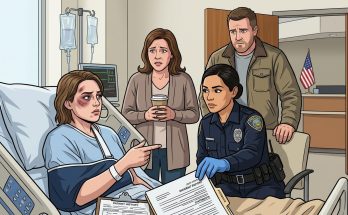
After my shift, I walked into the bank branch still wearing scrubs and a jacket thrown on in the locker room. The branch manager, Richard Peterson, had a folder waiting. Too thick. Loan application, credit authorization, income verification, closing documents — page after page, all of it bearing my name at the bottom. Heather Wilson. A signature that almost looked like mine. Almost. The H was too controlled. The W too careful. My real signature had a lazy loop in the middle when I was tired. This one looked rehearsed. Practiced. Copied by someone who had seen it many times. And the income listed: one hundred ninety-two thousand dollars per year. I was a nurse. A good nurse. A hardworking nurse. But I did not make one hundred ninety-two thousand dollars a year. Not even close. “Miss Wilson,” Richard said carefully, “if you did not sign these documents, I strongly recommend you contact the police.”

I drove home with the folder on the passenger seat. It felt alive. Like something dangerous was breathing beside me. My apartment in Ballard had always been my safe place — small, full of plants, secondhand furniture, a tiny kitchen with chipped cabinets. Nothing impressive. Nothing Amanda would ever have posted online. But it was mine. That night, I spread the documents across my kitchen table under the yellow light and stared at what they said. Then I called the credit bureaus. One by one. Equifax. Experian. TransUnion. By the time I finished, my hands were shaking. The mortgage was not the only account. A home equity line of credit — one hundred fifty thousand dollars. Three credit cards with limits between twenty and thirty thousand each. A personal loan — forty-five thousand dollars. All opened in my name. All connected to Amanda’s new life. All rotting in default. My credit score had fallen from respectable to wrecked: five hundred forty-six. I had spent my entire adult life paying bills on time, saving carefully, never buying what I could not afford. And my sister had burned it down in less than a year.

I did not call her that night. Because deep down I was afraid she would lie so well I would want to believe her. Amanda had always been better at everything — better grades, better confidence, better timing. She entered rooms like she owned them. I entered rooms and looked for the exit. Growing up, I had adored her. She protected me in middle school when girls made fun of my glasses. She taught me how to curl my hair before my first school dance. She helped me study for chemistry. She called me “kiddo” long after I stopped being one. I had trusted her completely. That was the worst part.

A financial adviser named Diane confirmed it immediately: identity theft, organized and deliberate. A handwriting expert named Marcus Bell compared the mortgage signatures to my passport, my hospital paperwork, my rental agreement. “These are forgeries,” he said. “Good ones — but forgeries. A person who knows your signature may have practiced this.” He pointed to hesitation marks, pressure changes, letters copied rather than written naturally. I already knew who had practiced. Then I started looking carefully into Amanda’s life. Her real estate commissions had slowed. Brian’s financial advisory firm had collapsed under circumstances nobody wanted to explain fully. Their lifestyle had not changed — if anything, it had grown louder. New boat. New Mercedes. Country club membership. Luxury vacations. I remembered Amanda at family dinner two months earlier, raising a glass of wine and saying: “People who play small stay small.” I had smiled politely. Now I wondered if she had already known I was paying for the glass in her hand.

Detective Harris called two days after I filed the police report. “The IP address used to submit part of the loan application logs into a private network registered to an address on Highland Drive.” Then: “The notary stamp on the closing documents is fake. But the seal number matches a notary who used to work with your brother-in-law.” Brian. Of course. The perfect couple. The perfect house. The perfect life — built like a pyramid, each piece balanced on something rotten underneath.

That night I drove to Highland Drive and parked half a block away. Warm lights glowed through the windows. Shadows moved inside like a painting of a happy life. A life I had unknowingly financed. At 9:14 p.m., Amanda stepped onto the balcony holding a wine glass. She laughed at something inside. Then she looked down and saw me. I watched her smile falter — not with fear, not with guilt, but with recognition. She knew I was no longer just her sister visiting for dinner. I was a problem that had arrived ahead of schedule.

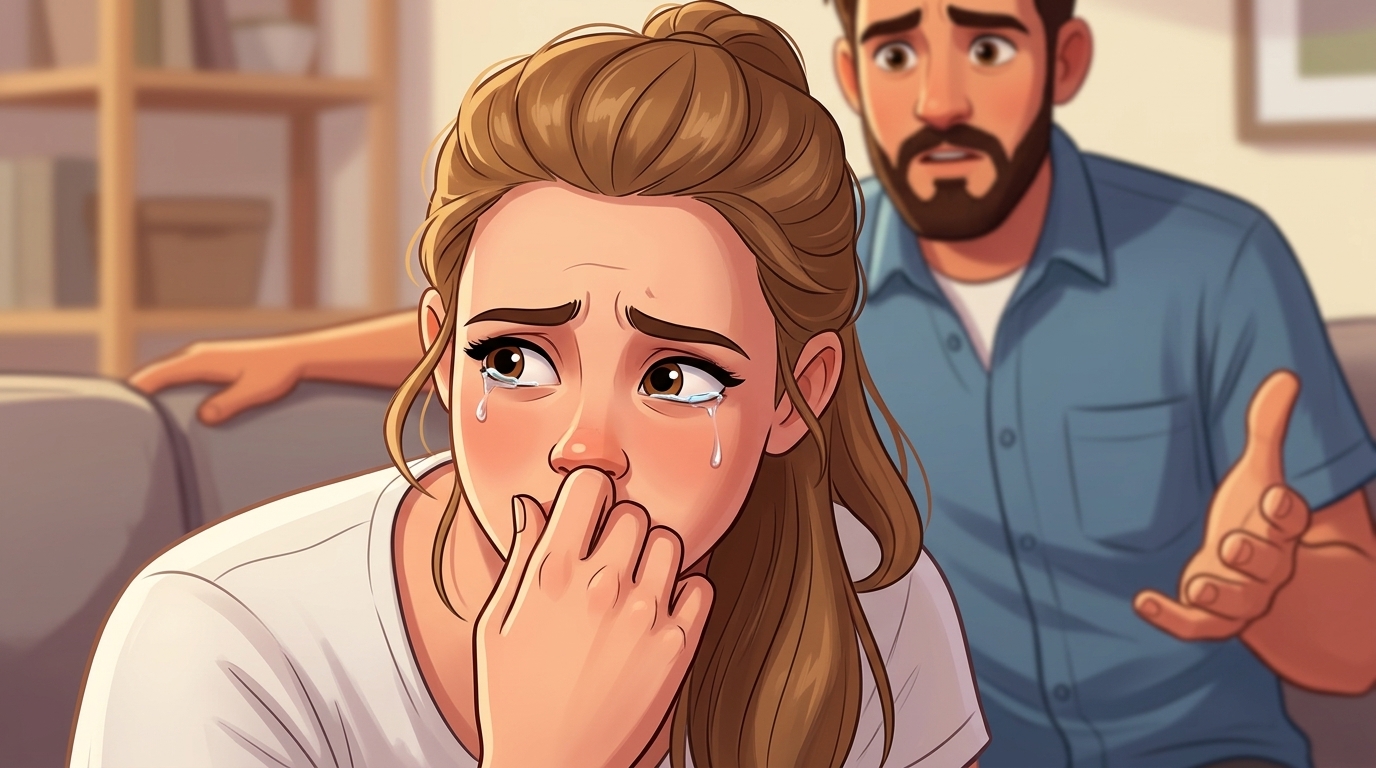
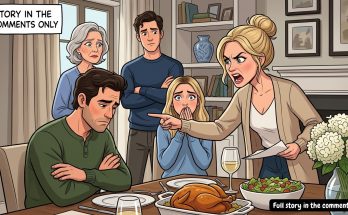
The family dinner invitation came the next evening. “Come over. We need to talk. No drama.” No apology. No explanation. Just control, as always. The house felt like a stage set when I arrived — everything too perfect, too intentional. Amanda greeted me at the door in a cream blouse. The same calm smile. Brian was already at the table, relaxed, smiling like nothing in the world had ever gone wrong for him. Lasagna was served. Wine poured. Normal family dinner sounds filled the air. For five minutes, no one mentioned the truth. Then I placed the folder on the table. Not loudly, not dramatically — just gently. The sound it made was enough. Amanda’s fork stopped mid-air. Brian’s smile faded slightly. “What’s that?” I opened it. The mortgage papers. The forged signature. The credit accounts. The police report. “I got a call from the bank,” I said quietly. “You bought a house in my name.”

Amanda laughed — short, sharp, defensive. “That’s insane. Heather, what are you talking about?” Brian leaned back. “She’s stressed. Hospitals are hard. You know how she gets.” I turned to him slowly. “No. This is not stress.” I slid the first page forward. Amanda didn’t look at it. She looked at me. Her voice softened with practiced concern. “Someone stole your information. That’s all. You think I would do that to you?” That was the moment something inside me shifted permanently. Because she didn’t deny it with shock. She denied it with performance. Like she had rehearsed this exact conversation many times. “The IP address came from your house,” I said. A flicker crossed her face. Just a flicker. Then gone. Brian cleared his throat. “That proves nothing legally.” “I don’t care about legal,” I said, my voice shaking for the first time. “I care about the fact that I owe six hundred thousand dollars for a house I’ve never lived in.” Amanda finally set her glass down, her tone sharpening. “You were always bad with money,” she said. The words hit harder than I expected — not because they were true, but because she believed they excused everything else. “You forged my signature.” She sighed like I was being difficult. “We were going to fix it. Brian had a plan. We just needed time.” Brian didn’t correct her. He watched me. Evaluating. Like I was a risk they hadn’t fully priced in yet. That was when I realized something worse than betrayal: they weren’t ashamed. They were inconvenienced.

I gave Detective Harris everything the next morning. He said: “This is bigger than family fraud. This is organized financial fraud.” Brian had done this before — smaller frauds, hidden debts, manipulated loans across multiple victims. Amanda was the face. The charm. The access point. My identity was just one of several they had tested. Mine was the one that stuck because I trusted her. Trust first. Then exploit. Then disappear into the lifestyle built from the damage.

The arrests were quiet. Brian leaving his office building in a suit, still checking his phone. Amanda at home, in the kitchen that wasn’t hers in any legal sense. Detective Harris called afterward. “She didn’t resist. She asked one question.” My throat tightened. “What question?” “If Heather was going to testify.” I didn’t answer for a long time, because part of me still saw her in every childhood memory. Braiding my hair. Helping me study. Calling me “kiddo” with real tenderness. But memory is not evidence. And love is not immunity from consequences.

The day I testified, Amanda didn’t look at me at first. She stared straight ahead, composed and perfect, until I described the moment I saw my forged signature on the mortgage papers. That was when she finally turned her head. Our eyes met. For the first time, I didn’t see my sister. I saw someone I didn’t recognize at all. Not monster. Not victim. Just consequence — the natural conclusion of choices made over a very long time. Amanda was sentenced. Brian too. No final apology that fixed anything. No emotional reconciliation. Just silence where a family used to be.

I didn’t get the house back directly. The debt took time to unwind legally and financially, and those months were exhausting in ways I hadn’t predicted. But I was no longer responsible for it. The court recognized what I had been afraid to claim at first: I was not the author of that destruction. Just the person who discovered it too late and refused to pretend otherwise.

Months later, I went back to the pediatric ward. Room 214. A new child asked me if something would hurt. I smiled and said: “A little. But I’ll stay right here with you.” And I realized something strange. Betrayal hadn’t ended my ability to care. It had only ended my ability to pretend. Because now I understood something I hadn’t before: betrayal doesn’t always arrive loudly. Sometimes it arrives in a cream blouse, pours the wine, and serves the lasagna. The most dangerous lies are the ones told by people who once taught you how to tie your shoes
The bank called me during my hospital shift and said I was three months behind on a $623,000 mortgage. I told them they had the wrong person — I had never owned a house in my life. Read More

My parents took my money every month while my sister lived rent-free — until my grandpa found out and made a shocking decision.


Grandpa stopped eating mid-bite when he realized what was happening. Then he placed his fork down and said the words nobody saw coming. “Wait… you pay your parents rent?”

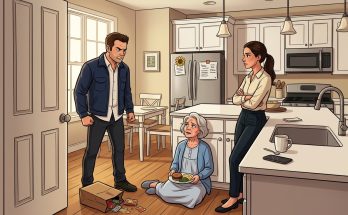
I went still with my fork halfway to my mouth. Across the Thanksgiving table, my mother’s expression tightened. My sister Claire lowered her eyes to her plate as though the mashed potatoes had suddenly become the most interesting thing in the room. Before I could respond, Dad waved one hand dismissively. “Your sister has two kids. She needs help more.” The table fell quiet. Grandpa put his fork down. No one expected what came next.

“No,” he said quietly. “I asked Ethan.” My stomach dropped. Dad leaned back. “Dad, don’t start.” Grandpa kept his eyes on me. “How much?” I swallowed. “Eight hundred a month.” My grandmother whispered, “Eight hundred?” Mom quickly stepped in. “It’s not rent. It’s helping with household expenses.” “I live in the basement,” I said before I could stop myself. “I buy my own groceries. I pay for my phone, car insurance, gas, and half the utilities.” Claire’s head snapped up. “You make it sound like you’re being abused.” “I didn’t say that.” “But you’re acting like it. I have two children, Ethan. Do you know how expensive daycare is?” I stared at her. “You don’t pay daycare. Mom watches them five days a week.” Claire flushed. Dad slapped his palm against the table. “That’s enough.”

But Grandpa was not eating anymore. His face had gone still in a way I had only seen once before, at my uncle’s funeral. “Claire,” he said, “do you pay anything to live here?” Claire opened her mouth, then shut it. Dad answered for her: “She’s rebuilding.” Grandpa nodded slowly. “How long has she been rebuilding?” Mom’s voice went thin. “That’s not fair.” Grandpa looked around the table. “No, what’s not fair is charging one child rent while giving the other a free room, free childcare, free meals, and then calling it family.”

Dad’s jaw tightened. “Ethan is twenty-six. He should contribute.” “And Claire is thirty-two,” Grandpa said, “with two children she chose to have and a man she chose to marry, divorce, and keep going back to whenever he knocks.” Claire stood so abruptly her chair scraped the floor. “How dare you.” Grandpa did not raise his voice. “Sit down.” She sat. Then he turned back to me. “Ethan, where does your money go?” I laughed once, but there was nothing funny in it. “To them.” Mom’s eyes filled with tears. “We never forced you.” “You told me if I moved out, I was abandoning the family.” Dad pointed at me. “Because family helps family.” Grandpa pushed his plate away. “Then tonight, family is going to tell the truth.”

The boys, Owen and Miles, were in the living room watching cartoons, too young to understand that every adult at the table had just stepped into a fight years in the making. Dad stood up. “I’m not doing this at Thanksgiving.” Grandpa looked at him. “You’ve been doing this for years. Thanksgiving didn’t create it.” Mom wiped her eyes. “Ethan, tell your grandfather we never mistreated you.” I looked at her. That was the worst part — she didn’t ask if they had mistreated me. She asked me to deny it.

I told them everything. Dad had begun charging me after I got my first full-time job, saying he was teaching me responsibility. He promised it was temporary. Two hundred, then four hundred, then six, then eight. Claire moved back after her divorce and became the person everyone served. I was expected to babysit, fix things, pick up groceries, and still pay rent. I had missed friends’ weddings because Mom said Claire needed babysitting. I had postponed looking for my own apartment because Dad said renting elsewhere would be stupid. I had watched Claire buy a new SUV while I drove a twelve-year-old Honda with a barely working heater. And every month I handed Dad eight hundred dollars. When Grandpa asked about my savings, I told him: eleven hundred dollars. He closed his eyes. Dad scoffed and said I wasted money. I almost laughed. “On what?” “Games. Takeout. Whatever you do down there.” “I haven’t bought a new game in two years. I eat takeout once a week because nobody saves dinner for me when I work late.” Grandma’s eyes moved toward Mom. Mom looked away.

Grandpa stood. “Get your coat.” I blinked. “What?” “You’re coming with us tonight.” Dad’s chair scraped backward. “Absolutely not.” Grandpa looked at him. “He is twenty-six years old.” “He lives under my roof.” Grandpa’s voice went cold. “And that roof was paid for with help from me. Don’t test my memory, Richard.” For the first time all night, Dad had nothing to say. Grandpa looked back at me. “Pack what you need for a few days. Tomorrow, we talk about the rest.” Mom started crying. “You’re breaking this family apart.” Grandpa looked at her sadly. “No, Linda. I’m just opening the basement door.”

I packed in fifteen minutes. That was the part that hurt more than I expected. Twenty-six years of living, seven years of paying rent, and everything I actually needed fit into two duffel bags and a backpack. A few clothes. My laptop. My work badge. A shoebox with my birth certificate, Social Security card, and car title. A framed photo of Grandma and Grandpa from my high school graduation. Mom stood near the hallway, crying. She did not ask if they had treated me unfairly. She asked me not to leave. That was how it always happened. Dad yelled. Claire complained. Mom cried. And I gave in. Not this time.

Their house smelled like lemon cleaner, old wood, and the cinnamon candles Grandma lit every winter. The guest room had a quilt at the foot of the bed and a lighthouse-shaped lamp on the nightstand. Grandma brought me towels. Grandpa left a glass of water beside the bed. Nobody asked me to explain more. The next morning, I woke to the smell of coffee and bacon. Grandpa was at the kitchen table with a yellow legal pad, three columns already drawn: Income. Expenses. Plan. We sat together and I told him everything, not dramatically, just honestly. When he finished writing, he circled the eight hundred dollars so hard the pen nearly tore through.

By Monday, he had helped me schedule three apartment tours. On Tuesday evening, Dad called. “You’ve made your point.” “What point?” “That you’re upset.” “I’m not trying to make a point.” “Your mother hasn’t slept.” “I’m sorry she’s upset.” “You should come home and talk.” “We can talk. I’m not moving back tonight.” There was a pause. “You think your grandparents are going to save you? They won’t always be around.” The old me would have panicked. The new me heard it clearly. It was not concern. It was bait. “I know,” I said. “That’s why I need to build my own life.” Dad’s voice lowered. “After everything we did for you?” “What did you do for me that you didn’t also do for Claire?” He said family helps family. Then he said what had been underneath everything all along: “You’re a man, Ethan. You’re supposed to help.” There it was. Claire’s mistakes were emergencies. My needs were selfishness. Her comfort was family. My exhaustion was duty. “I did help,” I said. “For seven years.” He hung up.

Two weeks later, I signed a lease. Grandpa came with me. He did not pay the deposit. I did not ask him to. He simply stood beside me while the leasing manager explained the paperwork, and when my hand hesitated before signing, he said, “Read every line. Then decide.” So I read every line. Then I signed. My apartment was on the third floor of a brick building with old stairs and a noisy radiator. One bedroom, one bathroom, a narrow kitchen, a living room just big enough for a couch I bought from a stranger on Facebook Marketplace. It was not impressive. It was mine. On moving day, Grandpa brought a toolbox. Grandma brought cleaning supplies. My friend Noah helped carry the mattress. By sunset I had a bed, a folding table, two chairs, and a shower curtain with blue stripes. At eight that night I sat on the floor eating pizza from a paper plate. Nobody asked where the leftovers were. Nobody told me to turn the volume down. Nobody knocked on the door and handed me a child. I slept for nine hours.

Dad and I talked one Christmas evening on a frozen porch. He told me that when I started paying, it helped, and he told himself it was normal. Then Claire came back and everything was chaos and I was stable. “I needed you to be fine,” he said, “so I acted like you were.” He rubbed his face. “I didn’t see it.” “No,” I said. “You didn’t.” His pride fought him. I could see it clearly. Finally he said, “It wasn’t fair.” The words came out rough, almost forced. But they were the words I had waited seven years to hear.

Grandpa died two years later — a heart attack in his garden while trimming tomato plants. He was seventy-nine. After the burial, Grandma handed me an envelope. I opened it alone in my car outside the cemetery. Ethan, you were never weak for staying. You were surviving the only way you knew how. But I am proud that you left. A family should be a place where a person grows stronger, not smaller. Remember that when you build your own. Don’t become bitter. Become clear. Love, Grandpa. I read it three times before I could drive.

Years passed. I got promoted twice. The Honda finally died at 214,000 miles and I bought a used Subaru with heated seats, which felt like luxury. Claire eventually remarried a quiet electrician named Ben who once said, in front of everyone, “Your brother is not your emergency fund.” I liked Ben immediately. One autumn, five years after that Thanksgiving, I hosted the family dinner at my townhouse. My name on the mortgage. My food on the plates. My choice to open the door.

Owen, twelve by then, wandered into the kitchen while I was carving the turkey. “Uncle Ethan, Mom said you used to live in Grandma and Grandpa’s basement.” I looked toward the dining room. “I did.” “Why?” The knife paused. I could have said many things. Instead I chose the answer he could carry without being crushed by it. “Because sometimes people stay in places longer than they should. And sometimes they need help remembering they can leave.” Owen considered that seriously. “Grandpa Daniel helped you?” I smiled a little. “Yeah. He did.”

After dinner, Grandma raised her glass. “To Daniel.” The room quieted. Dad looked down. Mom wiped her eye. Claire’s expression softened. Even the boys stopped moving. I lifted my glass. “To Grandpa.” And silently I added the words I had carried for years. Thank you for opening the basement door.

My parents took my money every month while my sister lived rent-free — until my grandpa found out and made a shocking decision. Read More

My brother drained every account I had and vanished with his girlfriend. I thought my life was over until my 10-year-old daughter looked at me and said: “Mom, don’t worry. I handled it.”


My brother emptied every account I had and disappeared with his girlfriend. I thought my life was finished until my 10-year-old daughter looked at me and said: “Mom, don’t worry. I handled it.” Two days later, my brother rang me, screaming so loudly I almost dropped the phone…
My name is Laura Mitchell, and until last spring I believed blood meant something. I believed family could disappoint, hurt, even embarrass you, but I never imagined family could look you in the eye while quietly planning to destroy you.
My older brother, Ethan, had always been the wild one — bad jobs, bad friends, bad timing. When he called me in tears after losing his apartment and said he needed a place to breathe, I let him in. He slept in the guest room. His girlfriend, Maya, came and went. I even added him as a temporary authorized user on my accounts so he could help cover shared bills while he stayed with us.
I told myself it was temporary.
I told myself he was my brother.
That was the stupidest thing I ever believed.
One Monday morning, while packing my daughter’s lunch, I opened my banking app. At first it looked like a glitch. My checking account was nearly empty. Then I checked the savings — the emergency fund I had built one painful paycheck at a time for ten years.
Gone.
Every cent.
My hands shook so badly I could barely speak to the bank. The woman on the phone sounded sympathetic, but her words cut right through: “Ma’am, the transfers were completed by an authorized user.”
Authorized by Ethan.
I called him once. Voicemail. Twice. Voicemail. I texted him, begged, threatened, demanded he answer. Nothing.
By noon the guest room was stripped bare. His clothes were gone. His laptop was gone. Maya’s makeup bag was gone. Even the cheap spare phone from the nightstand was gone.
That was when the truth hit me.
He had not panicked. He had not made one bad decision.
He had planned all of it.
I fell to the kitchen floor and sobbed until my throat burned. Rent was due. Groceries were low. Emily had school fees coming up. The walls felt like they were closing in as my brother vanished with everything I had worked for.
That night Emily sat beside me at the kitchen table. She was only ten, but her gaze was calm, serious, almost too steady for her age.
Then she whispered, “Mom, don’t worry. I handled it.”
I wiped my face and tried to smile. “Sweetheart, this is grown-up stuff.”
She nodded slowly.
“I know,” she said.
“That’s why I did what I did.”
I was too exhausted to ask questions. Two days passed in a blur of bank calls, police forms, and sleepless nights.
Then on Wednesday afternoon my phone rang.
It was Ethan.
The second I answered, he screamed my name.
My brother drained every account I had and vanished with his girlfriend. I thought my life was over until my 10-year-old daughter looked at me and said: “Mom, don’t worry. I handled it.” Read More

Part 1 : My 75-year-old mother said her stomach was burning, and my


My 75-year-old mother said her stomach was burning, and my husband mocked her: “She’s just faking it to get money out of you.” I took her to the hospital behind his back… and on the CT scan, something appeared that made the doctor order the door to be closed. That morning, I understood that my mother’s pain wasn’t old age. It was a warning. And my husband didn’t want to avoid an expense: he wanted to prevent anyone from discovering what was inside her.
My mother was always tough.
The kind of woman who sweeps the porch with a fever, waters her flowerbeds before breakfast, and says “nothing’s wrong” even if her soul is breaking.
She was seventy-five years old.
She lived alone in a small house in Queens, New York, with her rosebushes, her image of the Virgin Mary, and a pot of beef stew that was never missing.
But for weeks now, she hadn’t been the same.
She would eat two spoonfuls and push the plate away.
She would wake up pale.
She would clutch her stomach as if an invisible hand were squeezing her from the inside.
“Mom, that’s not normal.”
She would smile with her mouth, not her eyes.
“It’s just age, sweetie. I’m no spring chicken anymore.”
I tried to believe her.
Until one afternoon, she dropped a mug.
She bent down to pick it up and let out a groan so soft it broke my heart.
“How long has it hurt like this?”
“Don’t start, Linda.”
“Tell me.”
My mother clenched her jaw.
“For a little while.”
That night, I told my husband.
We were eating dinner in silence. He was checking his phone, as usual. I could barely swallow.
“Tomorrow I’m taking my mom to the doctor.”
Arthur didn’t even look up.
“What for?”
“She’s nauseous. In pain. She’s losing weight.”
He let out a dry laugh.
“Your mother has always been dramatic.”
I felt the blood rush to my face.
“Don’t talk about her like that.”
Then he set his fork down on the plate.
Slowly.
Like a threat.
“She’s seventy-five years old, Linda. At that age, everything hurts.”
“But it could be serious.”
“What’s serious is throwing money away on doctors just because an old woman wants attention.”
I froze.
Not because of the sentence.
Because of the coldness.
Arthur worked at an insurance company. He made good money. He spent without blinking on watches, dinners, trips with his friends.
But for my mother, suddenly, there wasn’t even enough for a consultation.
“She’s my mom,” I said.
“And I’m your husband,” he replied. “You’re not moving a single dime without talking to me.”
Right then, I understood something.
It wasn’t concern.
It was control.
The next morning, I waited for him to leave.
I hid my credit card, some cash, and the car keys inside a reusable grocery bag so he wouldn’t suspect anything.
I went to get my mother.
“Let’s go for a drive, Mom.”
She looked at me from her rocking chair, her face grey.
“Where to?”
“To get you checked out. And don’t tell me no.”
She didn’t have the strength to argue.
On the way there, she barely spoke. She kept both hands over her abdomen and her eyes closed, murmuring a prayer under her breath.
I took her to a small urgent care clinic, one of those places that looks like a converted house, with beige walls and the smell of bleach.
The nurse took her blood pressure.
Then again.
Then she called the doctor.
That’s when I started to feel afraid.
The doctor was young, but his smile vanished the moment he touched my mother’s stomach.
“How long has she been like this?”
“Weeks,” I said.
My mother lowered her gaze.
“Months,” she corrected.
I looked at her.
“Months?”
She didn’t answer.
They ran blood work.
An ultrasound.
Then a CT scan.
I waited in the hallway with ice-cold hands, watching stretchers pass by, nurses, women in gowns, and entire families praying quietly.
My phone started to vibrate.
Arthur.
One call.
Two.
Five.
Then text messages.
“Where are you?”
“Answer me.”
“Don’t you dare do something stupid.”
I turned off the phone.
For the first time in years, I wasn’t afraid of his anger.
I was more afraid of losing my mother.
Almost an hour later, the doctor came out.
He was holding a folder against his chest.
His face was serious.
Too serious.
“Mrs. Miller, I need you to come in.”
I walked in.
My mom was sitting on the examination table, small, hunched over, with dry lips.
The doctor closed the door.
That scared me more than any words could.
“What does she have?” I asked. “Tell me the truth.”
He put the CT scan images up on a screen.
At first, I didn’t understand anything.
Shadows.
Bones.
Organs.
Grey blurs.
Then he pointed to an area in the abdomen.
“We found something.”
“A tumor?”
The doctor took a moment to reply.
My mother crossed herself.
“It doesn’t look like a tumor.”
The air caught in my throat.
“Then, what is it?”
He zoomed in on the image.
There it was.
A small, elongated, dark shape, too sharply defined to belong to the body.
Like a capsule.
Like an object.
Stuck where it shouldn’t be.
“This didn’t get in there by itself,” the doctor said.
I felt the floor shift beneath me.
“Are you telling me someone put it inside her?”
My mother started crying silently.
She wasn’t surprised.
That was what killed me.
She didn’t ask questions.
She didn’t scream.
She just bowed her head, as if the years she had spent hiding something had finally caught up to her.
“Mom…” I whispered. “Did you know?”
She gripped my hand with a strength I didn’t know she had left.
“Forgive me, honey.”
The door burst open.
Arthur walked into the exam room, his face flushed red, breathing heavily, as if he had run all the way from the parking lot.
“What the hell is going on here?
Part 1 : My 75-year-old mother said her stomach was burning, and my Read More

Part1: After five years of bathing my paralyzed husband, I heard him laugh and say that I was “a free nurse.” I didn’t scream that day… that day, I started taking everything away from him without him even realizing it.


After five years of bathing my paralyzed husband, I heard him laugh and say that I was “a free nurse.” I didn’t scream that day… that day, I started taking everything away from him without him even realizing it.
For five years, I cleaned his body, changed his catheters, and spoon-fed Esteban. For five years, I slept with one eye open in case he choked, in case he was in pain, in case he needed me to turn him over in bed at three in the morning. Five years of smelling like rubbing alcohol, ointment, bleach, and chicken broth. Five years of believing that was love. Until I heard him.
My name is Brenda.
I was twenty-nine when Esteban was left paralyzed after an accident on the highway to Cuernavaca.
We were newlyweds.
I still wore fitted dresses, expensive perfume, and foolish dreams.
After the crash, my life became a hospital bed in the living room.
I learned to lift him.
To bathe him.
To change his diapers.
To fight with the public healthcare system.
To smile when he threw his plate because “the soup was cold.”
Everyone told me:
—What a good wife you are, Brenda.
And I believed them.
Because when a woman loves, she sometimes confuses sacrifice with a life sentence.
That morning, I went to get conchas from La Esperanza bakery.
Vanilla ones.
His favorite.
I got up at five, stood in line, bought them warm, and went to the rehabilitation center.
I wanted to surprise him.
How ridiculous I was.
When I arrived, I saw him out in the courtyard, sitting in his wheelchair, talking to a man I didn’t know.
I stopped behind a pillar to fix my hair.
Then I heard his laugh.
A clean laugh.
Loud.
Cruel.
—No, buddy, I already won —Esteban said.—Brenda is a nurse, maid, cook, and driver… all for free.
I felt the bag of bread slip from my hands.
The other man laughed.
Esteban continued:
—She’s so traumatized by the whole “in sickness and in health” thing that she’s never going to leave. I have her tied down tight.
I ran out of air.
—And the inheritance? —the man asked.
Esteban let out another laugh.
—All for my son, obviously. For Tomás. He’s my blood. Brenda is just watching the house until I die.
My chest broke.
Tomás.
His son from another marriage.
The same one who walked into my house without saying hello.
The same one who left dirty dishes and called me “lady” as if I were a servant.
The same one for whom Esteban asked me to have patience.
—It affected him to see me like this, Brenda.
A lie.
It suited both of them to see me brought low.
Esteban spoke again:
—Besides, while she cleans my backside, I don’t spend a single penny. Do you know how much a full-time nurse charges?
The man replied:
—A fortune.
—Well, I have her for food and a roof over her head.
Something died inside me right there.
I didn’t cry.
I didn’t walk in screaming.
I didn’t throw the conchas in his face.
I just turned around and walked out of the hospital, my legs shaking.
In the parking lot, I sat inside the car.
I gripped the steering wheel until my fingers hurt.
And I said softly:
—It’s over.
That night, I didn’t go pick him up.
I sent the ambulance instead.
When he arrived at the house, he looked at me annoyed from the gurney.
—Where were you? I was waiting for you.
—Busy.
He frowned.
—Did you bring my bread?
I looked at him.
For the first time in five years, I really looked at him.
I no longer saw a sick man.
I saw a comfortable monster.
—I forgot.
His face changed.
—What do you mean you forgot?
I didn’t answer.
I adjusted his pillow.
I covered his legs.
I gave him his pills.
I did everything exactly the same.
But inside, I was no longer the same person.
The next day, I began.
First, I checked the paperwork.
Invoices.
Accounts.
Deeds.
Receipts.
Contracts.
Everything he thought I didn’t understand because “I was only good for taking care of him.”
I found things.
A lot of things.
A life insurance policy.
A hidden account.
A will where my name didn’t appear even by mistake.
And a folder with Tomás’s name on it.
Inside, there were deposits.
Monthly ones.
Large ones.
While I was counting pennies to buy cooking gas, Esteban was sending money to his son so he could buy motorcycles, sneakers, and trips to Cancún.
I laughed.
A dry laugh.
Not from pain.
From disgust.
That night, while I was feeding him dinner, Esteban asked me:
—Why are you so quiet?
I wiped the corner of his mouth with a napkin.
—I’m tired.
—Well, rest when I go to sleep.
He said it without shame.
Like a boss.
Like an owner.
I smiled.
—Yes, Esteban.
He didn’t notice a thing.
Men like him never notice when a woman stops loving them.
They only notice when she stops obeying.
For two weeks, I kept acting the same.
I made him soup.
I changed his sheets.
I took him to therapy.
I smiled in front of the nurse.
And at night, while he slept, I kept saving copies.
Audios.
Bank statements.
Messages.
I recorded Tomás telling me:
—When my dad dies, you’re going to pack your bags and get the hell out of this house.
I recorded Esteban replying:
—Leave her be. As long as she serves me, let her stay.
I got a lawyer.
A good one.
The kind who doesn’t hold your hand; she opens your eyes.
When I laid everything out on her desk, she only said:
—Brenda, your husband doesn’t need a nurse. He needs a lawsuit.
That Friday, I returned home early.
Esteban was in the living room, talking on the phone with Tomás.
He didn’t hear me walk in.
—Don’t worry —he was saying.—As soon as I’m gone, I’ll kick her out. The house goes to you.
I stood right behind him.
And for the first time in five years, I didn’t feel sadness.
I felt peace.
I turned off the blender buzzing in the kitchen.
Esteban turned around.
His smile dropped instantly.
—How long have you been standing there?
I dropped a folder onto his lap.
—Since I understood how much a free servant costs.
His hands began to tremble.
He opened the folder.
He saw the copies.
The audios.
The lawsuit.
The request for a separation of property.
The calculation of five years of unpaid caregiving.
And even the deed to the house.
The house he swore he would leave to Tomás.
The house that had been in my mother’s name since before the accident.
Esteban looked up, pale.
—Brenda… we can talk.
I smiled.
—Of course we can.
My cell phone began to ring.
It was Tomás.
I put it on speakerphone.
His voice came out furious:
—What did you do to my dad?
I looked at Esteban.
Then I looked at the door.
Because at that exact moment, there was a knock.
Three hits.
Firm.
My lawyer had arrived.
And behind her came a woman I had never seen before, holding a child by the hand, and a birth certificate stating that Esteban was also the father of
Part1: After five years of bathing my paralyzed husband, I heard him laugh and say that I was “a free nurse.” I didn’t scream that day… that day, I started taking everything away from him without him even realizing it. Read More

Every morning, my husband beat me because I couldn’t give him a son…

Every morning, my husband be;at me because I couldn’t give him a son… until one day, I collapsed in the middle of the yard from unbearable pain. He took me to the hospital, pretending I had fallen down the stairs. But what he never could have imagined was that when the doctor handed him the results, the X-ray would make him freeze in terror….
Every morning was the same.
My husband would drag me into the backyard and beat me mercilessly for one single reason:
— “I married you, and you aren’t even good enough to give me a son.”
First came the slap.
Then the kicks.
Then the fists, sparing neither my face nor my body.
The neighbors heard it… and they closed their windows.
My mother-in-law stayed inside, mumbling prayers before a statue of the Virgin Mary.
And I… I would curl into a ball, learning to protect myself like a wounded animal, praying it would end quickly so I could get up and make breakfast.
I had two daughters.
Two beautiful girls.
But in that house, they were considered a “curse.”
Every time he looked at them, his rage intensified.
He hit me harder, as if it were my fault.
That day, everything started as it always did.
As he insulted and kicked me, I felt a ringing in my ears.
My vision blurred.
With the final blow, I fell unconscious onto the dirt in the yard.
I woke up on a gurney.
We were at Chicago General Hospital.
My husband was beside me, wearing a fake expression of concern.
He spoke quickly to the doctor:
— “My wife fell down the stairs.”
I didn’t have the strength to contradict him.
I just closed my eyes.
The doctor ordered a full battery of tests due to the severity of the injuries.
I was taken for X-rays.
The white light of the room blinded me.
Nearly an hour later, the doctor asked to speak with my husband first.
I was still in the room, but I could hear them from the hallway.
The doctor’s voice turned grave:
— “Sir, I need you to look at these films.”
There was no answer.
Minutes later, the door swung open.
My husband walked in… pale, trembling, clutching the X-ray in his hand.
He looked at me.
His lips moved, but no sound came out.
The doctor entered shortly after and said slowly and clearly.
Every morning, my husband beat me because I couldn’t give him a son… Read More

**Ma mère a annoncé sa dixième grossesse et tout le monde a applaudi ; j’étais la seule à avoir l’impression d’être condamnée une fois de plus. Cette nuit-là, j’ai compris que dans notre maison, les bébés naissaient d’elle, mais que c’était toujours moi qui finissais par devenir leur mère.**


Ma mère annonça sa dixième grossesse, et tout le monde autour de la table de cuisine applaudit comme si un nouveau bébé représentait un nouveau miracle au lieu d’un nouveau fardeau qui allait retomber sur mes épaules. J’étais la seule à sentir mon estomac se nouer d’angoisse, parce que dans notre maison, chaque nouvelle « bénédiction » arrivait toujours avec mon nom silencieusement inscrit en dessous.

Cette nuit-là, j’ai enfin compris la vérité que je vivais depuis des années : ma mère mettait les enfants au monde, mais d’une manière ou d’une autre, c’était moi qui devenais leur mère.

J’avais seize ans lorsqu’elle se plaça au milieu de la cuisine, se caressa le ventre devant tout le monde et déclara :

— « La famille… Dieu nous a envoyé une nouvelle bénédiction. »

Mes petits frères et sœurs poussèrent des cris de joie. Ma grand-mère fit le signe de croix comme si elle venait d’assister à quelque chose de sacré. Mon beau-père sourit avec cet air fier et inutile qui le caractérisait, comme si faire un enfant équivalait à l’élever.

Moi, je gardai les yeux fixés sur le sol de la cuisine, où des céréales séchées étaient collées au carrelage, où du lait renversé avait laissé une tache collante, et où une couche sale traînait à côté de la poubelle parce que personne n’avait pris la peine de terminer ce qu’il avait commencé.

Une nouvelle bénédiction.

Un autre biberon qui m’attendrait dans l’évier.

Une autre fièvre que je devrais remarquer avant tout le monde.

Un autre bébé qui pleurerait à trois heures du matin.

Un autre enfant qui tendrait les bras vers moi en premier et qui, un jour, m’appellerait « maman » par erreur.

— « Qu’est-ce qui ne va pas, Valerie ? » demanda ma mère avec cette voix douce qu’elle réservait aux témoins. « Tu n’es pas contente ? »

Je levai les yeux.

— « Non. »

Toute la cuisine se figea.

Mon beau-père arrêta de mâcher. Ma grand-mère me fixa. Les lèvres de ma mère se pincèrent en une ligne fine, et cette fausse douceur disparut de son visage.

— « Ne sois pas impolie. »

— « Je ne suis pas impolie. Je suis fatiguée. »

Ma petite sœur Lupita, qui n’avait que deux ans, tira sur ma jupe avec les doigts couverts de soupe.

— « Vale, de l’eau. »

Sans même réfléchir, je pris un verre, le remplis et le lui tendis.

Toute ma vie se résumait à ce simple geste.

Même lorsque j’étais en colère, même lorsque je m’effondrais intérieurement, même lorsque j’avais envie de hurler, mes mains répondaient encore aux besoins des enfants avant que mon cœur ait le temps de se défendre.

Depuis mes onze ans, tout le monde m’appelait « la grande sœur ».

Mais dans notre maison, être la grande sœur ne signifiait ni être protégée ni être respectée.

Cela signifiait donner le bain à des enfants qui n’étaient pas les miens.

Réchauffer le dîner avant d’avoir terminé mes devoirs.

Signer des mots de l’école que les adultes ne lisaient même pas.

Porter des bébés dans le bus d’un bras tout en tenant mon sac à dos de l’autre.

Préparer des repas avec du riz, des œufs et les quelques restes disponibles.

Dormir avec un nouveau-né sur ma poitrine parce que ma mère disait :

— « Il se calme mieux avec toi, ma chérie. »

Elle disait cela comme si c’était adorable.

Comme si c’était la preuve que j’avais un don.

Mais cela ne m’a jamais semblé être un don.

Cela ressemblait à une condamnation.

Cette nuit-là, j’ai finalement prononcé les mots que je ravalais depuis des années.

— « Maman, je ne peux pas m’occuper d’un autre bébé. »

Elle éclata d’un rire bref et sec.

— « T’occuper d’un bébé ? Oh, Valerie, n’exagère pas. Tu donnes juste un coup de main. »

— « Un coup de main ? Hier, je ne suis pas allée à l’école parce que Tony a vomi toute la nuit. Mon professeur m’a déjà dit que j’allais échouer en maths. Je ne suis pas allée à l’anniversaire d’Ana parce que tu m’as laissée avec les jumeaux. Je ne dors pas. Je ne sors pas. Je n’ai pas de vie. Je ne suis pas leur mère. »

Ma mère se leva brusquement.

— « Tu es l’aînée. La famille s’entraide. »

— « La famille ne devrait pas te voler toute ta vie et appeler ça de l’entraide. »

Elle me gifla.

Ce n’était pas assez fort pour me faire tomber.

Mais c’était assez fort pour briser quelque chose en moi.

Pas ma joue.

Mon obéissance.

Mon beau-père ne dit rien.

Comme toujours, il baissa simplement les yeux vers son assiette.

Il avait une voix lorsqu’il s’agissait de faire des enfants, mais lorsqu’il fallait les élever, les nourrir, les laver ou s’occuper d’eux, il devenait une statue.

Cette nuit-là, je dormis sur un matelas posé au sol, coincée entre deux frères et sœurs et une couverture qui sentait le lait tourné.

À quatre heures du matin, le bébé se mit à pleurer.

Ma mère cria depuis sa chambre :

— « Valerie, va t’en occuper. Je ne me sens pas bien. »

Je restai immobile un instant, fixant l’obscurité, espérant que quelqu’un d’autre se lèverait.

Les pleurs s’intensifièrent.

— « Valerie ! »

Alors je me levai.

Je préparai le biberon.

Je changeai la couche.

Je fis baisser la fièvre avec des compresses humides.

Je berçai le bébé jusqu’à ce que ses sanglots se calment.

Et pendant que je le tenais dans mes bras, je regardai mon uniforme scolaire suspendu derrière la porte, froissé, taché, attendant une adolescente trop épuisée pour continuer à prétendre qu’elle avait encore une enfance.

À six heures, ma mère entra dans la cuisine, les cheveux en bataille, une main posée sur son ventre.

— « Prépare des œufs pour tout le monde avant de partir. »

Je la regardai.

— « Je ne prépare rien. »

Elle cligna des yeux.

— « Qu’est-ce que tu as dit ? »

— « J’ai dit que je ne prépare rien. Pas aujourd’hui. »

— « Ne recommence pas avec ton cinéma. »

— « Ce n’est pas du cinéma. C’est une démission. »

Elle éclata de rire comme si j’avais dit quelque chose de ridicule.

— « Une démission ? De quoi ? »

Je regardai autour de moi.

La vaisselle s’empilait.

Les enfants se disputaient pour une chaussure.

Le bébé dormait dans mon lit.

Mon sac à dos était posé à côté d’un sac de couches, comme si l’école était facultative et que la maternité était ma véritable responsabilité.

— « Je démissionne de mon rôle de mère pour des enfants que je n’ai pas mis au monde. »

Le visage de ma mère se déforma.

— « Tais-toi. »

— « Non. »

Je me rendis dans la chambre et fourrai quelques vêtements dans mon sac : deux jeans, trois t-shirts, mes cahiers, mon acte de naissance et une photo de moi à huit ans, à l’époque où je souriais encore sans compter combien d’enfants avaient besoin de moi.

Ma mère me suivit.

— « Où crois-tu aller ? »

— « Chez tante Lucy. »

— « Tu ne quitteras pas cette maison. »

— « Si. »

Elle m’agrippa le bras.

— « Si tu franchis cette porte, oublie-moi. »

Ces mots me blessèrent.

Même après tout ce qu’elle m’avait fait subir, ils trouvèrent encore la partie la plus fragile de mon cœur, celle qui désirait une mère plutôt qu’une personne exigeant toujours quelque chose de moi.

Mais alors j’entendis mes frères et sœurs appeler depuis la cuisine :

— « Vale, on a faim ! »

J’ai failli rester.

C’était le plus cruel.

Je les aimais.

Je les aimais tellement que pendant des années j’avais confondu l’amour avec une prison, le besoin avec le devoir et la culpabilité avec la famille.

Je retirai mon bras.

— « Dites-le à leurs pères. »

J’ouvris la porte.

Ma mère se mit à hurler si fort que les voisins sortirent de chez eux.

— « Ingraaaate ! Tu m’abandonnes alors que je suis enceinte ! »

Je dévalai les escaliers, mon sac frappant mon dos, mon cœur se brisant en mille morceaux.

Au coin de la rue, j’utilisai une cabine téléphonique parce que je n’avais plus de crédit sur mon portable.

Ma tante Lucy répondit à la deuxième sonnerie.

— « Vale ? »

À la seconde où j’entendis sa voix, je m’effondrai.

— « Tata… je peux toujours venir vivre chez toi ? »

Elle ne demanda pas pourquoi.

Elle ne demanda pas ce qui s’était passé.

Elle répondit simplement :

— « Je t’attendrai à la porte. »

Quand j’arrivai, elle me serra dans ses bras comme si elle m’attendait depuis des années.

Elle me donna une soupe chaude.

Une couverture propre.

Elle ne me confia aucun bébé, ne me demanda pas un verre d’eau, ne me demanda pas de cuisiner ni de penser aux besoins de quelqu’un d’autre.

Pour la première fois depuis longtemps, la pièce était silencieuse.

Je m’endormis en pleurant, non pas de tristesse, mais parce que ce silence ressemblait à quelque chose que j’avais oublié avoir le droit de connaître.

Deux heures plus tard, quelqu’un frappa violemment à la porte.

Trois coups puissants.

Ma tante regarda par la fenêtre et son visage se durcit.

— « Valerie, reste derrière moi. »

Deux policiers se tenaient dehors.

Derrière eux se trouvait ma mère, enceinte de sept mois, pleurant comme une actrice devant son public.

— « C’est ma fille ! » cria-t-elle. « Elle me l’a prise ! Elle la cache ! »

L’un des policiers se tourna vers moi.

— « Vous êtes Valerie Hernandez ? »

J’acquiesçai.

— « Votre mère a signalé votre disparition et affirme que vous pourriez être en danger. »

Ma mère se couvrit le visage.

— « Elle est confuse, monsieur l’agent. C’est une fille difficile. Je veux seulement qu’elle rentre à la maison. Ses petits frères et sœurs ont besoin d’elle. »

Ses petits frères et sœurs.

Pas sa fille.

Pas moi.

Même à cet instant, elle ne pouvait pas cacher ce dont elle avait réellement besoin.

Ma tante Lucy sortit son téléphone.

— « Agent, j’ai des messages où Valerie me supplie de l’aider. Personne ne l’a kidnappée. »

Ma mère pointa un doigt rageur vers elle.

— « Tu lui as toujours mis des idées dans la tête ! À cause de toi, elle croit qu’elle peut abandonner ses responsabilités ! »

Le plus jeune policier fronça les sourcils.

— « Quelles responsabilités ? »

Ma mère ouvrit la bouche.

Puis s’arrêta.

Pour la première fois, elle sembla comprendre à quel point ce mot sonnait mal lorsqu’on lui demandait de l’expliquer.

Je fis un pas en avant.

Mes jambes tremblaient.

— « S’occuper de mes neuf frères et sœurs. Et du bébé qui arrive. »

L’autre policier baissa les yeux vers son carnet.

— « Neuf ? »

— « Oui. »

Ma mère intervint précipitamment :

— « Elle aide juste un peu, comme toute bonne fille. »

Je ris, mais le son sortit brisé.

— « “Un peu”, c’était quand j’avais onze ans et que j’ai appris à changer des couches. “Un peu”, c’était quand j’ai manqué le collège pour emmener les jumeaux chez le médecin. “Un peu”, c’était quand mon petit frère m’a appelée “maman” au supermarché et qu’elle ne l’a même pas corrigé. »

Ma mère me lança un regard rempli de haine.

— « Ne mens pas. »

Alors tante Lucy prononça une phrase qui glaça l’air.

— « Valerie, montre-leur le carnet. »

Ma gorge se serra.

— « Tata, non. »

— « Montre-leur. »

Elle sortit de mon sac un vieux carnet violet.

Pendant des mois, j’y avais noté les horaires des médicaments, les repas, les rendez-vous, les paiements, les vaccins et tous les détails qui empêchaient notre foyer de sombrer dans le chaos.

C’était le journal d’une mère écrit de la main d’une enfant.

L’agent l’ouvrit.

Il lut la première page.

Puis la deuxième.

Puis il leva les yeux vers ma mère.

— « Madame… il est écrit ici que votre fille de seize ans s’est occupée seule d’un bébé ayant 39 °C de fièvre toute une nuit alors que vous n’étiez pas à la maison. »

Ma mère pâlit.

— « Ce n’est pas ce qui s’est passé. »

Mais mon petit frère Tony, qui se cachait derrière elle, s’avança et murmura :

— « Si, c’est vrai. Maman était sortie avec Monsieur Ralph et Vale nous a dit de ne pas pleurer. »

Ma mère se retourna si brusquement qu’elle faillit tomber.

— « Tais-toi ! »

L’agent referma le carnet.

Et au moment où je pensais qu’il n’y avait plus rien à révéler, le téléphone de tante Lucy sonna.

Numéro inconnu.

Elle décrocha et mit le haut-parleur.

Une voix de femme déclara :

— « Valerie est-elle là ? Je vous appelle de l’Hôpital Général. Nous devons confirmer si elle est la tutrice légale des enfants Hernandez… parce que nous avons sa signature dans nos dossiers pour plusieurs admissions d’urgence. »

**Ma mère a annoncé sa dixième grossesse et tout le monde a applaudi ; j’étais la seule à avoir l’impression d’être condamnée une fois de plus. Cette nuit-là, j’ai compris que dans notre maison, les bébés naissaient d’elle, mais que c’était toujours moi qui finissais par devenir leur mère.** Read More

**Mon mari disait qu’il en avait assez de me « soutenir ». Alors j’ai étiqueté tout ce que je payais… et j’ai remis à sa famille un relevé imprimé de sept années de dépenses.**


Mon mari disait qu’il en avait assez de me « soutenir »… alors j’ai étiqueté tout ce que je payais.

— Chérie, à partir de cette paie, chacun va gérer son propre argent. J’en ai assez de te soutenir.

David a prononcé ces mots dans la cuisine avec une telle assurance que, pendant une fraction de seconde, j’ai presque eu pitié de lui.

J’étais en train de hacher de la coriandre pour le dîner. Le couteau frappait la planche à découper avec un rythme régulier et, pendant quelques secondes, les seuls sons furent le léger ronronnement du réfrigérateur et le chili qui mijotait dans la marmite.

Je n’ai pas crié.

Je n’ai pas pleuré.

Je n’ai même pas arrêté de couper.

— Ça me semble parfait, ai-je répondu.

David cligna des yeux, manifestement prêt à affronter une tempête et recevant à la place un grand soleil en plein visage.

— Parfait ?

— Oui. Les finances séparées, c’est moderne, équitable et cela rend tout parfaitement clair. On commence demain.

Sa bouche resta légèrement ouverte.

Mon mari était ingénieur civil dans une entreprise de construction haut de gamme à Austin. Il travaillait sur des résidences extrêmement luxueuses à West Lake Hills et sur des projets immobiliers dont ses clients parlaient comme de véritables palais. Il gagnait bien sa vie. Très bien même. Pourtant, depuis des années, il se comportait comme si les factures de la maison se payaient toutes seules, comme si l’électricité, le gaz, les courses, les frais de copropriété, les impôts fonciers et même le papier toilette apparaissaient par la grâce du Saint-Esprit.

Moi, j’étais responsable logistique internationale dans une entreprise automobile du pôle technologique d’Austin. Je gagnais plus que lui, je travaillais davantage que lui et pourtant, chaque samedi, je cuisinais pour toute sa famille comme si ma cuisine était un restaurant gratuit avec service de livraison à domicile.

Au début, je le faisais par amour.

Ma mère disait toujours que cuisiner, c’était une façon de serrer les gens dans ses bras sans utiliser ses bras. Et j’aimais sincèrement préparer de la poitrine de bœuf fumée, du porc effiloché, des gratins de macaronis au fromage, de la salade de pommes de terre, des haricots cuisinés, du pain de maïs, du cobbler aux pêches, du thé glacé sucré et tous ces repas gigantesques qui donnent à une maison l’odeur du foyer.

Cuisiner n’a jamais été le problème.

Le problème, c’était ma belle-mère, Victoria, qui arrivait chaque samedi avec un sac rempli de boîtes en plastique vides et une bouche pleine de critiques.

— Les macaronis sont un peu trop mous aujourd’hui, Chloe.

— La viande est bonne, mais elle manquait d’épices.

— Avec ce que tu gagnes, tu pourrais acheter les meilleurs morceaux de bœuf, non ?

Puis elle remplissait les boîtes avec la moitié de ce qu’il y avait dans mon réfrigérateur pour l’emporter à mon beau-frère Ryan, à sa femme Sarah et à leurs trois enfants, comme si j’étais née pour nourrir toute la famille Miller jusqu’à la fin des temps.

Personne ne demandait combien cela coûtait.

Personne ne lavait une casserole.

Et personne ne disait « merci » sans ajouter un « mais ».

Ce mois-là, poussée par la curiosité, j’ai ouvert mon tableur.

J’ai additionné les dépenses : viande, légumes, desserts, boissons, cadeaux d’anniversaire, fournitures scolaires pour mes neveux, et même les médicaments que David achetait pour sa mère parce que « la pauvre avait été un peu juste ce mois-ci ».

Rien que pour les repas du samedi, j’avais dépensé près de neuf mille dollars en une année.

Neuf mille.

En viande, desserts, sodas, collations, courses supplémentaires et cette générosité dont tout le monde profitait tout en la considérant comme une obligation.

David versait deux cent cinquante dollars par mois sur notre compte commun et gardait le reste pour ses jeux vidéo, ses sorties entre amis, ses bières artisanales, ses nouvelles baskets et les virements qu’il envoyait à sa mère.

La semaine précédente, quelque chose m’avait poussée à regarder tout cela de plus près.

David était rentré avec une nouvelle PlayStation « pour se détendre du stress ». Le même jour, j’avais payé les factures d’énergie, les courses en gros pour toute la famille et un nouveau sac à dos pour le plus jeune fils de Ryan parce que, selon Victoria, « le garçon avait honte de porter l’ancien ».

Quand j’avais demandé à David de contribuer davantage aux dépenses du foyer, il avait soupiré comme si je lui retirais l’air des poumons.

— Tu ne sais parler que d’argent, Chloe.

Je n’avais rien répondu.

Mais je l’avais noté.

L’idée de séparer l’argent ne venait même pas entièrement de lui.

Depuis des semaines, David ne cessait de parler d’un collègue nommé Marcus, un homme divorcé et amer qui répétait à chaque repas que « les femmes vivent aux crochets des hommes ». Et Victoria avait finalement poussé le rocher au bord du précipice lors d’un dîner dominical.

— Les mariages modernes séparent leurs finances, avait-elle déclaré en s’essuyant la bouche avec une serviette. Comme ça, personne n’a à entretenir qui que ce soit.

À cet instant, j’ai tout compris.

Ils croyaient que je vivais aux crochets de David.

Ils pensaient que mes repas, mon ménage, mes courses, mes paiements, ma fatigue et même mon salaire étaient des obligations silencieuses.

Cette nuit-là, j’ai terminé mon dîner seule.

David n’a même pas remarqué que l’expérience avait déjà commencé.

Le lendemain matin, je me suis préparé un petit-déjeuner rien que pour moi : œufs brouillés aux épinards, bagel grillé, fruits frais et café fraîchement préparé.

Je me suis assise et j’ai mangé tranquillement.

David descendit les escaliers, les cheveux en bataille, le t-shirt froissé et les yeux encore gonflés de sommeil.

— Où est mon café ?

— Fais-le toi-même, ai-je répondu. Finances séparées, tu te souviens ? Chacun s’occupe de ses propres affaires maintenant.

Il ouvrit le réfrigérateur.

Tout portait une étiquette rose.

Les œufs.

Le cheddar.

Le beurre.

Le jambon.

Les fruits.

Le café.

Le lait.

Même l’eau pétillante.

David fixa le réfrigérateur comme s’il venait de le trahir.

— Chloe…

— Quoi ?

— Tu as vraiment étiqueté la nourriture ?

— Bien sûr. Si chacun paie ses propres choses, chacun mange ce qu’il a acheté.

— Je ne pensais pas que tu allais prendre ça aussi au sérieux.

— Je prends toujours très au sérieux ce qu’on me demande de faire.

Je suis partie au travail pendant qu’il restait dans la cuisine à mâcher un morceau de pain rassis accompagné de sauce piquante.

Dans l’ascenseur de l’immeuble, j’ai souri.

Non par cruauté.

Par lucidité.

Si David voulait une maison divisée, il allait bientôt découvrir chaque mur de cette division.

Mais rien n’égalait ce qui se produisit le samedi suivant.

Parce qu’à quatorze heures, Victoria arriva avec Ryan, Sarah, les enfants et plusieurs boîtes en plastique vides à la main, s’attendant au banquet habituel.

Sauf que cette fois, la cuisine était impeccable.

La cuisinière était éteinte.

Et moi, j’étais assise sur le canapé, détendue, un verre de vin rouge à la main, en regardant un vieux feuilleton.

Victoria entra et regarda autour d’elle.

— Qu’est-ce que c’est que ça ? Le repas n’est pas encore prêt ?

— Quel repas ? demandai-je calmement.

Elle laissa échapper un petit rire gêné.

— Eh bien… le repas du samedi, Chloe.

— Ah… ça, c’était à l’époque où j’assumais seule cette tradition.

David apparut dans le salon, le visage déjà tendu.

— Chérie… tu n’as vraiment rien préparé ?

**Mon mari disait qu’il en avait assez de me « soutenir ». Alors j’ai étiqueté tout ce que je payais… et j’ai remis à sa famille un relevé imprimé de sept années de dépenses.** Read More

**Mon mari a amené sa maîtresse enceinte à notre divorce — sept mois plus tard, ce que j’ai découvert m’a glacé le sang**.


Mon mari m’a quittée parce que j’étais soi-disant « stérile » et s’est présenté au tribunal avec sa maîtresse enceinte pour assister à la signature des papiers du divorce. Sept mois plus tard, j’ai ouvert mon manteau devant tout le monde, et son sourire s’est éteint instantanément. Ma belle-mère a laissé tomber sa tasse. La maîtresse a cessé de se caresser le ventre. Et j’ai posé sur la table une enveloppe médicale qui me brûlait les mains depuis des semaines.

Je m’appelle Danielle Carter.

Pendant huit ans, Mark m’a appelée sa femme.

Durant les trois dernières années, il m’a appelée une punition.

« Tu n’es même pas capable de me donner un enfant », disait-il lorsqu’il rentrait ivre, avec le parfum d’une autre femme sur sa chemise et une colère héritée de sa mère.

J’ai avalé des traitements.

Des injections.

Des thérapies.

Des tisanes amères que Grace, ma belle-mère, me forçait à boire parce que, selon elle, « les femmes stériles ont besoin d’aide ».

Chaque réunion de famille suivait le même scénario.

« Pauvre Mark. »

« Un si bon homme, et aucun héritier. »

« Danielle est jolie, mais une maison sans enfants finit par devenir un tombeau. »

Je souriais.

Jusqu’au soir où j’ai trouvé une photo de Paige sur son téléphone.

Paige dans son bureau.

Paige dans sa voiture.

Paige dans un lit qui n’était pas le nôtre.

Et en dessous, le message qui m’a finalement brisée :

« Dis simplement à cette femme inutile de signer. Notre bébé ne peut pas naître sans nom de famille. »

Bébé.

Je n’ai pas pleuré cette nuit-là.

Je suis restée assise dans la salle de bain, téléphone à la main, et j’ai senti que mon mariage cessait de me faire souffrir pour commencer à me dégoûter.

Mark a demandé le divorce deux jours plus tard.

Pas en privé.

Pas avec honte.

Chez ses parents, pendant le dîner du dimanche, devant le rôti, les petits pains encore chauds et toute sa famille assise là comme un jury.

« Paige est enceinte », annonça-t-il. « Je vais faire ce qu’il faut. »

Je l’ai regardé.

« Faire ce qu’il faut ? »

Ma belle-mère a frappé la table du plat de la main.

« Faire ce qu’il faut, c’est donner un enfant à cette famille. Toi, tu en étais incapable. »

Paige était là.

Assise juste à côté de lui.

Dans une robe blanche, les lèvres rouges, une main posée sur son ventre comme si elle portait une couronne.

« Je ne veux pas d’ennuis », dit-elle avec une douceur feinte. « Je veux simplement que mon bébé naisse dans la paix. »

Mark poussa les papiers vers moi.

« Signe rapidement. Ne fais pas de scène. »

Mais je n’ai pas signé ce jour-là.

Parce que ce même matin, avant ce dîner empoisonné, j’avais vomi mon café.

Et le lendemain, dans une clinique de l’Upper East Side, un médecin m’a annoncé quelque chose qui m’a laissée sans voix :

« Madame Carter… vous êtes enceinte d’environ sept semaines. »

Sept semaines.

Du bébé de Mark.

De l’homme qui me traitait de stérile tandis que sa maîtresse exhibait un ventre qui n’existait même pas encore.

J’aurais pu le lui dire.

J’aurais pu courir lui montrer l’échographie.

J’aurais pu le supplier de revenir.

Mais en regardant l’écran de la clinique, en entendant le battement de cœur de mon bébé, j’ai compris une chose brutale :

Mon enfant n’avait pas besoin d’un père qui n’aimait que lorsque cela lui convenait.

Alors je me suis tue.

J’ai pris mes rendez-vous seule.

J’ai acheté mes vitamines seule.

J’ai pleuré seule dans le métro, une main cachée sous mon pull.

Et j’ai laissé Mark continuer à croire qu’il m’avait vaincue.

Sept mois plus tard, l’audience finale arriva.

La salle d’audience était pleine.

Ma belle-mère se présenta avec un collier de perles et un visage triomphant.

Paige arriva au bras de Mark, même si son ventre avait toujours quelque chose d’étrange : petit, presque invisible sous un chemisier ample.

Je suis entrée vêtue d’un long manteau beige.

Tout le monde me regardait comme on regarde une femme brisée.

Grace sourit.

« C’est bien que tu aies enfin compris quelle est ta place. »

Mark ne prit même pas la peine de se lever.

« Signe simplement, Danielle. Paige ne doit pas être stressée. »

Le juge examina les documents.

Mon avocat, Maître Sullivan, me regarda une seule fois.

Une seule.

C’était le signal.

J’ai pris le stylo.

Mark sourit.

« Au moins, cette fois, tu serviras à quelque chose. »

À cet instant, j’ai reposé le stylo.

Je me suis levée.

Lentement, j’ai déboutonné mon manteau.

D’abord un bouton.

Puis un autre.

Puis le troisième.

Le tissu glissa sur la chaise.

Et ma grossesse de sept mois apparut aux yeux de tous.

Le silence était si lourd que même la climatisation semblait s’être arrêtée.

Mark se leva brusquement.

« Qu… qu’est-ce que c’est ? »

Je l’ai regardé sans ciller.

« Ton mot préféré devenu réalité. »

Ma belle-mère pâlit.

Paige recula d’un demi-pas.

Mark baissa les yeux vers mon ventre, puis releva les yeux vers mon visage.

« Ce n’est pas possible. Ce n’est pas de moi. »

J’ai souri.

Pas par bonheur.

Par épuisement.

« C’est exactement ce que tu as dit de moi pendant des années. »

J’ai sorti l’enveloppe médicale de mon sac et l’ai déposée sur la table.

« Voici mes analyses. Les dates. Mon échographie. Et un test de paternité prénatal que j’ai demandé parce que je savais que la première chose que tu ferais serait de nier ton propre enfant. »

Mark déglutit difficilement.

« Danielle, écoute-moi… »

« Non. »

C’était un petit mot.

Mais dans cette salle d’audience, il résonna comme une condamnation à perpétuité.

Ma belle-mère tendit la main vers l’enveloppe, les doigts tremblants.

« Il doit y avoir une erreur. »

« Oui », répondis-je. « L’erreur a été de croire que j’étais la personne stérile dans cette histoire. »

Paige laissa échapper un étrange son.

Ce n’était pas un sanglot.

C’était de la peur.

Maître Sullivan ouvrit un deuxième dossier.

Mark le vit et perdit toutes ses couleurs.

« Qu’est-ce que c’est ? »

Mon avocat répondit calmement :

« Les résultats médicaux que Monsieur Carter a cachés avant son mariage. »

Grace agrippa le dossier de sa chaise.

« N’ouvrez pas ça. »

Tout le monde se tourna vers elle.

Mark fronça les sourcils.

« Maman ? »

Je me caressai le ventre une seule fois.

Mon bébé bougea.

Comme s’il voulait écouter lui aussi.

Puis l’avocat fit glisser le dossier vers le juge et déclara :

**Mon mari a amené sa maîtresse enceinte à notre divorce — sept mois plus tard, ce que j’ai découvert m’a glacé le sang**. Read More

J’ai obtenu un score de 98,7 à mon examen d’entrée, mais j’ai dit à mon père que j’avais échoué — ce que j’ai découvert ensuite m’a laissée sans voix.


J’ai menti à mon père en lui disant que j’avais échoué à l’examen d’entrée, alors que mon score affichait 98,7. Sa réponse fut simple :

— « Sors de cette maison. »

Les larmes ne sont pas venues.

Je ne l’ai pas supplié.

Je savais déjà que cette maison n’avait jamais été un foyer… c’était un piège qui attendait ma signature.

L’écran de mon téléphone illuminait mon visage dans l’obscurité.

98,7e percentile.

Classée parmi les meilleurs candidats.

Ma mère aurait pleuré de fierté.

Mon père, non.

Depuis le salon me parvenaient les éclats de rire de Celia et la voix enthousiaste d’Arthur Reed, l’homme qui avait encore l’audace de se faire appeler mon père.

— « Lily va vraiment nous rendre fiers », disait-il. « Cette fille mérite une immense célébration. »

*Ma fille.*

C’est ainsi qu’il parlait de Lily.

Pour lui, moi, j’étais simplement « le fardeau ».

J’inspirai profondément, composai son numéro et attendis.

Il répondit avec irritation.

— « Qu’est-ce que tu veux, Dianne ? »

— « Les résultats sont tombés. »

Un court silence.

— « Et alors ? »

Je regardai une dernière fois le chiffre 98,7.

Puis je prononçai le mensonge le plus froid de toute ma vie :

— « Je n’ai pas réussi, papa. J’ai échoué. »

Au téléphone, sa respiration était lourde.

Puis sa voix.

Dure.

Sèche.

Dépourvue du moindre chagrin.

— « Je t’ai nourrie, envoyée à l’école, offert un toit au-dessus de ta tête… et voilà comment tu me remercies ? »

Je gardai le silence.

— « Tu m’as humilié. »

J’avalai difficilement ma salive.

— « Papa… »

— « Ne reviens pas. Il n’y a pas de place dans cette maison pour les gens inutiles. »

Il raccrocha.

L’écran s’éteignit.

Pas une larme.

Pas une seule.

Deux semaines plus tôt, j’étais passée devant son bureau et j’avais entendu la vérité qui expliquait tout.

La porte était entrouverte.

La voix de Celia était douce, mais empoisonnée.

— « Dianne vient d’avoir dix-huit ans, Arthur. Tu peux enfin récupérer la maison que sa mère lui a laissée. »

Je me figeai.

La maison de ma mère.

La seule chose qu’elle avait protégée avant de mourir.

Un magnifique brownstone historique à Brooklyn Heights.

L’acte était à mon nom et le contrôle total me revenait à ma majorité.

Celia poursuivit :

— « Lily veut étudier en Europe. Ça coûte cher. Si nous vendons cette maison, nous serons tranquilles. »

Mon père poussa un soupir.

— « Le testament est clair. »

— « Et alors ? Ce n’est qu’une gamine. Tu es son père. Fais-la signer. »

Un silence.

Puis il prononça les mots qui détruisirent les derniers restes d’amour que j’avais encore pour lui.

— « Quand elle échouera à l’examen, je la mettrai dehors. Elle comprendra qu’elle n’est rien sans moi. Quand elle sera suffisamment désespérée, je lui donnerai quelques billets et elle signera tout ce que je lui présenterai. »

Celia éclata de rire.

Moi, j’avais cessé de respirer.

Je retournai dans ma chambre, verrouillai la porte et activai l’enregistreur vocal de mon téléphone.

Le lendemain, je cachai l’appareil derrière une plante dans son bureau.

J’enregistrai tout.

Leur plan.

Les documents de renonciation falsifiés.

Les pressions.

Les menaces.

La façon dont mon propre père prévoyait de me briser pour s’emparer de la seule chose que ma mère m’avait laissée.

Voilà pourquoi j’ai menti.

Voilà pourquoi je l’ai laissé me mettre à la porte.

Voilà pourquoi, ce soir-là, j’ai rangé mes affaires dans une valise sans faire le moindre bruit.

Je possédais peu de choses :

Trois jeans.

Deux hauts.

Mes documents.

Mon acte de naissance.

Ma pièce d’identité.

Une copie du testament.

Et une petite boîte en bois contenant une photo de ma mère.

Sur cette photo, elle me serrait dans ses bras devant la maison de Brooklyn Heights.

Des bougainvilliers fleurissaient derrière nous.

J’avais six ans.

Elle était encore en vie.

Je pressai la photo contre ma poitrine.

Depuis le salon, ils continuaient à rire en parlant du « brillant avenir » de Lily.

Quelle ironie.

Je tirai ma valise jusqu’à la porte.

Avant de partir, je regardai une dernière fois ce couloir où j’avais si souvent attendu l’amour de mon père.

La nostalgie ne vint pas.

La lucidité, si.

Quand je reviendrais, ce ne serait pas pour demander la permission.

Je reviendrais pour reprendre ce qui m’appartenait.

Cette même nuit, ma tante Susan m’accueillit dans son appartement de Park Slope.

Elle avait été la meilleure amie de ma mère.

La seule adulte qui ne m’avait jamais traitée comme un obstacle.

Lorsqu’elle vit ma valise, son sourire disparut.

— « Il t’a mise dehors ? »

J’acquiesçai.

Puis je lui fis écouter l’enregistrement.

À mi-chemin, elle se mit à pleurer.

À la fin, ses poings étaient serrés.

— « Ta mère a choisi un mari épouvantable, mais elle a laissé derrière elle une fille très intelligente. »

— « Tante Susan, j’ai besoin de rester discrète quelques jours. »

— « Tu restes ici. »

— « Et j’aurai besoin que tu joues un rôle avec moi. »

Elle ne posa aucune question.

Elle répondit simplement :

— « Donne-moi mon texte. »

Une semaine plus tard, mon père organisait une immense fête pour Lily dans une salle de réception de Manhattan.

Des fleurs.

Un orchestre.

Des serveurs.

Des photographes.

Et une bannière ridicule proclamant :

« Félicitations, future étudiante universitaire ! »

Lily avait à peine réussi ses examens.

Pour Arthur, cela suffisait.

Il monta sur scène avec une coupe à la main.

Sa voix débordait de fierté.

— « Ma fille est extraordinaire. Intelligente. Disciplinée. En tant que père, je ne pourrais pas demander davantage. »

Les applaudissements éclatèrent dans la salle.

Moi, je me tenais au fond de la pièce.

Vêtue de noir.

Tenant une enveloppe brune.

À l’intérieur se trouvaient dix copies de mes résultats — 98,7e percentile — l’enregistrement, le testament et une lettre que ma mère avait scellée pour ce jour précis.

Mon père ne m’avait pas encore remarquée.

Ni Celia.

Lily souriait comme une reine.

Puis mon téléphone vibra.

C’était Maître Santos, l’avocat de ma mère.

Je répondis à voix basse.

— « Maître Santos, je suis sur place. »

Sa respiration semblait précipitée.

— « Dianne, écoutez-moi attentivement. N’entrez pas dans la salle de réception pour l’instant. »

Je me figeai.

— « Pourquoi ? »

— « Parce que votre père vient d’arriver chez un notaire avec une jeune femme qui prétend être vous. »

J’ai obtenu un score de 98,7 à mon examen d’entrée, mais j’ai dit à mon père que j’avais échoué — ce que j’ai découvert ensuite m’a laissée sans voix. Read More