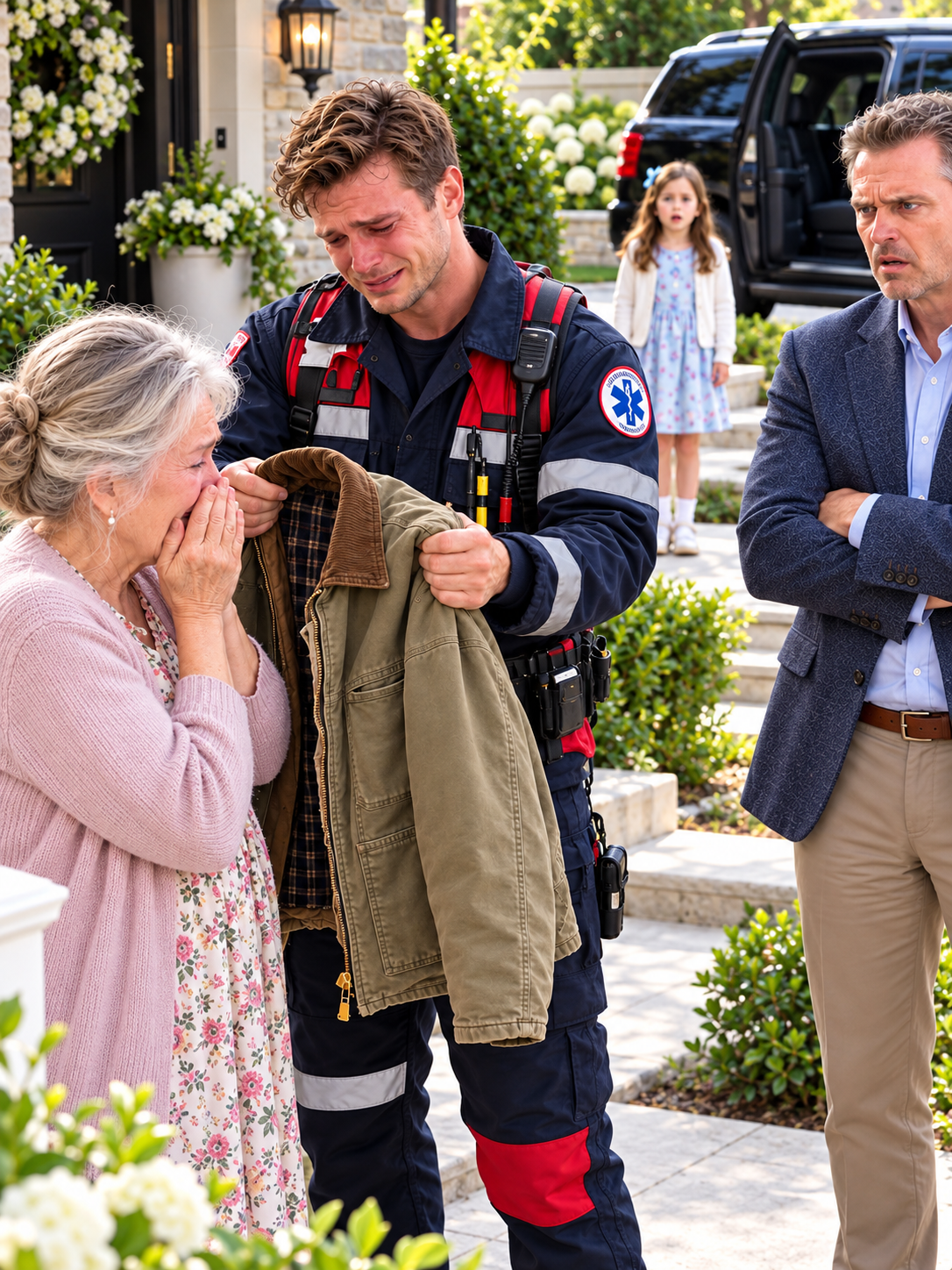
PART 1 TITLE: The Boy Who Came Through My Gas Station Door One Freezing Night Carried a Familiar Kind of Fear I Could Not Ignore
The first time I saw the boy, the temperature outside had dropped to twenty degrees below zero, and he was standing beside the coffee machine with his hands hidden inside the sleeves of a thin gray sweatshirt. It was nearly two in the morning. Snow blew sideways across the gas pumps, the highway was practically deserted, and the fluorescent lights above the convenience store hummed loud enough to make the silence uncomfortable. He had been staring at the same row of paper cups for almost ten minutes. I knew he wasn’t going to buy anything. I also knew that if I asked him to leave, there was a chance he wouldn’t survive the night.
My name is Marlene, and at the time, I worked the overnight shift at a Gas-N-Go station along Highway 53 outside Duluth, Minnesota. I was a widow, a mother whose only child had vanished years earlier, and a woman who had grown accustomed to having nobody waiting for her at home. The job wasn’t glamorous. I cleaned bathrooms, stocked refrigerator shelves, counted cigarettes, and sold coffee to truck drivers who looked nearly as exhausted as I felt. But it paid enough to keep a roof above my head, and the night hours suited someone who had forgotten how to sleep peacefully.
The boy moved whenever I looked toward him. He pretended to examine the price labels, then studied a display of powdered creamer as though it contained something fascinating. His sneakers were wet around the edges, and his jeans had dark patches near both knees. When he turned sideways, I noticed how sharply his shoulders showed beneath the sweatshirt. He couldn’t have been much older than fifteen. Maybe sixteen. The exact age hardly mattered. What mattered was that he was alone in a place where nobody should have been walking without a proper winter coat.
I watched him through the security mirror while I wiped down the counter. He wasn’t studying the register or looking for an opportunity to steal. He kept glancing toward the windows, checking the darkness beyond the glass. There was something practiced about the movement, as though he’d spent a long time making sure nobody could approach him unnoticed. Once, a pickup pulled into the lot, and he stepped behind a tall rack of windshield scrapers before the driver entered. The driver bought cigarettes and left without noticing him.
I might have dismissed him as another teenager running from trouble if I hadn’t recognized that particular expression. It was the same guarded look my son Jesse had worn during the final months before he disappeared. Jesse used to stand in our kitchen doorway with his hands buried in his pockets, answering ordinary questions with strained patience. I remembered asking whether he’d eaten dinner and seeing his jaw tighten, as though even kindness had become something painful to accept.
Jesse had been sixteen when he left home. Eleven years had passed since the morning I discovered his bedroom empty, his backpack gone, and a folded sheet of notebook paper waiting on the kitchen table. I could still remember the sound of the refrigerator motor while I unfolded it. His handwriting was hurried, the letters leaning unevenly across the page. He apologized for leaving, then wrote that he believed staying would only make my life harder. There was no address, no destination, and no promise to call.
I read that note so often that the paper began splitting along its creases. For years I kept it beside my bed, then moved it into a drawer because waking up and seeing it first thing every morning became unbearable. I eventually stored it inside a plastic sleeve with his school photographs and the few letters he’d written while away at summer camp. I had no death certificate, no grave to visit, and no explanation for why a boy who once loved sitting beside me during thunderstorms had decided he couldn’t remain in the same house.
My husband had died before I started working at the station, and after Jesse vanished, grief changed the shape of every ordinary day. I couldn’t bear grocery shopping because I still reached automatically for the cereal Jesse liked. I hated driving past the high school because I imagined him among the teenagers standing near the entrance. Even the sound of a basketball bouncing against pavement could make me stop walking. I told myself these reactions would fade. Some did. Others became habits I no longer noticed until somebody asked why I looked upset.
I searched everywhere I could afford to search. I visited shelters around Duluth, called outreach workers in neighboring towns, and eventually traveled as far as Seattle after someone reported seeing a boy who resembled Jesse near a bus terminal. I slept in cheap motels, carried his photograph in my purse, and approached strangers whose faces briefly gave me hope. More than once, someone claimed to know where he was, only to disappear after asking for money. I learned to keep my expectations quiet, but I never stopped looking.
At the print shop where I ordered missing-person notices, the woman behind the counter eventually stopped asking why I needed another batch. She would take the photograph, adjust the contrast, and print the same familiar face beneath my telephone number. Jesse was fifteen in that picture, standing near the water at Park Point, his hair disturbed by the wind. He was smiling at something beyond the camera. It was the kind of smile that made me believe, even after years of silence, that there must have been moments when he wanted to come home.
The boy by the coffee machine glanced toward the counter again. I realized I had stopped cleaning and was staring at him. He immediately lowered his eyes. I recognized embarrassment before I recognized fear. Hunger and cold were difficult enough, but being watched while trying to conceal them appeared to trouble him even more. I considered speaking, then decided against it. He might run. Instead, I turned down the volume on the small radio beneath the counter and kept busy with a stack of receipts.
Around three, he left without purchasing anything. I watched through the front windows as he pulled his hood tightly around his face and walked toward the road. The streetlight at the edge of the lot caught the blowing snow around his legs. He didn’t turn toward the nearby houses. He headed toward a stretch of highway bordered by dark trees. I stood behind the glass longer than I should have, holding a rag that had already dried in my hand.
When I arrived home that morning, I found Jesse’s old winter jacket hanging in the hallway closet. It was a heavy brown Carhartt coat, faded near the cuffs and repaired along one pocket. I hadn’t taken it out in years. The shoulders had always been a little large on Jesse, and he’d complained that the stiff fabric made him look like somebody’s grandfather. I remembered laughing and telling him he’d appreciate it when the temperature dropped. He had rolled his eyes, worn it anyway, and left it behind when he ran away.
I touched the collar, feeling the rough fabric beneath my fingers. There were things I’d kept because I expected Jesse to return and things I’d kept because I couldn’t accept that he might not. The coat belonged to both categories. I wasn’t ready to give it away, but I found myself wondering about the boy whose shoulders had been shaking in the station. There were shelters in Duluth, I knew. There were also reasons frightened teenagers avoided them. Jesse might once have been that boy, standing somewhere unfamiliar, hoping nobody would ask questions.
Two nights later, the teenager returned. He entered shortly after one in the morning, bringing a gust of bitter air through the door. His sweatshirt was the same, though a darker stain marked one sleeve. This time he approached the refrigerated display, looked at the sandwiches, and quickly stepped away when he noticed the prices. He spent several minutes examining a package of crackers before replacing it with unusual care. When he caught me watching, his face tightened.
I asked whether he needed help finding something. He shook his head. His answer was barely audible over the refrigerator fans. I didn’t press him. Instead, I explained that the bathroom was available if he needed to wash his hands or warm up for a few minutes. He glanced toward the hallway, clearly surprised that I hadn’t asked him to leave. After hesitating, he disappeared into the restroom and stayed there long enough for me to wonder whether he was simply standing under the hand dryer.
When he emerged, his cheeks were flushed, and his damp hair had been pushed away from his forehead. I offered him a paper towel because water was dripping from one sleeve. He accepted it without looking directly at me. His fingers were red and cracked. I noticed a small cut near his thumb and asked whether it needed cleaning. He said it was nothing. The way he said it sounded rehearsed. I suspected he’d become accustomed to explaining away injuries before anybody could ask how they happened.
He remained inside for almost an hour, then slipped out when a delivery truck stopped near the pumps. Before leaving, he looked back at me. For an instant, I thought he might say something. Instead, he gave a small nod. I returned it, and the door closed behind him. That night, I searched online for youth shelters and wrote two telephone numbers on a scrap of receipt paper. I carried it in my pocket until the next shift, uncertain whether he would return.
He came back on the third night. It was colder than before, and ice had formed along the bottom of the entrance door. I had just finished rotating the hot dogs on the warming grill when he appeared beside the coffee machine again. His movements were slower, and he seemed to struggle to keep his eyes open. He stayed near the wall, away from the security camera’s most obvious angle, though he couldn’t have known the camera recorded almost the entire store.
I took a clean paper cup, filled it with hot chocolate, and wrapped a napkin around the outside. Then I placed a hot dog in a cardboard tray and carried both toward him. He straightened instantly. His eyes went from my hands to my face, then toward the register. I told him the food was his if he wanted it. For several seconds, he didn’t move. He seemed convinced that accepting something would create an obligation he couldn’t afford.
Finally, he asked how much it cost. I said he could forget about paying. He shook his head and told me he didn’t have any money. I repeated that I wasn’t asking for any. His expression changed then. It wasn’t gratitude exactly. It was confusion, followed by an effort to conceal how badly he wanted the food. He held the paper cup with both hands, allowing the warmth to reach his fingers before taking a cautious sip.
I returned to the counter to give him privacy. He ate standing up, taking small bites at first, then faster ones when he realized nobody was going to interrupt. Halfway through, he stopped, wrapped the remainder in a napkin, and pushed it into his sweatshirt pocket. I asked whether he wanted another. He said no, then admitted he was saving some for later. There was nothing dramatic about his answer. That was what made it difficult to hear.
When he finished drinking, he approached the counter with the empty cup. He set it down carefully and told me his name was Danny. I introduced myself, though my name tag was plainly visible on my uniform. He looked at the badge, then called me Mrs. K. I almost corrected him, but something about the respectful formality seemed important to him. I let it stand. He glanced at the food display once more before thanking me.
I asked where he planned to sleep. His eyes moved immediately toward the door. He said he knew a place. I asked whether it was indoors. He shrugged. When I mentioned the shelters whose numbers I’d written down, he stepped backward and pulled his sleeves over his hands. He insisted that he was fine. I had spent enough years searching for Jesse to know that frightened young people often heard concern as the beginning of an interrogation.
I told him I wouldn’t make him answer questions he didn’t want to answer. His shoulders relaxed slightly. Then he looked toward the windows and asked whether the highway patrol came through often. I explained that deputies occasionally stopped for coffee, especially during bad weather. He became quiet. I didn’t know whether he was afraid of being returned to a family, reported missing, or arrested for something small. I only knew the question frightened him.
Near four o’clock, a gust of wind rattled the store windows, and the temperature display beside the register showed another drop. Danny had begun trembling again despite standing indoors. I offered him a seat near the small table reserved for employees during breaks. He refused at first, then sat on the edge of the chair with his feet positioned toward the exit. A few minutes later, his head dipped forward. He jerked awake immediately, embarrassed.
I looked toward the locked storeroom behind the counter. Inside were shelves of paper towels, boxes of cleaning supplies, bottled windshield fluid, and an unused folding chair. The room was heated by the same system as the store. There wasn’t much floor space, but it was dry, and nobody normally entered during my overnight shift. I understood perfectly well that allowing a customer back there violated company rules. I also understood the danger of doing nothing.
I told Danny there was a warmer place where he could rest until morning, provided he agreed not to touch anything on the shelves. He stared at me as though he’d misunderstood. I explained that I could find something for him to sleep on, and he could leave before the morning rush. He asked whether my manager knew. I paused for a moment too long. Danny noticed. He pushed his chair back and said he didn’t want to cause trouble.
I thought of Jesse’s note, the apologies he’d written, and the terrible conviction that his presence would somehow damage my life. I couldn’t bear hearing the same reasoning from another child. I told Danny he wasn’t responsible for every rule adults made. I asked him to wait while I checked the storeroom floor. He remained beside the counter, watching me move two cartons and clear a narrow space away from the cleaning chemicals.
When I returned, he was still standing exactly where I’d left him. I brought an old blanket from my car and laid it over flattened cardboard. Danny stepped inside cautiously. He looked at the shelves, the small ventilation grille, and the door. Then he asked, so quietly I almost missed it, whether I was certain he could stay. I told him he could sleep until six. That was the time I normally finished my shift.
He lowered himself onto the makeshift bed without removing his shoes. I left the door partly open and returned to the register. A few minutes later, I heard him shift beneath the blanket. Then the movement stopped. For the first time since he’d appeared, he was asleep somewhere warm. I checked the clock, calculated how long he had before morning, and wondered whether I had just made a mistake that would cost me my job.
At five thirty, I opened the storeroom door and found him sitting upright, already preparing to leave. He folded the blanket into a careful square and offered to put everything back. I told him there was no hurry. He thanked me, then asked whether he could come again if the weather stayed bad. His voice carried a cautious hope I recognized instantly. I looked at the snow falling beyond the windows and realized I couldn’t promise him safety without placing my own livelihood at risk.
I finally told him he could return that night. Danny nodded, keeping his face composed, but his fingers tightened around the folded blanket. After he left, I stood in the storeroom and looked at the space where he’d slept. I had spent eleven years wondering whether anyone had ever opened a door for Jesse when he was cold and hungry. Now another boy had reached my door, and I had made a decision I couldn’t easily take back.
END PART 1
PART 2 TITLE: I Gave a Runaway Boy My Missing Son’s Winter Coat Without Knowing What That Small Gift Would Someday Bring Back to Me
The following evening, I carried Jesse’s old Carhartt jacket into the gas station inside a grocery bag. I had taken it down from the closet just before leaving home, and for several minutes I’d stood in the hallway unable to decide whether to bring it. The coat was one of the few things Jesse had touched that still belonged to me. Giving it away felt like surrendering a part of him. Leaving it hanging while another boy shivered outside seemed worse.
I arrived shortly before eleven, relieved the evening cashier was busy counting receipts. Her name was Linda, and she normally left as soon as I signed in. She mentioned that the manager, Doug Pruitt, had complained about cigarette inventory that afternoon. Then she grabbed her purse and hurried toward the parking lot, eager to get home before the roads froze again. I watched her taillights disappear and carried the bag into the small employee area.
Doug ran the station with the rigid suspicion of a man who believed every dollar spent on other people came directly out of his pocket. He checked the coffee filters to make sure nobody used too many. He counted the hot dogs discarded at the end of a shift. He once demanded an explanation when I gave a stranded driver a cup of tap water after the man’s radiator failed. I had worked for him long enough to understand his priorities, and I knew what he would say if he discovered Danny sleeping behind the counter.
Still, knowing Doug’s rules didn’t make the temperature outside any less dangerous. I unfolded the coat and examined the repaired pocket. The stitches were uneven because I’d sewn them by hand years earlier. Jesse had caught the fabric on a fence while climbing after a basketball. When I scolded him for being careless, he laughed and pointed out that a jacket designed for construction workers ought to survive a little fence. I remembered the argument so clearly that I could almost hear his voice.
I checked both outside pockets, finding nothing except a flattened peppermint wrapper. I didn’t reach into the inner pocket. I rarely did, partly because the zipper had become stiff and partly because I was afraid of finding something Jesse had forgotten. I folded the coat again and placed it beneath the counter. For the rest of the evening, I told myself it was simply clothing. A boy needed warmth. I possessed a coat. There should have been nothing more complicated about it.
Danny arrived a little after midnight. He paused just inside the entrance, as if he needed to make certain I was working before walking farther into the store. His face was pale from the cold, and his hair had stiffened where damp strands escaped his hood. When he saw me, he relaxed enough to approach the register. He said hello, then immediately asked whether the storeroom was still available. I told him it was, but first I had something to show him.
I lifted the jacket from the bag and held it out. Danny looked startled. He touched the sleeve, then withdrew his hand as though the garment belonged in a display case. I told him it had been my son’s and that I hadn’t found anyone who needed it more. He asked whether my son would mind. The question was so simple that I had to look away before answering. I said Jesse wasn’t using it, and that was all the explanation I could manage.
Danny slipped his arms into the sleeves. The coat hung loosely around his narrow shoulders, and the cuffs extended almost to his knuckles. He looked down at himself with an embarrassed half smile and said it was too large. I told him there was nothing wrong with having room to grow. He adjusted the collar, pulled the zipper up, and stood still for a moment, enjoying the sensation of warmth. It was the first time I had seen him smile without immediately trying to hide it.
He asked whether he could do something in exchange. I told him he didn’t owe me. Danny disagreed. He said he was good at cleaning and could wash the floors or take out rubbish after the customers left. The urgency in his voice told me accepting assistance mattered to him. He didn’t want to feel like someone being kept alive through pity. I understood that better than he knew. So I handed him a spare mop and showed him where the bucket was stored.
For the next half hour, Danny worked with a concentration that would have impressed most employers. He moved the trash bins, cleaned beneath the coffee station, and wiped down the lower shelves where spilled sugar collected. When I told him he could stop, he insisted on finishing the corner near the restroom. He seemed relieved to have a task with clear expectations. Each completed chore made him a little less nervous about occupying space inside the building.
We developed a routine over the following weeks. Danny generally arrived after midnight, helped with small jobs, ate something warm when I could provide it, and slept in the storeroom until shortly before six. I bought an inexpensive sleeping bag from a secondhand shop rather than make him lie on cardboard every night. He rolled it tightly each morning and placed it behind the lowest shelf. When I needed to retrieve cleaning supplies, I stepped around it without comment.
I learned small things about him through ordinary conversation. He disliked mustard but added ketchup to almost everything. He preferred cocoa to coffee, though he sometimes accepted the latter because he thought drinking coffee made him look older. He knew how to repair a bicycle chain and could distinguish truck engines by sound. He had attended school long enough to develop strong opinions about mathematics, which he described as easy when the teacher explained what the numbers were supposed to accomplish.
Other questions remained unanswered. He wouldn’t give me his surname. He avoided discussing his family and became noticeably tense whenever somebody mentioned law enforcement. If I asked where he spent his days, he usually said he walked around or found places to stay warm. Sometimes he disappeared for several nights. He always returned looking exhausted, and I stopped asking where he’d been. I didn’t want my concern to become another reason for him to avoid the only reliable shelter he seemed willing to accept.
Once, during a particularly severe storm, Danny arrived with blood on his sleeve. I saw it when he reached for a paper towel. He insisted that he’d slipped on the ice, but the injury along his forearm looked more like a scrape from rough metal. I cleaned it with supplies from the store’s first-aid kit and asked whether he felt safe wherever he’d been staying. He stared at the floor. After a long silence, he said there were people he preferred not to meet again. I didn’t demand names.
That answer stayed with me. I knew how quickly a teenager without stable housing could become vulnerable to exploitation, violence, and addiction. I had read enough accounts while searching for Jesse to understand that survival sometimes forced children into situations adults later judged without understanding. Yet Danny wasn’t a problem I could solve simply by offering a sleeping bag. He needed stable accommodation, support, and adults with the authority to protect him. I tried to discuss those options whenever he seemed willing.
I showed him the shelter numbers I’d written down. He studied the paper without taking it. When I mentioned a youth outreach program, he asked whether staff would report his location. I said I didn’t know exactly what they were required to do and wouldn’t pretend otherwise. I offered to call anonymously and ask about their policies. He considered it, then shook his head. I left the information beside the register for several nights. Eventually, he folded it into his pocket.
My own life continued around our unusual arrangement. I returned home every morning to a duplex that felt larger than it was. The furniture remained much as it had when my husband was alive. His photograph stood on a living-room shelf, and Jesse’s childhood drawings occupied a kitchen drawer beneath the telephone. I kept the rent paid, balanced the heating bill against groceries, and sometimes fell asleep in my clothes because I didn’t have the energy to prepare for bed.
I had friends once. After my husband’s death, several brought meals and checked on me. After Jesse disappeared, they kept calling for a while. Eventually, conversations became difficult. People wanted to offer reassurance, but there was no reassuring answer to a question nobody could resolve. Some avoided mentioning Jesse because they didn’t want to upset me. Others suggested I might need to accept that he would never return. I understood their discomfort, yet it left me increasingly alone.
At the station, Danny’s presence gradually changed the shape of my nights. I began watching the clock around midnight, expecting the door to open. I kept extra food in my lunch bag and started noticing whether the warming grill had enough left at closing. When the wind rose, I checked the parking lot more often. On mornings when Danny slept soundly, I sometimes delayed waking him by a few minutes, knowing how little rest he might find elsewhere.
We never pretended that he was my son. Danny understood that Jesse existed long before him, and I made no effort to disguise my grief. One morning, while helping me organize a box of supplies, he noticed the photograph I kept tucked into my wallet. He asked who the teenager was. I told him Jesse was my boy and that I hadn’t seen him in eleven years. Danny looked at the picture for a long time before handing it back.
He asked whether Jesse had died. I answered that I didn’t know. The uncertainty seemed to trouble him more than a straightforward loss might have. He asked whether I still looked for him, and I told him that I followed every credible lead I could, even though most ended nowhere. Danny studied my face before asking how I knew Jesse wanted to be found. It was a difficult question, one I had asked myself repeatedly.
I said I couldn’t know what Jesse wanted now. Perhaps he had built another life. Perhaps he was afraid to contact me. Perhaps he believed the things he’d written in his note. But I wanted him to understand that leaving hadn’t erased his place in my life. Danny turned his attention to a box of cleaning cloths, folding each one with exaggerated precision. After a while, he said some people stayed away because they thought returning would hurt everyone more.
I asked whether he was speaking about himself. He shrugged. His expression closed again, and I didn’t pursue it. But I remembered the sentence. There was something painfully familiar about the idea that absence could be an act of protection. Jesse had written almost the same belief into his farewell note. I began to wonder how many young people carried that conviction, how many mistook shame for responsibility and loneliness for something they deserved.
Several months passed, and winter loosened its grip on Duluth. The snowbanks shrank along the road, leaving gray gravel and flattened wrappers behind. When the nights became warmer, Danny stopped coming as frequently. He told me he could find temporary work and sometimes stay with people he knew. I encouraged him to use the outreach resources he’d taken, reminding him that he deserved more than an occasional place to sleep. He listened without promising anything.
The first night he didn’t arrive, I kept looking toward the entrance until dawn. By the third absence, I began worrying about the worst possibilities. I called the outreach program anonymously to ask how young people could access assistance, but without Danny’s surname or consent, I couldn’t learn whether he’d contacted anyone. I left a small bag of food beneath the counter, then felt foolish for expecting him to appear simply because I’d prepared it.
When he returned nearly two weeks later, he had a bruise near his jaw and tried to keep that side of his face away from me. I told him I was glad to see him. He responded with a faint smile, then asked whether I still had the sleeping bag. I said it hadn’t gone anywhere. For a moment, he seemed younger than when we’d first met. Relief crossed his face so plainly that he had no time to hide it.
He slept almost immediately that night. In the morning, he helped carry supplies from the delivery area and asked whether I would need him when winter came again. I told him I hoped he’d have somewhere permanent by then. He nodded, but his expression suggested he was already preparing for the possibility that he wouldn’t. Before leaving, he carefully buttoned the Carhartt coat and touched the repaired pocket with his thumb.
I stood by the front window watching him walk down the highway. The coat was still too big, but it covered his hands and reached nearly to his knees. I thought of Jesse wearing it years before, then of all the strangers who might have seen my son somewhere and never known how desperately I wanted news of him. Danny disappeared beyond the next bend, and I returned to the counter with a quiet determination to keep helping for as long as I could.
What I didn’t understand then was that Doug had begun watching the station’s expenses more closely. I noticed new inventory sheets beside the register and questions written in red ink about discarded food. He had also started arriving at irregular hours, sometimes before the morning shift officially began. I knew our arrangement depended on his ignorance. For the first time, I began to suspect that ignorance might not last through another winter.
END PART 2
PART 3 TITLE: During Our Second Winter Together, One Early Morning Visit Turned My Small Act of Kindness Into a Public Accusation That Destroyed Everything
The second winter arrived earlier than anyone expected. By November, the roadside ditches were crusted with ice, and the wind coming off Lake Superior cut through clothing that had been perfectly adequate in October. Danny returned to the station regularly, sometimes carrying a few dollars earned from odd jobs and sometimes arriving with nothing. He looked taller, though he remained painfully thin. Jesse’s coat fit him better across the shoulders, and he had learned to mend small tears using thread I kept in the employee drawer.
Our routine had become familiar enough that I occasionally forgot how fragile it was. Danny entered near midnight, checked whether I needed help, and disappeared into the storeroom when his chores were finished. He never took merchandise without asking. If he wanted coffee or food, he waited for me to offer it or used whatever money he had. He even started writing down the supplies he used for cleaning, concerned that Doug might accuse him of wasting something. I told him nobody needed to count every paper towel. He replied that people like him were usually expected to explain everything.
I paid for his meals whenever I could, though I wasn’t always careful about recording the hot dogs I offered on the store’s inventory sheets. At the time, it seemed like a small matter. Food left overnight was often thrown away before the next shift, and Doug had never shown interest in finding alternatives to wasting it. Still, I understood that a business could demand payment for its merchandise. I kept intending to settle the cost properly and kept postponing the conversation because it would require explaining why Danny was there.
Doug had become increasingly difficult to work for. He complained about heating bills, employee hours, and customers who lingered without making purchases. He seemed especially irritated by anyone who asked for help. When a stranded woman requested permission to charge her dead telephone behind the counter, he told me afterward that we weren’t running a public service. I nodded without arguing, then continued allowing people to use the outlet whenever he wasn’t around.
He had little patience for my circumstances either. He knew my husband had died and that Jesse was missing, but he treated those facts as inconveniences that occasionally interfered with my concentration. When I requested a day off to follow a possible lead concerning Jesse, he demanded proof that the trip was necessary. I explained that I couldn’t know whether the lead was credible until I checked it. He told me personal problems couldn’t dictate the station’s schedule.
I took the shift anyway. The lead turned out to be another mistake. Someone had confused Jesse’s photograph with a man of similar age who lived several hundred miles away. I returned exhausted, spent an entire evening cleaning shelves that didn’t need cleaning, and wondered whether I was becoming foolish for continuing the search. Danny noticed my silence. He asked what had happened, and when I explained, he listened without offering the sort of reassurance that made me feel worse.
Instead, he asked whether I had eaten. It was such an ordinary question that I almost laughed. I told him I wasn’t hungry. He made me a cup of cocoa anyway and placed it beside the register, exactly as I had done for him during his first visit. When I looked up, he was already carrying the mop toward the rear hallway. The gesture remained with me. Kindness had become something we exchanged rather than something one of us supplied and the other received.
We talked more during that second winter. Danny admitted that he had spent time with people who used drugs and that there were periods he struggled to remember clearly. He didn’t give me a complete account of his life, and I didn’t push for one. I asked whether he wanted assistance finding treatment or a stable place to live. He said he had thought about it but feared what would happen if he failed. I told him seeking help wasn’t a contract requiring perfection.
He regarded me for a long moment. Then he said it was easy for people with houses to say things like that. I accepted the criticism. He was right that my understanding had limits. I could offer a warm room, food, and company, but I had never been forced to navigate the world exactly as he did. I told him I didn’t expect him to trust my judgment about everything. I only wanted him to remain alive long enough to have choices.
After that, he occasionally asked questions about addiction, recovery, and whether a person could rebuild a life after doing things they regretted. I answered as carefully as I could, admitting when I didn’t know. Jesse was never far from my thoughts during those conversations. The possibility that my son might be facing similar struggles frightened me, but it also made Danny’s questions feel especially important. I wanted him to hear that a difficult past didn’t make his future worthless.
The trouble began on a Tuesday morning when Doug arrived earlier than usual. I didn’t see his truck pull into the lot because I was behind the counter preparing the deposit envelope. The entrance bell rang at five forty-seven, thirteen minutes before Danny normally left the storeroom. I looked up expecting a commuter buying coffee. Instead, Doug entered wearing his dark winter coat and carrying a ring of keys. He appeared irritated before he even reached the register.
He asked why the back hallway light was on. My stomach tightened. I told him I had been restocking supplies. He looked past me toward the partially open storeroom door. One corner of Danny’s sleeping bag was visible through the gap. Doug stopped walking. I could see the moment he understood that someone was inside. He moved toward the hallway before I could think of a convincing explanation.
I stepped around the counter and told him there was a young person resting in the back. He turned toward me with disbelief, then pushed the storeroom door wide open. Danny was asleep near the lowest shelf, wearing Jesse’s jacket over his shoulders. The sudden light woke him. He sat upright, blinking, and immediately recognized that something was wrong. Doug demanded to know who he was and why he was in an employee-only area.
Danny tried to stand, but the sleeping bag tangled around his legs. Before he could free himself, Doug seized the back of his hoodie and pulled him toward the doorway. I shouted for him to stop. Danny stumbled into a shelf, knocking a packet of paper towels onto the floor. Doug kept hold of the fabric and dragged him into the main store, where three customers had gathered near the coffee station.
One of them was a truck driver I recognized from regular overnight stops. Another wore a Minnesota Vikings cap and held a cup beneath the coffee dispenser. They all turned toward the commotion. Danny struggled to keep his footing, his face pale with humiliation. I placed myself between him and Doug, demanding that my manager release him. Doug finally let go, but his anger only grew as he surveyed the scene.
He asked how long I had been allowing strangers to sleep in his storeroom. I told him Danny was a teenager who needed somewhere safe during the coldest hours. I explained that he helped clean and never interfered with customers. Doug repeated the words as though they were absurd. He accused me of converting the business into a shelter without permission, then demanded to know whether I had been giving away merchandise.
I said I’d provided food from time to time and would personally cover whatever remained unpaid. That answer only encouraged him. He pointed toward the hot dog grill, raised his voice so everyone could hear, and accused me of stealing from the business. He called Danny a drug addict despite knowing almost nothing about him. Danny’s face changed when he heard the accusation. He lowered his head, but I could see his jaw trembling.
I tried to explain that no money had been taken from the register. I hadn’t sold merchandise privately or hidden cash. I had fed a hungry teenager and offered him a place to sleep during dangerous weather. Doug refused to distinguish between those things. He kept repeating that I’d used his property without authorization and that every item given away represented a loss to the station. I could feel the customers listening, each of them uncertain whether to intervene.
The man in the Vikings cap set his coffee down without paying and walked out. The truck driver remained near the door, looking uncomfortable. A woman who had been selecting breakfast pastries stopped beside the refrigerated case. Nobody spoke. I hated that silence almost as much as Doug’s shouting. Danny had spent months trying to avoid attention, and now strangers were watching him being treated as though his homelessness itself were evidence of wrongdoing.
I told Doug to direct his anger toward me. Danny hadn’t forced his way inside. I had invited him, and I would accept responsibility. Doug laughed sharply. He said taking responsibility wouldn’t replace the missing food or erase the violation of company policy. He threatened to call the police and report both of us. Danny stepped backward at the mention of police. I saw his hand move toward the front of Jesse’s coat, gripping the zipper tightly.
I asked Doug to let Danny leave. He demanded that I surrender my keys first. I took the store keys from my pocket and placed them on the counter. Doug stared at them for a moment, then announced that I was dismissed from my position immediately. He said I had abused his trust, stolen from the business, and allowed an unauthorized person into a restricted area. Each accusation was delivered loudly enough for everyone in the store to hear.
I had worked countless nights during storms, covered shifts when other employees called out, and stayed late whenever deliveries were delayed. None of it mattered. Doug told me to collect my belongings and leave before he contacted law enforcement. Then he added that I shouldn’t bother seeking a reference from him. He intended to make sure other employers in Duluth knew what sort of employee I’d been.
The threat struck harder than I expected. At my age, finding new work wasn’t simple, particularly with a limited employment history and no recent training. I depended on that paycheck to cover rent, heating, and food. The station wasn’t merely an inconvenient job I could replace in a week. It was the structure holding my life together. Yet standing there, looking at Danny’s frightened face, I couldn’t convince myself that abandoning him in the first winter would have been the better choice.
I told Doug I would pay for the food and asked him to stop making accusations in front of customers. He ignored the request. Instead, he ordered Danny to leave immediately. The boy glanced at me, clearly waiting to see whether I had another idea. I wanted to tell him we would figure something out, that losing my job didn’t mean I regretted helping him. But Doug was still shouting, and I could barely organize my own thoughts.
Danny whispered an apology. He called me Mrs. K, just as he always had, and said he hadn’t meant for any of this to happen. Tears stood in his eyes, though he was fighting desperately to keep them from falling. I told him he hadn’t caused the manager’s behavior and wasn’t responsible for my decisions. He looked unconvinced. It was as though every fear he’d expressed about being a burden had suddenly been confirmed in front of an audience.
I reached for his arm, intending to reassure him, but he stepped away. He said he should go before Doug called anyone. I nodded reluctantly. He turned toward the entrance, still wearing Jesse’s brown coat, and walked past the silent customers. The bell rang as he pushed through the door. I watched him cross the parking lot, his head lowered against the wind. For a moment, he stopped near the highway, then continued into the gray morning.
Doug ordered me to remove my personal belongings from the employee area. I gathered my lunch bag, a small photograph of my husband that I kept near the break table, and the gloves I used for cleaning. I left the sleeping bag behind because I couldn’t bring myself to enter the storeroom again. The floor looked strangely empty through the open doorway. I remembered Danny’s careful habit of rolling his bedding and felt an unexpected ache in my chest.
When I walked outside, snow had begun falling. The parking lot was nearly empty, and Danny was nowhere in sight. I searched both directions along the highway before getting into my car. My hands shook so badly that I dropped the keys between the seats. I sat there for several minutes, listening to the heater struggle against the cold, trying to understand how a morning that had begun ordinarily had ended with both of us turned out.
I drove home slowly, stopping once to wipe my eyes because I couldn’t see the road clearly. At the duplex, I carried my lunch bag inside and placed it on the kitchen table. For eleven years, I’d lived with the uncertainty of Jesse’s disappearance. Now I faced a smaller, more immediate version of that same uncertainty. Danny was somewhere outside, frightened and humiliated, and I had no idea where he intended to go.
I called the station later that afternoon, hoping someone had seen him return. Doug answered. He told me not to telephone again unless I was calling to arrange payment for the missing food. I hung up without arguing. Then I drove to several places Danny had occasionally mentioned, including a bus stop near a shopping center and a warming area close to downtown. Nobody remembered seeing a boy matching his description.
By evening, I had lost both my job and the only reliable means of contacting Danny. I returned home with numb fingers and an empty fuel tank, still looking at every teenager wearing a dark hood. Before going to bed, I placed Jesse’s missing-person photograph beside the telephone and found myself studying it with renewed desperation. I had failed to keep one son near me, and now another boy had disappeared from my reach.
END PART 3
PART 4 TITLE: After the Boy Vanished Wearing My Son’s Coat, I Discovered That I Had Lost the One Photograph I Could Never Replace
For the first few days after Doug fired me, I expected Danny to appear at my front door. I had never told him my full address, but he’d occasionally seen mail tucked inside my handbag, and I imagined he might have remembered enough to locate the duplex. Every car slowing near the curb made me look toward the window. I kept the porch light on until dawn, even though the extra electricity was another expense I could no longer comfortably afford.
I had no reason to believe Danny knew where I lived. Still, hope didn’t always respond to reason. I checked the mailbox twice a day and answered telephone calls before the second ring. I went back to the station once, parking across the road rather than risk another confrontation with Doug. From my car, I watched customers enter and leave beneath the bright canopy lights. I told myself Danny might return out of habit, looking for the storeroom and discovering I wasn’t there.
He never appeared while I watched. After an hour, my feet had grown cold despite the heater, and I drove away. I passed the stretch of road where I’d first seen him disappear into the snow two winters earlier. The trees stood black against the gray sky, their lower branches weighed down by ice. I wondered whether he’d returned to sleeping outdoors or found someone willing to offer shelter. The thought of him alone made it difficult to concentrate on anything else.
I contacted the youth outreach organization again. This time, I explained that I’d been helping a teenager who had recently lost his place to sleep. I described Danny’s age, clothing, and the circumstances of his departure without asking anyone to disclose confidential information. The worker listened carefully and suggested places where I could leave a message. She also explained that if Danny sought assistance, staff could help him explore safer housing and recovery options. I thanked her, though I understood there was no guarantee he’d walk through their door.
I wrote several notes addressed to Danny. They were short because I didn’t know how much he could bear to read. I told him I wasn’t angry, that he’d done nothing requiring an apology, and that I wanted him to contact me if he needed help. I left one note with an outreach worker and another at a location where volunteers distributed winter clothing. Afterward, I sat in my car wondering whether the messages sounded too much like instructions from an adult he’d learned not to trust.
At home, unemployment quickly became practical rather than abstract. I listed my expenses on a sheet of yellow paper. Rent occupied the largest line, followed by utilities, insurance, groceries, and fuel. There wasn’t much left to cut. I’d already learned to buy discounted food and keep the thermostat lower than most people found comfortable. Without the station wages, my savings would last only a limited time. I needed work, and I needed it before winter bills accumulated.
I applied at convenience stores, grocery shops, cleaning companies, and small motels. Some employers accepted my applications without comment. Others asked why I had left my previous position after several years. I tried to explain the situation plainly, avoiding dramatic language or complaints about Doug. I said there had been a disagreement over allowing an unauthorized person to shelter inside the business. The reactions varied, but the outcome was usually the same. Someone promised to call, and the telephone remained silent.
At one interview, a manager asked whether Doug would provide a reference. I hesitated, then admitted that he probably wouldn’t. The woman looked down at my application and asked whether there had been an issue involving missing merchandise. My stomach tightened. I explained that I had given food to a homeless teenager and had offered to pay for it. She listened politely, but something in her expression changed. I never heard from her again.
I couldn’t prove Doug had contacted anyone, and I was careful not to invent explanations for every rejection. Still, his threat followed me from interview to interview. I had never thought of myself as dishonest. I’d raised a child, cared for a sick husband, and worked through countless difficult nights. Now I was forced to defend my character over a few meals provided to someone who might otherwise have gone hungry. The accusation left me feeling exposed in a way ordinary unemployment never had.
One afternoon, while organizing old employment papers, I came across a photograph of Jesse taken at Park Point. It was a duplicate print from the same summer as the picture I’d once tucked inside his jacket. He stood near the wooden dock, grinning beneath the pale northern sunlight. I remembered the trip clearly. My husband had brought a small cooler, Jesse had complained about the wind, and we’d spent most of the afternoon watching boats cross the water.
I stared at the photograph, then looked toward the hallway closet. Something about the image disturbed me. I opened the box where I kept Jesse’s childhood belongings and searched through the envelopes of photographs. There were school portraits, birthday pictures, and snapshots from family trips. But the particular print I remembered carrying in my wallet years earlier wasn’t there. I checked the drawer beside my bed, the old address book, and the small tin where I stored sentimental keepsakes.
Then I remembered the inner pocket of Jesse’s coat. Years before, I had placed one of his photographs there after another unsuccessful search. I couldn’t recall why I’d chosen that hiding place. Perhaps I’d intended to carry the jacket to another shelter. Perhaps I simply wanted his face to remain close to something that had belonged to him. I remembered zipping the pocket and hanging the coat back in the closet. I had not thought about that photograph when I gave the jacket to Danny.
The realization made me sit down on the bedroom floor. The coat was gone, and so was the photograph inside it. It wasn’t the only image of Jesse ever taken, but it was the last print I’d kept from that particular afternoon, the one where his expression looked most like the boy I remembered. The others seemed arranged or distant by comparison. In that picture, he was laughing at something I’d said just before pressing the camera button.
I told myself Danny would probably discover it eventually. He might even understand whose face it showed and keep it safe. But another thought intruded: if the coat became too damaged, he might discard it. Someone could steal it. He might leave it behind while moving between temporary places to sleep. The photograph could fall from the pocket and disappear into a street gutter without anyone ever knowing what it meant to me.
I searched the closet again, though there was nothing left to find. Then I sat at the kitchen table and cried harder than I had since the morning Jesse disappeared. It wasn’t only about paper and ink. The coat had carried memories of both boys. Jesse had worn it during a happier part of our lives, and Danny had worn it because I wanted him to survive. Losing it meant losing the last physical connection between those two chapters of my life.
For several weeks, I struggled with the silence. I had become accustomed to Danny’s footsteps in the hallway, the soft scrape of a mop across the station floor, and the occasional sound of him laughing at something on the radio. Now I woke before midnight, unable to understand why the house felt particularly empty. Then I remembered I wasn’t going to work. Nobody would be waiting beside the coffee machine. Nobody would ask whether the storeroom was available.
I found myself replaying the morning Doug discovered him. I remembered every word, every expression, every customer who had stood nearby. There were things I wished I’d done differently. I could have kept more careful records of the food, contacted outreach services sooner, or found a safer arrangement before Doug discovered the storeroom. I could have tried harder to reach Danny after he left. These possibilities circled endlessly through my mind, though none changed what had happened.
Eventually, the need to earn money interrupted the worst of my grief. A small motel on the outskirts of Duluth offered me part-time cleaning work. The pay was lower than at Gas-N-Go, and the schedule varied according to occupancy, but I accepted immediately. I couldn’t afford to wait for something better. My supervisor explained how to change the linens, inspect bathrooms, report damage, and work through a sequence of rooms quickly enough to meet the morning deadline.
The work was harder than I expected. At the station, I had spent long hours standing, but I could alternate between tasks. Cleaning motel rooms required constant bending, lifting, scrubbing, and carrying supplies along narrow corridors. My knees began aching before noon. By the end of the first week, my shoulders felt stiff whenever I raised my arms. I bought inexpensive pain-relief cream and told myself I would become accustomed to the routine.
Some rooms were left nearly spotless. Others contained overflowing rubbish bins, stained towels, and food scattered beneath the beds. I learned to work without dwelling on the unpleasant parts. The supervisor appreciated that I arrived on time and rarely complained. After a month, she offered me additional shifts whenever another cleaner was absent. I accepted them, even when my body protested. I had bills to pay and little reason to believe another opportunity would arrive.
I continued searching for Jesse whenever I could. The habit had become part of my identity. I checked notices online, contacted shelters periodically, and kept his photograph in my purse. Occasionally, someone sent information that seemed promising. Most leads dissolved quickly. Yet I couldn’t stop. I had spent so long wondering where my son was that the act of searching felt like the only remaining form of motherhood I could practice.
Danny remained in my thoughts as well. Whenever I saw a young man sleeping near a bus station or asking for food outside a store, I looked carefully at his face. Once, I approached someone wearing a brown work jacket and called Danny’s name. The stranger turned, confused, and I apologized. I felt foolish afterward, but the next time I saw a similar coat, I looked again. I couldn’t help it.
Spring returned, melting the snow along the roadside and revealing the abandoned objects winter had hidden. I drove past Gas-N-Go occasionally, though I stopped parking nearby. The station remained busy. Doug continued operating it as if nothing unusual had happened. I wondered whether any of the customers remembered the morning he’d humiliated a frightened teenager. Perhaps they did. Perhaps they’d forgotten before reaching the highway. I couldn’t decide which possibility hurt more.
Over time, the immediate crisis of losing my job became a longer struggle to remain financially secure. I paid the rent, usually with little money left over. When the car needed repairs, I postponed replacing my worn shoes. When heating costs rose, I reduced grocery spending. Each decision seemed manageable in isolation. Together, they formed a life increasingly governed by what I could do without.
I grew older during those years, though I resisted admitting how much the work was affecting me. My knees became less reliable on stairs. My hands ached after long mornings scrubbing bathroom fixtures. Sometimes I stood in the motel corridor, waiting for a wave of dizziness to pass before pushing the cleaning cart toward the next room. I knew I needed medical attention, but appointments meant lost wages, and I had grown practiced at postponing anything that wasn’t immediately urgent.
The duplex became my refuge despite its imperfections. The windows rattled during storms, and the kitchen floor had begun separating near one corner. But the rooms contained photographs of my husband, Jesse’s childhood drawings, and furniture we’d purchased together. The place wasn’t valuable or impressive. It was simply the last address where I could still imagine my family gathered around the same table.
At night, I sometimes sat in Jesse’s old room, which I had gradually converted into storage. The walls still bore faint marks where posters had once hung. I kept a small wooden box of his belongings on the closet shelf: a childhood baseball glove, an old birthday card, and a keychain shaped like a lighthouse. I would open the box, handle one or two objects, then close it before the memories became too painful.
I thought often about what Danny had asked me while we were cleaning the station: how could I know Jesse wanted to be found? I still couldn’t answer. But I remembered my son’s note, particularly the belief that leaving would protect me from whatever he thought he’d become. If Danny carried a similar burden, perhaps he had disappeared because he was ashamed of what happened at the station. I hoped he would eventually understand that I had never blamed him.
Another year passed, followed by another. I measured time through rent increases, changes in motel management, and the increasingly uncomfortable effort of climbing stairs. Six years went by after that terrible morning at Gas-N-Go. I continued working because there was no realistic alternative. Danny had become a memory I guarded carefully, and Jesse remained the unanswered question at the center of my life.
Then, one autumn afternoon, a notice appeared concerning the sale of my duplex. The property had changed hands before, and I’d never paid much attention to ownership as long as the rent was accepted and necessary repairs were completed. This time, however, the new landlord’s name made me stop reading halfway through the letter. I looked at it twice, convinced there must be another person with the same name.
The new owner was Doug Pruitt.
I sat at the kitchen table holding the notice while the clock above the stove ticked through the silence. The man who had publicly accused me of stealing, cost me my job, and sent Danny into the cold now controlled the home I was struggling to keep. I knew how little patience Doug had for people with financial problems. More importantly, I knew he remembered me. For the first time in years, the threat of losing everything no longer felt distant.
That evening, I placed the letter beside my rent records and examined the numbers. There had been late payments, small balances carried forward, and fees I hadn’t managed to settle. I had always hoped to catch up when work became steadier. Looking at the figures beneath Doug’s name, I understood that hope might no longer be enough. I closed the folder, turned toward the photograph of my husband on the living-room shelf, and wondered how much more of our life I would be forced to surrender.
END PART 4
PART 5 TITLE: The Man Who Had Taken Away My Job Now Owned My Home, and His First Visit Made His Intentions Unmistakably Clear
For three days after receiving the notice that Doug Pruitt had purchased my duplex, I left the letter on the kitchen table without moving it. Each morning, I unfolded the page, examined the printed name, and read the paragraphs about changes in property management. The words remained ordinary enough. There was nothing openly threatening in the document, no mention of our history, no warning that my tenancy would be reviewed. Yet seeing Doug’s name beneath the company address made the house feel suddenly less secure, as though someone had quietly removed the locks while I slept.
I had spent six years learning to survive on less than I needed. My body had aged faster than my expectations, my savings had nearly disappeared, and I had stopped replacing things that still worked, however poorly. The kitchen faucet dripped unless I turned it with both hands. The refrigerator made a heavy knocking sound before its motor started. In the bedroom, an old electric heater sat beside the window because the main heating system struggled during the worst Minnesota nights. None of those problems seemed important while I could still close the door behind me and call the place home.
Now I found myself listening for vehicles outside. Every unfamiliar engine made me look through the curtains. I knew Doug owned several properties nearby. I had heard his name mentioned at the motel by guests who complained about rent increases and delayed repairs. Until the letter arrived, those stories had seemed unrelated to my life. I had been careful to avoid him since the morning he dismissed me from Gas-N-Go, and I had hoped never to face him again.
On Thursday afternoon, shortly after I returned from cleaning fourteen motel rooms, a dark pickup stopped in front of the duplex. I recognized Doug before he climbed out. He had grown heavier through the middle, and his hair had thinned considerably, but he still walked with the same impatient confidence I remembered from the gas station. He stood on the sidewalk for a moment, examining the front steps, then approached the porch carrying a leather folder.
I opened the door before he knocked. I didn’t want him thinking I had been hiding. He looked briefly surprised, then gave me a smile that stopped well short of his eyes. He said he was visiting tenants to introduce himself as the new owner. I stepped aside enough to let him see the clean hallway but didn’t invite him inside. Something about that small decision seemed to irritate him.
He glanced at the brass numbers above my door. Then he looked directly at me.
“Well, Marlene. I wondered whether this was the same address.”
I had no doubt he already knew. My name was printed on the tenancy records he carried in his folder. I told him I had received the ownership notice and would continue sending rent through the appropriate channel. He made a small sound of amusement, opened his folder, and began flipping through papers.
According to Doug, the previous landlord had left behind an untidy record of payments. He pointed to several late rent entries and additional charges that had accumulated over time. I recognized some of them. During the months when motel work was scarce, I had occasionally paid in installments, always explaining the situation to the former owner. There had been verbal arrangements, partial extensions, and promises to clear remaining balances when I could. None of it looked particularly reassuring when reduced to columns of figures.
I explained that I had never deliberately avoided paying rent. I had worked continuously, even when my health made it difficult, and had sent whatever I could each month. Doug listened while studying the numbers. Then he informed me that his company didn’t operate on personal understandings. He wanted every outstanding balance resolved and all future payments made on schedule.
I asked whether we could arrange installments for the amount he believed remained unpaid. His expression hardened. He reminded me that property ownership involved expenses, taxes, insurance, and responsibilities. I said I understood. He replied that understanding didn’t pay bills. The exchange sounded so similar to arguments we’d had at Gas-N-Go that I could almost smell the burnt coffee and floor cleaner from that morning six years earlier.
Then he closed the folder and looked past me into the living room. He asked whether I still kept photographs of my missing son everywhere. The question was delivered casually, almost as though he were commenting on the weather. My hand tightened around the edge of the door. I told him Jesse’s photographs were my business. Doug shrugged and said he remembered how often I had talked about looking for him.
I wanted to correct him. I had rarely spoken about Jesse at work unless someone asked. Most of my grief had been carried privately, through quiet shifts and long drives home. But Doug had a talent for turning other people’s pain into an inconvenience. Correcting him would only invite another remark, so I said nothing.
He turned back toward the porch steps and told me that late payments would no longer be tolerated. I asked when I would receive an accurate statement showing the amount owed, including any fees. He promised to have one delivered. Then he offered a tight smile and said it was fortunate I had finally learned that businesses couldn’t survive by giving things away.
For a moment, I couldn’t speak. Six years had passed, yet he still remembered Danny well enough to make that remark. I asked whether he ever thought about the boy he’d forced out into the cold. Doug gave me a puzzled look, as if he genuinely couldn’t understand why I would bring up someone so unimportant to him. He said he had dealt with plenty of troublemakers over the years and couldn’t be expected to remember every one.
I told him Danny had been a child who needed shelter. Doug replied that the boy was probably in prison by now. He said it without anger, almost absentmindedly, and the indifference was worse than the original insult. I felt the familiar urge to defend Danny, to explain that he had cleaned floors, carefully folded his sleeping bag, and never once taken anything without permission. Instead, I told Doug that he didn’t know what had become of him.
Doug slipped the folder under his arm. He said he had other properties to inspect and wasn’t interested in revisiting old disagreements. Before leaving, he reminded me that the outstanding rent would need to be addressed soon. He walked away without waiting for a reply. I remained in the doorway until his pickup disappeared around the corner, then went inside and locked the door.
I sat at the kitchen table for a long time. The house was quiet except for the refrigerator motor and the faint scrape of bare branches against the outside wall. I thought about Danny walking into the freezing morning wearing Jesse’s old coat. For years, I had imagined him finding some kind of safety. I had never known whether he survived that winter, much less what became of him afterward. Doug’s careless prediction brought back fears I had worked hard to control.
The next day, I visited a local housing assistance office. A woman behind the reception desk helped me review the documents I’d brought. She explained that rental disputes required written records and that I should request an itemized statement of the claimed balance. She also gave me information about assistance programs and legal services for tenants facing possible eviction. I wrote everything down in the small notebook I carried to work.
When I asked whether an old landlord could transfer unpaid balances to a new owner, she explained that the answer depended on the tenancy records, the sale, and applicable law. She wouldn’t make promises without reviewing the documents. I appreciated the caution, even though I had hoped for something more reassuring. She suggested that I gather every bank receipt, money order stub, and written message I possessed concerning rent.
That evening, I spread six years of paperwork across the kitchen table. Some envelopes held receipts. Others contained motel pay stubs, utility notices, medical invoices, and reminders I’d written to myself. I spent hours arranging the documents by date. Several payments were missing from the landlord’s records, though I couldn’t immediately prove every discrepancy. The amount Doug claimed seemed larger than I expected, but I understood that disputed charges didn’t disappear simply because I challenged them.
I found myself thinking again of the gas station. Doug had called me a thief before establishing what I had actually taken, and the accusation had followed me through years of employment applications. I didn’t want to repeat that experience by accepting another claim without examining it carefully. But challenging him required energy, money, and confidence I no longer possessed in abundance.
The motel schedule grew heavier as autumn tourists arrived. On certain days, I cleaned sixteen rooms, hauling fresh linens along the corridor and collecting damp towels that seemed to grow heavier with every trip. My knees swelled by evening. The joints in my fingers became stiff enough that opening a jar sometimes required wrapping a towel around the lid. I kept working because missing shifts would only make the rent problem worse.
My supervisor, Elaine, noticed that I was moving more slowly. She was a practical woman in her fifties who managed housekeeping schedules with the precision of someone accustomed to constant shortages. One afternoon, she called me into the linen room and asked whether I was feeling well. I told her I was tired. She looked at my hands, which were trembling slightly as I folded a sheet, and suggested I consider reducing my hours temporarily.
I almost laughed. Reducing my hours was the one thing I couldn’t afford. I explained that my landlord had changed and that I was trying to resolve an old balance. Elaine listened without interrupting. Then she offered to assign me a few ground-floor rooms so I wouldn’t need to climb stairs as often. It was a small accommodation, but I thanked her more sincerely than I could express. She didn’t ask for details or offer a speech about resilience. She simply adjusted the schedule.
As October advanced, the weather turned wet and sharp. I began keeping a blanket beside my chair in the living room to avoid raising the thermostat. At night, the house smelled faintly of damp plaster and the cedar blocks I had placed inside Jesse’s old closet. I would sit beneath the lamp, going through receipts while the television played quietly in the background. Sometimes I looked toward the front door expecting Danny to appear, though I had stopped believing such a thing was likely.
One Sunday, I opened the wooden box containing Jesse’s belongings. I took out the old lighthouse keychain and turned it over in my palm. The paint had chipped near the base, and the metal ring was slightly bent. Jesse had bought it during a school trip and declared it lucky because he’d found a five-dollar bill in the parking lot immediately afterward. For months, he carried it everywhere. Then, like so many childhood treasures, it had been abandoned in a drawer.
I wondered whether he remembered that afternoon. Eleven years earlier, when he disappeared, I had imagined that the memories we shared would eventually bring him home. Now I understood that memory could be complicated. Sometimes the very people we loved most became the people we feared disappointing. Danny had once asked whether Jesse might believe returning would hurt me. I had never forgotten the question.
I took a clean sheet of paper and wrote Jesse a letter. I didn’t know where to send it, but I needed to put something into words. I told him that I was growing older, that life had become difficult, and that there was still a place for him in whatever remained of my future. I wrote that he didn’t need to explain everything before coming home. Then I folded the letter and placed it beside his photographs.
Two days later, an envelope arrived from Doug’s property company. Inside was an itemized statement claiming that I owed four thousand two hundred dollars in unpaid rent, accumulated charges, and fees. I read the total several times. It was more than I could reasonably save while maintaining current expenses. Even if I worked every available motel shift, I would struggle to cover the amount without falling behind somewhere else.
I telephoned the housing office again and arranged to have the documents reviewed. The worker encouraged me to preserve the statement and respond through proper channels. She also warned me that ignoring formal notices could lead to serious consequences. I promised I wouldn’t ignore anything. I had no intention of surrendering my home because Doug decided I was an easy person to remove.
But determination didn’t alter the figures. I calculated what I could pay immediately, what might be borrowed, and what could be saved over the following months. There was no comfortable answer. My car needed maintenance, the heating system was unreliable, and I had begun receiving medical bills I could barely cover. Every possible solution seemed to require sacrificing something equally necessary.
Near the end of October, Doug returned. This time, he didn’t knock. I heard a car door close and found a notice attached to the front door. When I stepped onto the porch, he was already walking toward his pickup. I called after him, and he stopped near the sidewalk. I asked why he hadn’t spoken to me directly. He said the paperwork contained everything I needed to know.
I looked down at the notice. It warned that continued nonpayment of the claimed balance could result in termination of the tenancy and legal action. The language was formal, but Doug’s expression made the meaning personal. He told me he had plans for the property and didn’t intend to keep losing money on unreliable tenants. I reminded him that I was disputing portions of the charges and seeking assistance. He replied that I could explain that to a judge.
He started toward his truck. Then he turned back and looked at the house. He said the building would look much better once it had been cleared out and renovated. The remark was unnecessary. He wanted me to understand that, in his plans, I was already gone.
I stood on the porch holding the notice while the wind pressed against my sweater. Behind me were the rooms where Jesse had grown up, the kitchen table where my husband used to read the newspaper, and the little shelf where I kept their photographs. For years, I had feared losing memories. Now I was facing the possibility of losing the place that held them.
That night, I packed the first cardboard box. I told myself it was only a precaution, a practical step in case I eventually needed to move. I placed old winter clothing inside and sealed the top with brown tape. Then I wrote BEDROOM on the side and set it near the hallway.
Seeing the box there frightened me more than Doug’s letter. It meant I had begun preparing for a future I couldn’t afford to imagine.
END PART 5
PART 6 TITLE: Every Dollar I Earned Went Toward Keeping My Door Open, Until a Stranger’s Question Brought Back the Boy I Had Sheltered
By November, my house had begun to resemble a place in the middle of a move. Boxes stood beside the hallway wall, not because I had accepted defeat, but because I couldn’t bear the thought of strangers handling Jesse’s belongings if I eventually lost the right to remain. I packed slowly. Each object required a decision about whether it mattered enough to keep, and nearly everything seemed connected to a person or a moment I didn’t want to surrender.
I started with the kitchen cupboards. There were mugs my husband had collected during road trips, a chipped blue plate Jesse used whenever he ate breakfast before school, and baking dishes I hadn’t touched since the last Christmas we spent together. I wrapped them in newspaper and placed them carefully inside a box. The newspaper left faint black marks on my fingers. When I finished, I realized I had spent an entire afternoon packing items that would probably fit in a single cabinet.
The housing assistance office helped me arrange a consultation about the rent dispute. The adviser reviewed my receipts, identified some entries that required clarification, and encouraged me to respond promptly to every formal notice. I learned that I could challenge charges I believed were incorrect, but I also learned that legal procedures moved according to deadlines rather than hardship. Being elderly, ill, or financially strained didn’t automatically make a rental obligation disappear.
I gathered everything I could find. Old money-order receipts were tucked inside envelopes with utility bills. Some bank statements showed withdrawals corresponding to rent payments, though they didn’t always prove what happened afterward. I spent evenings reconstructing dates from notes written in the margins of calendars. The effort left me exhausted, but it also helped me feel less helpless. For the first time since Doug appeared at my door, I had something more substantial than anger to bring into a conversation.
When I submitted a written request for clarification, Doug’s property office responded through a clerk. The letter acknowledged my concerns but maintained that the amount owed remained four thousand two hundred dollars. It also stated that any payments I made would be applied according to the account ledger. I wanted to speak with someone who could explain the figures directly. Every telephone call seemed to end with a promise that the matter would be reviewed.
Meanwhile, the motel entered its slow season. Fewer guests meant fewer rooms to clean, and fewer rooms meant reduced hours. Elaine tried to spread available work fairly among her employees, but there were limits to what she could offer. I took occasional laundry shifts and helped organize supplies when there wasn’t enough housekeeping work. Some days, I earned barely enough to cover groceries and fuel.
I considered looking for a second job. A supermarket near the highway advertised part-time evening positions, and I spent an hour completing the application. When I reached the section requesting references, I hesitated. Six years had passed since Doug fired me, yet his accusation still influenced how I thought about employment. I listed Elaine and a former coworker instead. Nobody contacted me about an interview.
One morning, while carrying a basket of towels down the motel corridor, my right knee suddenly gave way. I caught myself against the wall, but the basket fell and scattered clean linens across the floor. Elaine heard the noise and came out of the supply room. I told her I’d slipped, though the floor was dry. She helped me sit in a chair and insisted I take a break. The embarrassment was almost worse than the pain.
Elaine asked whether I’d been to a doctor. I admitted that I had postponed an appointment. She gave me a look that suggested she understood exactly why, but she didn’t lecture me. She simply told me that injuring myself would create a bigger problem than missing one shift. I knew she was right. The difficulty was that every reasonable decision seemed to cost money I didn’t have.
That evening, I drove home more slowly than usual. The sky had darkened before five, and a line of snow clouds hung low over the road. I passed the old Gas-N-Go station without intending to look at it, but the bright canopy lights caught my attention. The sign had changed slightly, and the pavement had been resurfaced. For an instant, I pictured Danny standing beside the coffee machine in his thin gray sweatshirt.
I remembered the first hot chocolate I’d given him. The way he’d held the cup before drinking, allowing the warmth to reach his cracked fingers, remained sharper in my mind than conversations I’d had only a week earlier. I wondered where he had gone after leaving Duluth. Perhaps he’d found stable housing. Perhaps he’d returned to school, found work, or built a family. Those possibilities had always existed alongside darker fears, but I rarely allowed myself to imagine them for long.
At a traffic light, I noticed a young firefighter crossing the street outside a nearby station. His uniform jacket was dark, with reflective markings along the sleeves. He walked toward a parked vehicle carrying a folded bag. I couldn’t see his face clearly. Something about his posture reminded me of Danny at seventeen, standing awkwardly in Jesse’s oversized coat. I watched until the light changed, then drove on.
The following week, the housing adviser telephoned to discuss my case. She explained that the formal process was advancing and that I needed to prepare for a hearing. I wrote down the date, then asked whether there was still time to apply for emergency rental assistance. She said I could pursue available programs but couldn’t promise approval or timely payment. I thanked her and began filling out another application.
The forms required information about income, expenses, identification, and tenancy history. I gathered bank statements, motel pay stubs, and copies of the notices. At several points, I stopped because my hands hurt too much to write clearly. I had once managed a household, cared for a sick husband, and supported a growing son without thinking of myself as especially capable. Now filling out a few pages felt like a test I was constantly failing.
One afternoon, I visited a community center where volunteers helped older residents navigate assistance applications. A retired teacher named Margaret sat beside me and checked the documents. She spoke gently but directly, asking questions whenever something was unclear. When we finished, she suggested I consider contacting family members who might help if the housing situation became urgent. I told her there was no family nearby.
She asked whether I had children. I looked down at the papers, uncertain how to answer a question that seemed so ordinary. Finally, I told her I had a son but hadn’t seen him in many years. Margaret apologized for asking. I said she hadn’t done anything wrong. The difficult part wasn’t the question. It was explaining the absence without knowing whether my son was alive, well, frightened, or simply unwilling to return.
Margaret listened as I briefly described Jesse’s disappearance. I didn’t tell her everything. There wasn’t time, and some memories still felt too private to offer a stranger. But I mentioned the searches, the photographs, and the years of uncertainty. She asked whether I had ever received reliable information about his whereabouts. I said no. Then, without quite knowing why, I told her about Danny.
I described the boy who had appeared at the gas station in the middle of winter, the sleeping bag hidden behind boxes, and the coat that had once belonged to Jesse. I explained how Doug discovered him and how both of us lost the little security we’d managed to create. Margaret didn’t interrupt. When I told her that the last photograph I’d kept of Jesse was inside the coat, she pressed her lips together and looked toward the window.
She asked whether I’d ever found Danny afterward. I shook my head. She said perhaps he remembered me. I smiled sadly and told her I hoped he’d forgotten the humiliation, even if he remembered the kindness. Margaret considered that for a moment before saying that people sometimes carried the memory of being helped much longer than the helper realized.
I thought about her words during the drive home. I had always assumed Danny’s life continued without me, as it should have. He had been a teenager trying to survive, and I was an exhausted woman who could offer only temporary shelter. I couldn’t expect him to search for me simply because I’d given him food and a place to sleep. Yet the possibility that he might remember made the silence feel less absolute.
The hearing arrived on a bitterly cold morning. I wore my best dark coat, carried a folder containing every document I’d collected, and sat in a crowded room with other tenants waiting for their cases. Some people appeared angry. Others looked frightened or resigned. I recognized the expression on one elderly man’s face when he counted the pages in his folder for the third time. We were all trying to make complicated lives fit into orderly stacks of paper.
Doug attended with a representative from his property company. He wore a pressed shirt and greeted the official with practiced politeness. When he noticed me, he gave a brief nod. I returned it because I didn’t want the hearing to become another public argument. I had spent too many years carrying the memory of his voice raised inside the gas station. I wanted this disagreement resolved through evidence rather than humiliation.
My records helped clarify several payments, but other charges remained unresolved or were accepted as part of the balance. I explained the financial difficulties that had accumulated during years of irregular motel work. I also described my attempts to seek assistance and negotiate repayment. The decision was not the one I had hoped for. The proceeding moved the case toward an order requiring me to leave if the debt and other conditions were not resolved within the permitted time.
I left the building feeling strangely calm. During the hearing, I’d been so focused on answering questions that I hadn’t allowed myself to consider what the outcome would mean. Once I reached the parking lot, the consequences began to settle around me. I might soon have no legal right to remain in the duplex. I had no savings sufficient for a new rental deposit and no nearby relatives willing or able to take me in.
I called the housing assistance office from my car. The adviser explained the remaining steps and urged me to continue looking for emergency support while preparing for the possibility of displacement. She also reminded me to keep copies of every document. I thanked her, hung up, and remained seated with my hands resting on the steering wheel. The windshield was beginning to fog, but I couldn’t bring myself to start the engine.
That evening, I walked through every room in the duplex. I stood in the kitchen where Jesse used to complete homework while I cooked dinner. I entered the small bedroom where my husband had spent his final months, listening to the old radiator click beneath the window. I touched the wooden banister Jesse had scratched while carrying his bicycle upstairs against my instructions. The imperfections I’d ignored for years suddenly seemed precious.
In the living room, I took down several photographs and wrapped them carefully. My husband’s portrait remained on the wall. It showed him standing outside our first apartment, smiling beneath a sun-faded baseball cap. I couldn’t bring myself to pack it yet. The photograph had occupied the same place for so long that the room would look unfamiliar without it.
I found Jesse’s letter inside the box of keepsakes. The paper had yellowed slightly, but every word remained legible. I read it again, then placed it beside the old lighthouse keychain. He had believed he was protecting me by leaving. I wondered what he would think if he knew that, after all these years, I still spoke to his photograph whenever I was frightened.
I didn’t blame him for my circumstances. Whatever had happened to Jesse, the rent problem belonged to the life I’d lived after his disappearance. Yet I couldn’t help wishing he were there. Not because I expected him to pay the debt or solve everything, but because I wanted someone familiar to sit across the kitchen table and tell me that we would face the next morning together.
Near midnight, my telephone rang. I answered quickly, half expecting another message from the housing office. Instead, it was Margaret from the community center. She wanted to know whether I had managed to complete the final assistance forms. I told her I had submitted them. She asked how I was holding up. I considered pretending that everything was fine, then admitted I was frightened.
Margaret stayed on the line for nearly half an hour. She didn’t promise a miracle or insist that things would work out. She asked whether I had identified somewhere to stay if I had to leave. I told her I was still trying. She suggested contacting a local housing coordinator and offered to help make the call the following morning. I accepted.
After we hung up, I sat in the living room and listened to the quiet house. Outside, snow began falling across the porch steps. I thought of Danny standing in that same kind of cold six years earlier, uncertain whether anyone would open a door. I had once been able to give him a warm place for the night. Now I was approaching a moment when I might need someone to do the same for me.
The next morning, a formal notice arrived confirming the approaching deadline. I read the date carefully, then marked it on the calendar beside the refrigerator.
Friday.
I had less time than I thought.
END PART 6
PART 7 TITLE: With the Eviction Deadline Approaching, I Packed My Family’s Last Belongings and Faced the Possibility That Nobody Would Come
The week before my eviction, I began counting the days by the number of boxes I managed to fill. Monday, I packed the kitchen. Tuesday, I sorted the bedroom drawers. Wednesday, I gathered the books and photographs from the living room. By Thursday evening, nine cardboard boxes stood in a row near the front door, each labeled in black marker. There wasn’t much furniture worth moving, and I had no secure destination for most of it. Still, packing gave my hands something to do while my mind struggled with the approaching loss.
I had imagined that leaving a home after so many years would involve dramatic decisions. Instead, it became a series of small humiliations. I had to decide which dishes deserved space, whether to keep a worn blanket, and how many photographs I could carry without damaging them. I threw away expired medicines, broken appliances, and stacks of papers I had once considered important. Each bag placed in the rubbish bin made the house feel a little less like the place where I’d raised my son.
The housing coordinator had helped me explore temporary accommodation, but the available options were limited. Some places were full. Others required arrangements I couldn’t complete before Friday. A short motel stay would consume money I needed for food and transportation. I had spoken with Margaret several times, and she continued making calls on my behalf, but neither of us had found a stable solution. I tried to remain practical, reminding myself that temporary hardship was not the same as permanent homelessness.
My body was making the process harder. My knee swelled after carrying boxes down the hallway, and my fingers cramped whenever I gripped the packing tape. I had begun moving slowly enough that tasks which once required an hour now consumed an afternoon. Twice, I sat on the kitchen floor because standing had become too painful. I waited for the discomfort to ease, then forced myself upright again. There was no one available to finish the work for me.
Elaine gave me two days away from the motel without making me feel guilty. She said the rooms could be reassigned and that I should concentrate on finding somewhere safe to stay. I thanked her, though missing the wages frightened me. Before I left, she pressed a small grocery-store gift card into my hand. I tried to refuse. She told me the housekeeping staff had contributed and would be offended if I returned it. I accepted because refusing kindness out of pride had become a luxury I couldn’t afford.
On Wednesday afternoon, Doug appeared while I was carrying a box toward the porch. He parked his pickup near the curb and watched me struggle with the weight before approaching. I expected him to offer assistance, though I knew better. Instead, he looked through the open doorway and commented that I still had a great deal to remove. I told him I was working as quickly as I could.
He asked whether I understood that the deadline was Friday. I said I did. Doug reminded me that the property needed to be empty and that he already had contractors scheduled. I asked whether there might be any flexibility if I needed a few extra hours to arrange transportation. He shook his head before I’d finished speaking.
Then he looked down at the box in my arms. The word PHOTOGRAPHS was written across the top. He asked whether I was still keeping every picture of Jesse. I held the box more tightly and told him I was keeping what belonged to my family. Doug made a dismissive sound and said sentimental belongings wouldn’t help me pay the debt.
I wanted to tell him that not every object in a person’s life could be measured by its resale value. I wanted to ask whether he had ever lost someone and spent years searching for evidence that they might return. But there was no point. Doug was looking past me toward the walls, already imagining fresh paint and new tenants. I stepped aside and carried the box back inside.
He remained on the porch long enough to remind me that the unpaid balance stood at four thousand two hundred dollars. I told him I knew the figure. He said the legal process had reached its final stage and that a deputy would be present if necessary. I asked him to leave so I could continue packing. For a moment, he seemed prepared to argue. Then he turned toward his truck.
I watched him drive away, my hands trembling from anger and exhaustion. Six years earlier, he’d thrown Danny out of the gas station for taking shelter in a heated storeroom. Now he was preparing to remove me from the home I’d struggled to maintain. The situations weren’t identical, and I knew my rent debt was real. But Doug’s satisfaction disturbed me. He seemed to enjoy the fact that he could control what happened next.
That night, I opened the box containing Jesse’s childhood belongings. I placed his baseball glove on the table, then took out the lighthouse keychain. The metal had dulled, and the chipped paint looked almost gray beneath the kitchen light. I remembered Jesse racing through the house with the keychain dangling from his finger, delighted by something he’d purchased with his own allowance. The memory was so ordinary that it hurt.
I wondered whether he had children of his own. The thought had occurred to me before, but I’d always pushed it away. Jesse would be twenty-seven now. He might have a family, a job, friends who knew nothing about the mother still searching for him. Perhaps he’d changed his surname. Perhaps he lived in a city I’d visited during my searches without either of us knowing how close we’d come.
For years, I had tried to imagine what I would say if we met again. At first, I pictured demanding answers. Later, I imagined asking whether he was safe. As the years passed, my expectations grew simpler. I wanted to see his face, hear his voice, and know that he was alive. Everything else could wait.
I placed his belongings carefully into the box and sealed it. The tape made a harsh tearing sound in the empty kitchen. I wrote JESSE across the top, then sat beside it for a while. The name looked strangely small against the cardboard.
Thursday morning brought freezing rain. Thin ice formed along the porch railing, and the pavement shone beneath the gray sky. I drove to the motel to collect my final paycheck for the week and speak with Elaine. She asked whether I’d found somewhere to stay. I told her I had a few possible temporary arrangements but nothing permanent. She looked concerned and encouraged me to call if I needed help transporting anything.
I thanked her again. Part of me wanted to ask whether I could sleep in an unused motel room, but I knew that would put her in a difficult position. She had already helped as much as she reasonably could. I didn’t want another person risking employment because of my circumstances. The thought brought back Danny, who had once apologized for making me lose my job. I finally understood how easily a person in need could begin treating kindness as something dangerous to accept.
On my way home, I stopped near the lake. The water was dark beneath low clouds, and wind pushed small waves against the shore. I sat in the car watching the movement. Jesse had loved the lake when he was younger. He used to ask whether ships could become lost even when they knew where they were going. My husband would explain navigation lights, maps, and weather. Jesse listened seriously, then asked questions neither of us could always answer.
I thought about the photograph inside the missing Carhartt jacket. In it, Jesse stood smiling on the Park Point dock, unaware that his life would eventually take him away from us. For six years, I had imagined that picture folded inside a pocket somewhere, possibly ruined by rain or lost among discarded belongings. I had accepted that I might never see it again. Yet the memory of the photograph remained almost as vivid as the original.
Sometimes I wondered whether Danny had discovered it. If he had, perhaps he kept it because he understood what it meant. I imagined him opening the inner pocket, finding the boy’s face, and remembering the exhausted woman who had offered him shelter. Maybe he had considered contacting me. Maybe he had tried and failed. More likely, I told myself, he had been too busy surviving to concern himself with a stranger’s photograph.
I returned home before dark and made a small supper from the food remaining in the refrigerator. There wasn’t much point in buying groceries with no place to store them. I ate at the kitchen table, surrounded by boxes, listening to the heater click on and off. The room felt unfamiliar without the dishes and photographs that usually occupied its shelves. I realized I had already begun saying goodbye.
Margaret telephoned shortly after seven. She asked whether I’d received confirmation of the enforcement schedule. I told her the deputy was expected the following morning. She reminded me to keep important papers, medication, and identification in a bag I could carry personally. She also suggested taking photographs of the property’s condition and keeping any remaining notices. I wrote down her advice, though I felt too tired to absorb much.
Before ending the call, Margaret asked whether there was anyone else she should contact. I told her no. Then, after a pause, I admitted that I wished I could call Jesse. She didn’t respond immediately. Finally, she said she hoped I would someday have that chance. It was the kindest answer she could have given because it didn’t pretend to know what would happen.
When I hung up, I walked into the living room and looked at my husband’s portrait. He stood outside our first apartment with his familiar, slightly crooked smile. I had left the picture on the wall because I wanted it to be the last thing I removed. For a moment, I imagined him standing beside me, studying the boxes and asking what we were going to do. I could almost hear his voice telling me to make a list, start with what mattered, and deal with the rest afterward.
I took the picture down, then changed my mind and put it back. I wasn’t ready to see the pale rectangle on the wall where it had hung for years. I told myself I would collect it in the morning. Everything else was nearly packed. Surely the deputy could allow me a moment for one last photograph.
Near midnight, I checked the weather. More snow was expected before dawn. I set an alarm for six, though I doubted I would sleep. My car was parked near the curb, its back seat filled with two boxes and a bag containing my clothes. I had arranged to leave the remaining belongings outside temporarily while I continued looking for a way to transport them. It wasn’t a satisfactory plan, but it was the only one I had.
I lay down on the bed without changing clothes. The mattress felt cold, and the room echoed slightly because so much had been removed. I stared at the ceiling, listening to the wind press against the windows. I wondered how many people had spent their last night in a familiar home feeling exactly as I did: frightened, exhausted, and embarrassed by circumstances that seemed visible to everyone.
At some point, I must have slept because I dreamed of Jesse. He was sixteen again, standing in the kitchen wearing the brown Carhartt coat. He held something in his hand, but I couldn’t see what it was. I asked where he’d been. He looked at me with the same troubled expression he’d worn before leaving home and tried to speak. Then the sound of a vehicle outside woke me.
It was still dark. I checked the clock and saw that dawn was several hours away. The vehicle continued down the street, and silence returned. I remained awake, holding the edge of the blanket, thinking about the dream. For the first time in years, I hadn’t dreamed of Jesse walking away. He had been standing still, facing me, as though he had something important to say.
I got out of bed and walked to the kitchen. On the table lay the letter I’d written to him months earlier. I unfolded it and read the final lines. I had told him that he didn’t need to return as a successful man or explain away the years he’d lost. I wanted him to come home as himself, whatever that meant now.
I placed the letter in my handbag with my identification and the remaining photographs. Then I sat by the window until the eastern sky began to pale.
By morning, the snow had settled across the porch and driveway. The nine boxes stood ready near the door. My husband’s portrait remained on the wall.
At eight thirty, a sheriff’s vehicle turned onto my street.
I rose from the chair, straightened my coat, and understood that the moment I’d been dreading had finally arrived.
END PART 7
PART 8 TITLE: On the Morning I Lost My Home, a Red Pickup Stopped Outside and a Familiar Voice Returned From Six Years of Silence
The sheriff’s deputy arrived shortly before nine. He was a broad-shouldered man with tired eyes and a manner that suggested he’d performed this duty many times without ever becoming comfortable with it. He introduced himself, confirmed my name, and explained the order he was there to enforce. His voice was professional but not unkind. I listened carefully, though I already understood why he had come.
Behind him stood Doug Pruitt. He wore a heavy dark coat and leather gloves, and his expression carried the same faint satisfaction I’d seen at the gas station six years earlier. He looked past me into the hallway, taking inventory of what remained. I told the deputy that most of my belongings were packed and that I needed a little time to bring them outside. He glanced at the boxes and nodded.
Doug immediately complained that contractors were expected later that morning. The deputy reminded him that the process needed to be handled properly and that I would be given a reasonable opportunity to collect essential belongings. Doug pressed his lips together but said nothing more. I was grateful for the deputy’s restraint. It was difficult enough to lose my home without having Doug direct every movement.
I carried the first box onto the porch. The cardboard was damp along one corner from condensation near the kitchen window, and I worried that the bottom might split. I lowered it carefully onto the steps, then returned for another. The deputy offered to help move the heavier boxes to the edge of the walkway. I thanked him. Doug stood near the sidewalk watching, occasionally checking his telephone.
Neighbors began looking through their curtains. I saw movement in the windows across the street and a face briefly appear behind the glass of the adjoining duplex. I didn’t blame them for being curious, but their attention made my cheeks burn. I had lived there for years, quietly paying bills, tending the small flowerbed, and collecting mail like everyone else. Now my life was being carried outside in cardboard boxes.
The snow had stopped falling, but a cold wind moved between the houses. I pulled my coat tightly around my shoulders and tried to ignore the ache in my knees. Each trip from the hallway to the porch seemed longer than the last. I had cleaned motel rooms for years, carried heavy laundry baskets, and worked through pain because I needed the money. Yet moving my own belongings out of my home felt harder than any shift I’d endured.
I placed the box labeled JESSE on the dry side of the porch, away from the snow. Inside were the lighthouse keychain, the old baseball glove, and the letters I’d saved from his childhood. The cardboard looked terribly ordinary. Nobody passing by would know it held the remaining pieces of a boy’s life before he disappeared. I rested my hand on the top for a moment, then went back inside.
Doug followed me as far as the doorway. He asked whether the living room was empty. I told him I still needed to collect my husband’s picture. He looked toward the wall and said I should have taken it down earlier. The deputy was standing nearby, and I didn’t want another argument. I simply told Doug I would remove it before leaving.
The house smelled different with the furniture moved and the cupboards emptied. There was a faint odor of dust beneath the rugs and the sharper scent of cold air entering through the open door. Every room echoed. I could hear Doug speaking outside, though I couldn’t make out every word. Somewhere nearby, a car engine started and faded into the distance.
I stood in the living room facing the portrait. My husband looked impossibly young in the photograph. His baseball cap shaded one eye, and his hand rested on the railing outside our first apartment. I remembered taking the picture on a warm Saturday afternoon, shortly after we’d moved in together. We had been proud of that apartment, though the kitchen was cramped and the bathroom door never closed properly. We believed everything important still lay ahead.
I reached toward the frame, then lowered my hand. For years, the photograph had remained in exactly the same place. Taking it down meant accepting that the room would no longer belong to me. I knew that was already true in a legal sense. But emotionally, the final act felt different. It was the difference between hearing that a door was closing and turning the handle yourself.
The deputy appeared in the doorway and asked whether I needed assistance. I shook my head and told him I’d be finished shortly. He looked at the picture, then at the boxes outside. His expression softened. He said there was no need to rush the final few minutes. I thanked him, embarrassed by how close I was to tears.
When I stepped outside again, Doug was examining the front steps. He mentioned that the railing needed replacing and that the porch would look better after repainting. I wondered whether he was speaking to me or simply thinking aloud. Either way, the comments made me feel like an unwanted object being removed so repairs could begin.
The nine boxes were now scattered across the grass near the curb. Some stood upright; others leaned against one another, their cardboard corners darkening where they touched the snow. My car was parked a short distance away, too small to hold everything at once. I had not yet decided where the remaining boxes would go. I knew leaving them outside wasn’t practical, but the immediate task of getting through the morning had consumed all my attention.
Doug looked at the boxes and asked whether that was everything. I told him nearly everything. He said the painters would arrive around noon and that he wanted the rooms cleared before then. I reminded him that I was trying to work as quickly as possible. He glanced at his watch with exaggerated impatience.
The deputy stepped between us and asked Doug to wait near his vehicle. For a moment, I saw irritation cross Doug’s face. He wasn’t accustomed to being told to step aside, especially when he believed he controlled the situation. But the deputy’s tone left little room for argument. Doug walked toward the sidewalk, muttering something I chose not to hear.
I returned to the living room and carefully lifted my husband’s portrait from its hook. A pale rectangle remained on the wall, surrounded by paint that had darkened slightly over the years. I traced the outline with my eyes. For reasons I couldn’t explain, that empty space hurt more than the boxes outside. It made the loss visible in a way legal notices and overdue rent statements never had.
I wrapped the picture in a towel and held it against my chest. I thought of the day my husband died and how I’d stood in the hospital corridor unable to imagine returning home without him. I had done it anyway. I had survived the funeral, the lonely nights, and the endless searches for Jesse. I had believed that losing my house would be another event I could endure by continuing to move forward.
But standing there, I wasn’t certain anymore. I was tired in a way sleep couldn’t correct. My body hurt. My savings were gone. The future had narrowed into questions about where I would spend the coming night and whether I could keep my belongings dry. I had no energy left for the reassurance I’d repeated to myself for years.
I carried the portrait onto the porch. The deputy looked up from speaking with someone near his vehicle. Doug turned as well. I told them I was finished inside. My voice sounded calm, almost detached. Doug nodded and said it was time to go. I began walking toward the boxes, trying to decide which one I should move first.
Then I heard a vehicle approaching from the far end of the street.
At first, I paid no attention. Cars passed through the neighborhood regularly, and I had no reason to expect anyone. But the engine slowed near the duplex. I looked up and saw a red pickup traveling toward the curb. The truck was clean but clearly used, with mud along the lower doors and a small dent near the rear wheel. It pulled to a stop just beyond my car.
The driver remained inside for a moment. Through the windshield, I could make out a broad-shouldered young man wearing a dark jacket. He appeared to be looking directly at the house. I wondered whether he was one of Doug’s contractors arriving early. The thought made my stomach tighten. I couldn’t bear the idea of workers walking through the rooms while my belongings were still on the lawn.
The passenger side of the truck was partly hidden from where I stood. I noticed movement behind the glass but couldn’t see who was inside. The driver turned toward someone beside him, said something, then opened his door. He stepped onto the street and paused with one hand resting against the vehicle, as though gathering himself before approaching.
He was tall, much taller than the boy I remembered. His shoulders filled out a dark Duluth Fire Department jacket, and his hair was neatly cut. He had the steady posture of someone accustomed to difficult situations, yet his face held an expression I couldn’t immediately understand. He seemed nervous, almost overwhelmed, as he looked toward the porch.
Doug glanced at the truck and asked whether the man was there about the property. The newcomer didn’t answer. Instead, he walked directly toward me, passing the boxes on the grass without looking at them. His eyes remained fixed on my face. I felt a strange uneasiness, the sensation of recognizing something familiar before being able to name it.
He reached the bottom of the porch steps and stopped. For several seconds, neither of us spoke. I noticed the color of his eyes, the shape of his mouth, and the way he held his hands close to his body. Those small details stirred a memory of a thin teenager standing beside a coffee machine with his sleeves pulled over his fingers.
Then he spoke.
“Mrs. K?”
The name struck me with such force that I almost dropped the picture frame. Nobody had called me that in years. I stared at him, searching his face. The boy I remembered had been underfed, frightened, and constantly prepared to run. This young man looked strong enough to carry someone out of a burning building. But beneath the changes, there was something unmistakable.
“Danny?”
His expression broke. He nodded, then pressed his lips together as though he were struggling to speak. Tears gathered in his eyes. He said he’d been trying to reach me for a long time and apologized for arriving so late. I couldn’t understand what he meant. I had spent six years imagining him somewhere far away, perhaps struggling, perhaps finally safe. Now he stood in front of me wearing a firefighter’s uniform.
I wanted to ask a hundred questions. Where had he gone? How had he survived? Was he healthy? Had he finished school? Did he have somewhere to live? But the words caught in my throat. Instead, I stepped toward him and placed one hand against his arm, needing to know that he was real. He was warm beneath the thick jacket. His shoulders trembled slightly.
Danny looked past me toward the boxes, the empty porch, and Doug standing near the deputy. His expression changed from relief to concern. He asked what was happening. I told him I was being evicted. Saying the words aloud in front of him felt almost unbearable. He looked toward Doug, and recognition passed across his face.
For a moment, the two men stared at each other. Doug frowned, clearly trying to understand why a firefighter had arrived and why I appeared to know him. Danny didn’t address him. He turned back toward me and asked whether I had somewhere to go. I shook my head, then tried to explain that I was working on arrangements. My answer sounded weak even to me.
Danny swallowed hard. He said he wished he’d found me sooner. I told him that seeing him alive was enough. I meant it. For six years, I’d carried the fear that the last thing Danny heard from anyone who cared about him was Doug’s accusation. Knowing he had survived, found work, and built something better was more than I’d allowed myself to hope for.
He looked down at the photograph of my husband in my hands. Then his gaze moved toward the boxes again. I saw him take a slow breath, as though preparing to say something difficult. He asked whether I could sit down for a moment. I told him there was nowhere to sit except the boxes. He smiled faintly, then guided me toward one resting near the porch.
The deputy watched us without interrupting. Doug stood several feet away, increasingly irritated by the delay. He said the property still needed to be vacated. Danny glanced at him but didn’t respond. His attention remained on me. He seemed determined to explain something before allowing anyone to rush the conversation.
I sat on the box labeled BEDROOM and placed my husband’s portrait across my knees. Danny crouched in front of me, bringing his face level with mine. He told me he had never forgotten what I’d done for him at the gas station. He said the sleeping bag, the food, and the warmth had mattered more than I could understand.
I shook my head and told him I’d only done what I thought anyone should have done. He looked at me seriously. He said not everyone had done it. There had been nights before he met me when he’d believed nobody would care whether he survived until morning. I wanted to reach for his hand, but he was already turning toward the truck.
He said there was something he’d carried with him for six years. Something that belonged to me. He had kept it safe because he knew how much it mattered, even before he fully understood why.
Then he walked back toward the red pickup.
I watched him open the rear door and reach inside. When he turned around, he was holding a folded brown coat. The fabric was faded, the cuffs worn, and one pocket bore the uneven stitches I’d sewn long ago at my kitchen table.
Jesse’s Carhartt jacket.
My breath caught. I recognized it immediately. For years, I’d imagined the coat lost, discarded, or destroyed. Now it was resting in Danny’s hands, and he was carrying it toward me with extraordinary care.
He stopped beside the box and gently unfolded it. His fingers moved toward the inner pocket.
“Mrs. K,” he said softly, “there’s something I need to show you.”
I stared at the coat, unable to speak.
Then he reached inside the pocket where, six years earlier, I had forgotten the last photograph of my missing son.
END PART 8
PART 9 TITLE: The Eleven Years Between Us
For eleven years, I had imagined what it would feel like to hear my son’s voice again. Sometimes, during the long hours at the Gas-N-Go, I had pictured him walking through the glass doors while I counted the register. Other nights, I imagined answering the telephone and hearing his familiar laugh. In none of those dreams did I see him standing beside a red pickup on the morning of my eviction, looking frightened of the very woman who had spent more than a decade trying to find him.
Jesse stood a few feet away, his hands hanging awkwardly at his sides. At twenty-seven, he looked older than his years. His cheeks were hollow, and there were small lines beside his eyes that had never belonged to the boy I remembered. But when he looked at me, I recognized something the years had not managed to erase. It was the same uncertain expression he had worn whenever he came home from school with something difficult to tell me.
“Hi, Mom,” he said again, because I had not answered the first time.
I tried to speak. His name was somewhere inside my chest, trapped beneath eleven years of questions, grief, and sleepless nights. I could hear the deputy shifting behind me and the low engine noise from a passing truck. The cardboard box beneath my hand had begun to collapse where I was gripping it. None of those things mattered. I was looking at my son, and he was alive.
Then I crossed the lawn. I cannot remember deciding to move. One moment I was beside the porch, and the next I had my arms around Jesse’s shoulders. He bent toward me, holding me so tightly that the cold air seemed to disappear between us. I could feel him shaking. His face pressed against my hair, and he kept trying to apologize, but the words broke apart before he could finish them.
I had spent years rehearsing what I would say if I found him. I wanted to ask where he had gone, why he had never called, whether he knew what his disappearance had done to our family. I wanted to tell him about the shelters I had contacted, the hospital waiting rooms I had visited, and the photographs I had shown to strangers who could barely look me in the eye. But when he finally stood in front of me, the only thing I could manage was to hold on.
“You came back,” I whispered.
Jesse nodded against my shoulder. “Danny found me, Mom. I don’t think I would have made it here without him.”
Behind us, Danny remained near the porch. He held the worn Carhartt jacket folded across his forearms, the same brown coat I had given him when he was a thin, frightened teenager trying to survive a Minnesota winter. I remembered how the sleeves had swallowed his hands. Now he wore a Duluth Fire Department jacket, and his broad shoulders filled it comfortably. I had wondered about him almost as often as I had wondered about Jesse.
A small voice interrupted us. “Daddy?”
I turned and saw the little girl standing near the truck. Her pink winter coat was zipped to her chin, and blonde curls escaped from beneath her knitted hat. She was holding the passenger door with one mittened hand, watching us with a mixture of curiosity and concern. Her eyes were unmistakable. They were Jesse’s eyes, the ones I had studied in photographs until the edges of those pictures became soft from handling.
Jesse wiped his face and reached for her. “Come here, sweetheart.”
The little girl approached slowly. Her boots made faint crunching sounds on the frozen grass. She looked up at me, then at her father, as though comparing the person in front of her with somebody she had heard about many times. Finally, she asked whether I was Grandma Marlene.
I lowered myself carefully to my knees. My joints complained, and the cold seeped through my trousers, but I barely noticed. “Yes, honey,” I said. “That’s me.”
She studied my face for another moment. Then she smiled, revealing a small space between her front teeth. Jesse had once had the same gap. The resemblance struck me so suddenly that I had to put a hand against the ground to steady myself.
“Daddy has your picture beside my bed,” she told me.
I looked up at Jesse. He was crying again, though he seemed embarrassed by it. “Her name is Hope,” he said. “She’s five.”
Hope stepped forward and placed her arms around my neck. Children have a way of offering affection without considering how much history it might contain. She held me for only a few seconds, but I would remember the weight of her small hands on my shoulders for the rest of my life.
As I embraced her, I thought of all the ordinary moments I had missed. I had not known when she was born. I had never held her as an infant, watched her take her first steps, or heard her first words. Somewhere, while I cleaned motel rooms and counted the money left after paying rent, my granddaughter had been growing up. I had believed my family was disappearing, when all along a part of it had been waiting for me in another city.
“She’s why I finally got clean,” Jesse said quietly.
I looked at him again. The words carried more history than he could explain on a frozen lawn. There was shame in his expression, but there was also something I had not seen in him before he disappeared. He looked like a man who understood what he had almost lost.
“Fourteen months,” he continued. “I’ve been sober for fourteen months.”
I reached for his hand. His fingers were rough and cold. “That’s fourteen months you can be proud of.”
He shook his head, not rejecting the words exactly, but struggling to accept them. He told me that he had wanted to come home many times, particularly during the first months of recovery. Every time he picked up a phone, however, he remembered the note he had left on our kitchen table. He believed I had already survived the worst of losing him and that bringing himself back into my life would only reopen the wound.
“You thought staying away would help me?” I asked.
His eyes dropped. “I thought you deserved a better son.”
The answer hurt more than I expected. I remembered the sixteen-year-old boy who had left home believing his troubles were too heavy for his mother to carry. Eleven years later, he was still measuring his worth by the damage he feared he might cause. I wanted to tell him that families were not built from perfect people, but from people who kept trying to return to one another. Instead, I lifted his chin so that he would look at me.
“I never stopped wanting you home,” I said.
He closed his eyes. For a moment, he looked like a little boy again, not because his features had changed, but because he finally allowed himself to be comforted. We stood together while Hope held his coat and Danny waited quietly nearby, giving us the privacy that was possible on a street where half the neighbors were watching.
It was Doug Pruitt who interrupted us. He cleared his throat with deliberate impatience. I had forgotten he was there. I had forgotten the eviction order, the deputy, the painters he had mentioned, and the nine cardboard boxes containing everything I owned. Doug, however, had forgotten none of it.
“This is touching,” he said, glancing toward his watch. “But the property still needs to be cleared.”
Jesse turned toward him. The softness disappeared from his expression. “Who are you?”
“Her landlord,” Doug answered. “And she’s behind on what she owes.”
I felt the old humiliation return. Six years earlier, Doug had accused me of stealing because I had fed a hungry child. Now he stood outside my home, watching my son discover how little I had left. I hated that Jesse’s first morning back had become a public display of my financial troubles.
“It’s all right,” I said quickly. “We were leaving anyway.”
But Danny had already stepped forward. He rested the folded jacket on the porch railing and looked directly at Doug.
“Mr. Pruitt,” he said, “I think you and I have met before.”
Doug narrowed his eyes. Behind him, the deputy remained silent, while Hope moved closer to her father and slipped her mittened hand into his. I saw Danny’s expression change. The frightened boy I remembered had vanished. In his place stood a man who no longer needed Doug’s permission to speak.
And for the first time that morning, Doug Pruitt seemed uncertain of himself.
END PART 9
PART 10 TITLE: The Debt That Was Already Paid
Doug stared at Danny for several seconds, searching his face without success. I watched the small changes in his expression: irritation, impatience, and then a reluctant awareness that the young man in front of him knew something he did not. Doug was accustomed to being recognized. He owned several properties on our block and made sure people understood when he expected obedience. Not being remembered would have offended him. Not recognizing somebody who remembered him clearly seemed to offend him even more.
“Should I know you?” he asked.
Danny did not raise his voice. “January. Six years ago. Highway 53.”
Doug looked toward me, then back at Danny.
“The Gas-N-Go,” Danny continued. “I was the kid sleeping in your storeroom.”
I saw the moment recognition arrived. Doug’s jaw tightened. He looked at Danny’s fire department jacket, then at the worn brown Carhartt coat on the porch railing. Perhaps he remembered the boy whose hoodie he had grabbed that winter morning. Perhaps he remembered the customers staring as he shouted accusations at me. Whatever he recalled, he looked away first.
“You were trespassing,” he said. “That was a business.”
“I know what it was,” Danny answered. “I also know she was the only person who cared whether I survived that winter.”
A gust of wind lifted one corner of the eviction notice lying among my belongings. I stepped toward the porch to retrieve it, partly because I wanted something useful to do with my hands. Danny had carried enough shame because of what happened that morning. I did not want him to feel responsible for the years that followed. I had made my own decision to shelter him, and despite everything it cost me, I had never regretted it.
“Danny,” I said softly, “you don’t have to explain any of this.”
He looked at me with an expression I remembered from the nights when he helped restock the refrigerators. Back then, he would sometimes glance over his shoulder to make sure I was still in the store. He had been afraid kindness would disappear if he stopped watching it. Now his eyes were steady.
“I know, Mrs. K. But there’s something I need to finish.”
Doug folded his arms. “What you need to do is stop interfering with a lawful eviction. She owes four thousand two hundred dollars. Sentiment doesn’t change that.”
The amount sounded enormous when he announced it to the street. Four thousand two hundred dollars represented months of working while my knees throbbed, of deciding which bill could wait, of buying the cheaper groceries and pretending I preferred them. I had watched the balance grow through late fees and overdue rent. Each time I managed to pay something, another expense appeared. By the time Doug posted the final notice, I had stopped imagining I could catch up.
Jesse looked at me. “Mom, why didn’t you tell anyone?”
I almost laughed at the question. Who was there to tell? My husband was gone. My son had been missing for eleven years. Danny had disappeared after the Gas-N-Go incident, and the few friends I still had were dealing with troubles of their own. It is difficult to ask for help when your world has grown so small that you no longer know who might answer.
“I managed as long as I could,” I replied.
Jesse’s face tightened, but he said nothing. I appreciated that silence. I had already been embarrassed enough for one morning, and I did not want the first conversation with my son to become an inventory of my failures.
Danny reached inside his jacket and took out a white envelope. It had been folded once across the middle. He held it toward Doug.
“Here,” he said. “The full amount.”
Doug did not move. “What is that?”
“A cashier’s check. Four thousand two hundred dollars.”
For a moment, nobody spoke. Even the deputy seemed surprised. Doug reached for the envelope, then hesitated, as though accepting it would mean admitting something he preferred to deny. Finally, he opened it and inspected the check. His gaze moved over the amount, the issuing bank, and the payee information.
“Where did you get this?” he asked.
Danny’s answer was simple. “The firefighters at Station 2 helped me.”
I looked at him. He seemed almost uncomfortable with the attention now. He explained that when he told the men at his station about the woman who had sheltered him as a teenager, they asked what they could do. He told them about my eviction and the money Doug claimed I owed. One person offered a contribution, then another. By the time Danny was ready to make the drive, they had collected enough to cover the entire balance.
I had spent years thinking of those hot dogs and cups of cocoa as small things. They were all I could afford to give. A warm room between midnight and six in the morning had seemed an imperfect substitute for the stable home Danny deserved. I had never imagined those small gestures would travel through another person’s life and return to me in the form of help from people I had never met.
“I can’t let them do that,” I said.
Danny turned. “They already did, Mrs. K.”
“But that’s too much money.”
“You gave me a place to sleep when nobody else would. You lost your job because of it.” His voice softened. “This doesn’t make us even. It just means you don’t have to carry this part anymore.”
My eyes filled before I could answer. I was not accustomed to receiving anything I could not repay. Even after my husband died, I had insisted on handling the arrangements myself, believing that accepting help meant admitting I could no longer manage. Danny knew that stubbornness in me. I suspected it was why he had arranged everything before arriving.
Doug cleared his throat. “If this clears, the outstanding balance is settled.”
Danny looked toward the deputy. “Could we have that acknowledged?”
The deputy stepped forward and asked to see the payment information. He reminded us that questions about the eviction and its status would have to be handled according to the applicable legal process. I was grateful for his careful manner. Nothing was magically erased by the presence of a check, and I did not want Doug to find another reason to claim I had refused to cooperate.
Doug took out his phone and called the person who handled his rental accounts. The conversation was brief and unfriendly. He kept his back toward us, speaking in clipped sentences while Danny stood beside Jesse and Hope. When Doug finished, he tucked the envelope inside his coat.
“The debt will be recorded as paid,” he said.
Danny nodded. “I’d like a receipt.”
Doug gave him a look of undisguised annoyance.
“A proper one,” Danny added. “For Mrs. K.”
For several years, Doug had controlled much of what happened in my life. First, he had taken away my job. Later, as my landlord, he determined whether I could remain in my home. I had learned to dread seeing his vehicle outside because it usually meant a demand I could not satisfy. Watching him stand there while Danny calmly insisted on documentation was a strange reversal. The power had not disappeared, but the fear no longer belonged entirely to me.
Jesse put his arm around my shoulders. “You aren’t staying here,” he whispered.
I glanced toward the duplex. Through the open front door, I could see the pale rectangle on the wall where my husband’s photograph had hung. My furniture was nearly gone, and the rooms looked smaller without it. I had lived there because it was what I could afford, not because it had ever truly felt like home. Yet leaving still frightened me. It was one more ending in a life that seemed to contain too many of them.
“Where would I go?” I asked.
Jesse looked toward Hope, who was drawing a shape in the frost on the truck window with one mittened finger.
“With us,” he said. “We have room.”
I wanted to believe him immediately. Instead, I heard the cautious voice that had governed my decisions for eleven years. Jesse had only recently found stability. He had a little girl to raise and a recovery he needed to protect. I could not bear the thought of becoming another responsibility he carried because he felt guilty about leaving me.
“You have your own life,” I told him.
He nodded. “I do. And I want you in it.”
Danny returned to the porch railing and picked up the Carhartt jacket. For a moment, he ran his thumb across a worn seam. Then he looked toward the other buildings Doug owned along the block.
“Mr. Pruitt,” he said, “there’s one more thing.”
Doug stopped walking.
“I’m assigned to fire inspections in this district now. Your other three properties on this block are on the schedule. You might want to make sure the smoke detectors and safety equipment are in order.”
There was no threat in Danny’s voice. He sounded like a firefighter delivering an ordinary professional reminder. That made Doug’s reaction more revealing. His expression darkened, and he started to object, then seemed to think better of it. The deputy turned aside, concealing a small smile.
Danny did not follow him or prolong the confrontation. He simply returned to my side. The moment was finished, and he had no intention of giving Doug any more of our morning.
I looked from Danny to Jesse, then to Hope. The rent had been covered. My son was alive. My granddaughter was standing in front of me. And the young man I had once protected from the cold had returned as somebody who could protect others.
For the first time in years, the future seemed to contain something beyond the next bill.
END PART 10
PART 11 TITLE: Nine Boxes and a Spare Bedroom
After Doug finally stepped away, the street grew quieter. A neighbor who had been watching from behind her curtains disappeared into her living room. The deputy finished speaking with Doug and returned to his vehicle, leaving us to gather the belongings that were still scattered across the grass. The morning had turned brighter, but the sunlight offered little warmth. I stood beside the nine cardboard boxes and tried to understand how a day that began with the loss of my home had become something entirely different.
Jesse crouched beside the nearest box. “Is this everything, Mom?”
I looked at the uneven row. There were towels, kitchen utensils, photographs, a few books, my husband’s old letters, and the clothes I had worn through too many winters. Some boxes were heavier than others, but none contained anything particularly valuable to a stranger. Nearly all of my life could be carried in one pickup truck. I wondered whether Jesse would be shocked by that, then realized he had probably lived with less during the years he was missing.
“Everything I need,” I answered.
He lifted the first box. Danny took another, and within minutes they were moving my belongings toward the red pickup. I wanted to help, but Jesse asked me to stay beside Hope. There was no impatience in his request. He knew my knees were hurting. I had been standing in the cold since the deputy arrived, and the unexpected reunion had left me trembling more than I cared to admit.
Hope took my hand. Her mitten was soft and slightly damp from touching the snow. “Daddy says you make pancakes.”
I smiled. “I used to make them every Sunday.”
“With blueberries?”
“Sometimes. Your daddy liked chocolate chips better.”
She considered that information seriously. “I like both.”
“Then we’ll have to make both.”
It was such an ordinary conversation that it nearly undid me. I had spent years imagining my reunion with Jesse as a single enormous moment, a door opening after a long winter. I had not thought about what would happen afterward: small conversations with a child, deciding what to cook, learning which foods somebody liked. Those details were what made a family feel real. I wanted them more than any grand declaration.
When Jesse came back for another box, Hope ran to him and announced that I could make two kinds of pancakes. He laughed, and the sound took me backward so suddenly that I had to look away. It was not quite the laugh I remembered. His voice had deepened, and there was a rough edge to it now. But the rhythm was the same, the little pause before the sound escaped. My son was standing in front of me, talking about breakfast with his daughter.
“Tell me about where you live,” I said.
Jesse leaned against the truck. “It’s a small rental in St. Paul. Nothing fancy. Hope has her room. I have mine. There’s another bedroom we haven’t really used.”
“Why would you need three bedrooms?”
He looked at me. “Because sometimes you get lucky enough to have room for somebody you thought you’d lost.”
I was not ready to accept an invitation made out of guilt. I asked about his work, the rent, and whether he had enough money to support himself and Hope. He answered patiently. He had been building a steadier life since entering recovery, and he was continuing the routines that helped him stay sober. The house was not large, he admitted, and there would be adjustments. But he wanted those adjustments. He wanted his daughter to know her grandmother, and he wanted to stop treating his own mother like somebody he had to avoid.
“What about your recovery?” I asked quietly.
He nodded, understanding what I meant. “I still go to meetings. I have people I call when things get difficult. I’m not asking you to fix me, Mom.”
I felt ashamed of how relieved I was to hear that. When Jesse was sixteen, I had sometimes believed that loving him strongly enough could solve whatever frightened him. After his disappearance, I blamed myself for not seeing the warning signs, not asking better questions, and not knowing how to help. It had taken years to understand that a parent could love a child completely and still be unable to control the choices or struggles that shaped his life.
“I couldn’t help you then,” I said.
Jesse looked down at the box in his hands. “You tried.”
“Not enough.”
He set the box on the truck bed and turned toward me. “Mom, I need you to hear this. I didn’t leave because you didn’t love me.”
I pressed my lips together. Those were words I had needed for eleven years, but hearing them did not instantly erase the old guilt. Grief becomes familiar when it has lived with you long enough. Even after the person you mourn returns, part of you remains prepared to keep mourning.
“You were sixteen,” I said.
“I know.” He rubbed a hand across his face. “And I made choices I didn’t understand. Then I was too scared to ask for help.”
He told me that the shame grew heavier the longer he stayed away. Each missed birthday made it harder to call. Each holiday became another reminder of what he would have to explain if he returned. When he eventually began rebuilding his life, he kept postponing the conversation because he wanted to arrive with proof that he was different. He had imagined finding me after he had a better job, more money, and a life he could present without embarrassment.
“I kept waiting until I was good enough to come home,” he said.
I took his hand. “You didn’t have to earn that.”
He looked toward Hope. She was showing Danny a small stone she had found near the sidewalk. Danny listened as though it were an important discovery, turning the stone over in his palm before returning it to her. I watched them for a moment, struck by the strange path that had brought all four of us together.
“Danny told me about you,” Jesse said.
I nodded. “He told me how he found you.”
“He didn’t tell you how stubborn he was.”
I glanced at Danny, who was now answering Hope’s questions about fire engines. Jesse explained that when they first met at the sober living house in St. Paul, he had not wanted to believe Danny’s story. He had recognized the photograph and the jacket, but the possibility that somebody had spent years searching for him felt almost impossible. Danny had returned again and again, never demanding anything, simply making sure Jesse understood that his mother had not forgotten him.
Jesse paused. “He said you kept looking even when you had no reason to believe I was alive.”
“I always had a reason,” I said. “You were my son.”
He looked at me with an expression I could not entirely read. There was gratitude in it, but also grief for the years that could not be recovered. I suspected we would both have to learn how to live with those missing years. A reunion did not turn an eleven-year absence into a brief misunderstanding. It gave us the chance to begin from where we stood.
The last box was smaller than the others. It contained the framed photograph of my husband, wrapped in a kitchen towel to protect the glass. Jesse lifted it carefully and held it in both hands. For a long moment, he studied the familiar face.
“I still think about Dad,” he said.
“So do I.”
He ran a finger along the wooden frame. “I wish he could see this.”
I looked at my husband’s photograph. I had imagined that moment myself, many times. I wished he could have watched Jesse return, could have met Hope, and could have seen what Danny had become. There were losses that no happy ending could reverse. But I thought of the way my husband used to insist that family meant leaving the door open, even when somebody had gone farther than you could follow.
“I think he’d be glad you found your way here,” I said.
Jesse placed the photograph securely in the truck.
Before we left, I walked once more through the empty duplex. The rooms echoed without furniture. There were faint marks on the walls where pictures had hung, and the kitchen window still stuck when I tried to close it. I remembered the nights I had sat at the table sorting overdue notices, the mornings I returned from cleaning motel rooms too tired to take off my shoes, and the winter evenings when I watched snow collect on the steps while wondering whether Jesse was warm somewhere.
I did not hate the place. It had sheltered me when I had very little else. But I no longer felt obligated to remain there simply because I had survived in it.
Jesse waited at the door. “Ready?”
I looked around one last time. There was nothing left that needed saving. The memories would come with me whether I wanted them to or not.
“Yes,” I said. “I’m ready.”
Outside, Danny had cleared space in the pickup, and Hope was waiting beside the passenger door. I walked toward them slowly, holding my husband’s photograph close until Jesse offered to place it safely with the other belongings. As I handed it over, I realized that I was no longer trying to decide how to survive the afternoon.
I was thinking about the road to St. Paul, about a little girl’s bedroom, and about the unfamiliar but welcome possibility of living with my family again.
END PART 11
PART 12 TITLE: The Jacket He Finally Grew Into
Danny closed the tailgate after securing the last of my boxes. The metal latch made a solid clicking sound, and I stood beside the pickup listening to it. For years, most of the sounds that marked changes in my life had been unpleasant ones: a telephone going unanswered, a door closing behind someone I could not find, a notice being attached to the front of my home. That small click was different. It meant my belongings were packed, and this time I was leaving with people who wanted me beside them.
Jesse checked the straps holding the boxes in place. He was careful with everything, perhaps because he knew how little I had left. The photograph of my husband was tucked safely between two bags, protected from the heavier items. Hope sat in the truck, looking through the window at us. Every few seconds, she waved, apparently worried that we might forget she was waiting.
I returned her wave. She responded with an enormous smile.
Danny came around the truck carrying the old Carhartt jacket. Its brown canvas had faded along the shoulders, and the cuffs were worn from years of use. I recognized the small repaired tear near one pocket. My husband had caught it on a nail while working in the garage long ago. I had stitched it myself one evening while Jesse sat at the kitchen table doing homework.
“I almost forgot this,” Danny said.
He held the jacket toward me, and I reached out automatically. The fabric was heavier than I remembered. Or perhaps I had simply grown weaker. It smelled faintly of old canvas, winter air, and the clean detergent Danny used now. I ran my fingers across the lining and found the inner pocket where Jesse’s photograph had once been hidden.
For six years, I had believed that jacket was gone forever.
I remembered the night I first offered it to Danny. He had arrived at the Gas-N-Go with hands so cold he could barely wrap them around a paper cup. His hoodie was wet at the shoulders, and he kept insisting he was fine. I had gone home after my shift, found Jesse’s old coat in the closet, and brought it back the following evening. Danny had resisted taking it. He worried I might want it back. I told him the coat was doing no good hanging in a dark closet while somebody outside needed warmth.
When he tried it on, the sleeves covered most of his fingers. I had laughed gently and told him he would eventually grow into it.
Standing beside the pickup, I looked at the man he had become. The coat would fit him now.
“Take it,” he said. “It’s yours.”
I shook my head. “No, Danny.”
He looked surprised. “Mrs. K, it belonged to Jesse. You should have it.”
I glanced toward my son. Jesse had come to stand beside us. There was no possessiveness in his expression, only quiet understanding. He had recognized the jacket immediately when Danny brought it to the duplex, but he knew what it had meant to the boy who carried it through years of uncertainty.
“It was Dad’s before it was mine,” Jesse said.
“I know,” I answered.
The words settled between us. My husband’s jacket had gone from one member of our family to another, then to a frightened teenager who had no reliable family of his own. For years, it had traveled through shelters, cold streets, temporary rooms, and the long, difficult process of building a different life. It had protected Danny, and in its pocket he had carried the photograph that eventually led him to Jesse.
I thought about how easily I might have left it in the closet.
“Keep it,” I told Danny.
He lowered his eyes. “Are you sure?”
I nodded. “You grew into it.”
For several seconds, Danny did not answer. He held the jacket against his chest, and I saw his throat move as he swallowed. He was no longer the teenager who used to apologize for taking up space in the storeroom. He had a job, people who trusted him, and a future he had worked hard to build. Yet something about that old coat still reached the part of him that remembered being hungry and afraid.
“You saved my life,” he said quietly.
I did not know whether that was true in the literal sense. Danny had survived because of countless choices, because he accepted help, entered recovery, worked toward becoming a firefighter, and refused to let his worst years determine the rest of his life. What I had offered him was a place to sleep and a few meals when he needed them. Those things mattered, certainly, but he had done the harder work of surviving afterward.
“You did the difficult part,” I said.
He shook his head. “I couldn’t have done it alone.”
We stood for a moment without speaking. I thought of the men from Station 2, whose kindness had reached me through a cashier’s check. I thought of the people who must have helped Danny after he left Duluth, and of the support Jesse had found during his recovery. None of us had arrived at that curb entirely by ourselves. There had been strangers who offered shelter, friends who answered difficult telephone calls, and people who kept showing up when it would have been easier to leave.
I wished I could thank them all.
Jesse placed a hand on Danny’s shoulder. “You found me because you kept a picture of someone you’d never met.”
Danny gave a small, embarrassed smile. “Your mom made you sound worth finding.”
Jesse looked toward me. His expression softened.
“I had a better mother than I understood,” he said.
I put an arm around him. “And I have my son back. That’s enough for today.”
Hope knocked gently against the truck window. We turned together and saw her pressing both mittens against the glass. Her face was full of impatience.
“Are we going to Grandma’s new home?” she asked when Jesse opened the door.
Jesse laughed. “We are.”
She looked directly at me. “Do you have to leave your boxes outside there?”
I felt something tighten in my chest. The child had watched strangers carry my belongings onto the lawn. She did not understand rent arrears, eviction orders, or the humiliation of losing a place to live. She only knew that somebody she had just met was standing beside everything she owned.
“No, sweetheart,” I answered. “We’ll bring them inside.”
“All of them?”
“All nine.”
She nodded, apparently satisfied. “Good. Because it might snow.”
I looked at Jesse, and we both laughed. It was the first easy laughter we had shared in more than a decade. Nothing extraordinary had caused it. A little girl was simply worried about boxes getting wet. Yet I knew I would treasure that moment because it belonged to the life unfolding in front of us rather than the past I had spent so long trying to recover.
Before we climbed into the truck, I looked back at the duplex. Doug was no longer standing on the lawn. The deputy had left. The neighbors’ curtains had fallen back into place. The porch steps were bare except for a little dirt where the boxes had rested. From the street, nothing about the building revealed what had happened there that morning.
I thought about the woman who had opened that front door hours earlier, prepared to lose the last place she could call her own. She had expected to spend the day searching for somewhere to sleep and trying to decide which belongings were worth keeping. She had believed her son was still lost somewhere beyond her reach, and she had no reason to think the runaway boy from the Gas-N-Go would ever return.
Now both of them were beside her.
I climbed into the passenger seat while Jesse helped Hope settle safely in the back. Danny placed the Carhartt jacket behind his seat, smoothing the folded canvas once before he closed the door. He would keep it, not because he needed another coat, but because it carried a piece of the life he had survived.
As we pulled away, I watched the duplex recede through the window. I felt sadness, but not the crushing despair I had expected. I was leaving behind a home where I had spent years waiting for somebody who had finally returned. I did not know exactly what living with Jesse and Hope would be like. There would be difficult conversations, unfamiliar routines, and days when eleven years of separation made ordinary things complicated. But there would also be breakfasts, evenings together, and the simple comfort of hearing my son’s voice without imagining it.
The road south stretched ahead beneath a pale winter sky. Hope began talking about her favorite books and the pancakes she wanted me to make. Jesse listened, occasionally glancing toward me with a smile that was still a little uncertain. I understood that uncertainty. We were both learning how to be together again.
Danny kept his eyes on the road. His fire department jacket hung comfortably across his shoulders, and every so often I caught a glimpse of the old brown coat tucked safely behind him.
I thought of that freezing night six years earlier, when a hungry teenager stood beside a gas station coffee machine pretending to read labels because he was too ashamed to ask for food. I had not known his future. I had not known mine. I had only known that no child should have to spend a Minnesota winter outdoors without somewhere safe to rest.
I could never have guessed that the boy I helped would one day find the son I had lost.
Hope leaned forward as far as her seat belt allowed. “Grandma?”
I turned. “Yes, honey?”
“Will you stay with us for a long time?”
I looked at Jesse, then at the road ahead. For eleven years, I had answered questions about tomorrow with uncertainty. I could not promise that life would become easy, or that none of us would ever face another difficult winter. But I could promise that I wanted to be there, and that this time we would have the chance to face those winters together.
“As long as you’ll have me,” I said.
Hope smiled. “That’s a very long time.”
I settled back into my seat, holding that answer close.
The nine boxes were behind us. My husband remained in his photograph, my son sat within reach, and my granddaughter was already planning what we would eat for breakfast.
And Danny, the boy who had once been given a coat far too large for him, was taking us home.
END PART 12
PART 13 TITLE: A Room That Had Been Waiting
The drive to St. Paul took us through miles of winter fields, dark stretches of pine trees, and small towns where snow had gathered against the windows of empty storefronts. I sat in the passenger seat with my hands folded over my purse, watching the landscape pass. For years, I had traveled nowhere farther than the grocery store, the motel where I cleaned rooms, or the little cemetery where my husband was buried. Now I was leaving Duluth with my son, my granddaughter, and the young man whose life had become tangled with mine in ways neither of us could have imagined.
Danny drove with the easy concentration of someone accustomed to long shifts and difficult roads. Jesse sat behind him beside Hope, who had already fallen asleep, her cheek resting against the side of her car seat. Every so often, Jesse leaned forward to ask whether I was warm enough. He had done it four times before we reached the first major highway junction. I recognized the habit immediately. When he was little, he used to ask whether I needed help carrying groceries, even when the bags were nearly empty.
I wanted to tell him that he didn’t need to prove anything to me. I wanted to say that he could stop worrying about whether I was comfortable because simply having him within reach was more than enough. But I understood something about the way he kept checking on me. Each question was a small attempt to care for the mother he had spent eleven years avoiding. Perhaps those ordinary gestures were easier than trying to explain the years between us.
We stopped at a roadside restaurant shortly after noon. The dining room smelled of fresh coffee, fried potatoes, and the damp wool of winter coats drying near the heating vents. Hope woke as soon as the truck stopped. She looked through the window, announced that she was starving, and insisted that everybody needed pancakes. Jesse laughed and told her pancakes were available at any hour if she asked politely enough.
Inside, the waitress showed us to a booth near the windows. Hope immediately slid beside me, leaving Jesse and Danny across the table. She examined the children’s menu as seriously as if she were reviewing an important contract. When the waitress brought crayons, she pushed the blue one toward me and told me we were going to draw a house together.
I drew a square with a crooked roof and three windows. Hope added a large yellow sun, even though the sky outside was completely gray. Then she drew five stick figures standing in front of the door. She labeled them with the names she knew how to spell: Hope, Dad, Danny, and Grandma. The fifth figure was smaller and stood beside the others without a name.
“Who’s this one?” I asked.
She hesitated, then pointed toward the photograph of my husband, which Jesse had placed carefully in a bag beside him.
“Grandpa,” she said.
I felt my throat tighten. I had never told Hope much about her grandfather. Jesse must have spoken about him during the years I was absent from their lives. The thought that my husband’s memory had survived in a household he never got to visit brought me an unexpected kind of comfort.
“He would have loved you,” I told her.
Hope considered this, then added a smile to the little figure. She seemed satisfied that the problem had been solved.
While she colored, Jesse spoke quietly about his house. It was a modest three-bedroom rental on a residential street in St. Paul. The landlord was an older woman who lived nearby and had rented to him after he completed the program that helped him establish a stable home. There was a small backyard, a narrow kitchen, and a living room with a secondhand sofa he had purchased from a coworker.
“I painted the spare bedroom last month,” he said.
I looked up. “Why?”
Jesse glanced toward Danny before answering. “Because I was hoping you’d come.”
The words caught me unprepared. Until that moment, I had assumed my arrival would require everyone to rearrange their lives overnight. I imagined Hope losing a playroom, Jesse having to move furniture, and cupboards being emptied to accommodate my belongings. I had prepared myself to apologize for every inconvenience.
“You were already planning this?” I asked.
Jesse nodded. “Danny told me you might need somewhere to go. We didn’t know exactly when we’d find you or what you’d want. But I wanted the room ready.”
I looked across the table at Danny. He lowered his eyes toward his coffee, suddenly interested in stirring a cup that needed no stirring. He had become remarkably skilled at helping people without making them feel watched. Even as a boy, he had disliked being thanked. Now I understood that he had carried that discomfort into adulthood.
“You two have been doing a great deal of planning,” I said.
Danny gave a small smile. “We thought it was better than showing up with just good intentions.”
When the food arrived, Hope insisted I taste one of her blueberry pancakes. Jesse moved the syrup away from her elbow before she could knock it over. Danny asked for extra napkins. I watched those little movements with a kind of wonder. They were the movements of people accustomed to one another, people who had learned each other’s habits and shortcomings. I was joining a life that already existed, not returning to the one I had lost.
The thought frightened me more than I wanted to admit. I loved Jesse with a certainty that had survived his absence, but I did not know the man he had become. I knew very little about the routine that kept his recovery steady, how he handled difficult days, or what it meant to raise Hope alone. Loving him would not automatically teach me those things. I would have to pay attention.
After lunch, we returned to the truck. Hope asked me to sit beside her for the remaining journey, and Jesse took the passenger seat. I spent the next hour listening to her explain the important rules of her household. Shoes belonged beside the front door. Her favorite blanket could not go in the washing machine without permission. Tuesday was library day, and nobody was allowed to move the small stuffed rabbit that slept beside her pillow.
“Those sound like good rules,” I told her.
She nodded solemnly. “Daddy says rules help us remember things.”
I glanced toward Jesse. He was looking out the front window, but I could see his reflection in the glass. There was something tender and tired about his face. I wondered how much effort it had taken him to create a dependable home after years when even finding somewhere to sleep had been difficult.
We reached St. Paul in the late afternoon. The streets were crowded with people returning from work, and the sidewalks were lined with dirty snow. Danny turned into a quieter neighborhood of small houses with porches and narrow driveways. Several homes had yellow lights shining through their windows. Smoke rose from a chimney near the corner, and someone had built a crooked snowman beside a mailbox.
Jesse pointed toward a blue-gray house with white trim. “That’s ours.”
I looked at it for a long moment. It wasn’t large or impressive. The porch railing needed paint, and one of the shutters hung slightly crooked. But the front steps had been cleared, a small wooden bird feeder hung beside the window, and a bright paper sun was taped inside the glass.
Hope leaned against me. “I made that.”
“It’s beautiful,” I said.
Danny parked beside the house. Jesse helped Hope out, then came around to open my door. I accepted his hand, though I could have managed the step myself. The air smelled of snow and wood smoke. Somewhere nearby, a dog barked twice before falling silent.
At the front door, Jesse took out his keys. His hands were shaking slightly. I remembered those same hands gripping mine when he was small and nervous about his first day of school.
“Ready?” he asked.
I nodded.
He opened the door, and Hope rushed inside to announce that Grandma had arrived. Her voice echoed through the little hallway. Jesse stepped aside so I could enter first.
The house smelled of clean laundry, warm air, and something faintly sweet. There were children’s drawings attached to the refrigerator, shoes arranged beneath a bench, and a stack of library books on a table near the front window. A gray sofa stood across from a television. Nothing matched perfectly, but everything looked cared for.
Jesse led me down the short hallway. The spare bedroom was at the back of the house, overlooking a narrow strip of garden. Its walls had been painted a soft cream color, and a quilt covered the bed. On the small bedside table stood a lamp, a glass of water, and a folded piece of paper.
I picked up the paper. Across the front, in large uneven letters, Hope had written, “WELCOME GRANDMA.”
Inside was a drawing of a woman standing beneath a blue sky. A small child held her hand. Above them, Hope had drawn three red hearts.
I sat on the bed because my knees suddenly refused to hold me. The mattress dipped gently beneath my weight. After the morning’s eviction, the long journey, and the shock of seeing Jesse alive, this small room was almost more than I could understand.
Jesse stood in the doorway, uncertain whether to come closer.
“Mom?” he asked. “Is it all right?”
I looked around at the clean curtains, the empty dresser waiting for my clothes, and the little drawing in my hands. I had spent so many years believing I was running out of places to belong.
“It’s more than all right,” I said.
He came into the room and sat beside me. We stayed that way for several minutes, shoulder to shoulder, without trying to fill the silence. When Hope called from the kitchen to ask whether Grandma liked hot chocolate, Jesse answered that Grandma loved it.
For the first time in eleven years, I did not have to wonder where my son would sleep that night.
He was home.
And so was I.
END PART 13
PART 14 TITLE: The Things We Had Never Said
My first morning in Jesse’s house began before sunrise. Old habits are stubborn, especially the ones developed during years of working overnight. I woke at four-thirty, certain I had missed an alarm, and lay in the unfamiliar bed listening to the quiet. There was no traffic rushing along Highway 53, no humming refrigerator behind a gas station counter, and no landlord’s footsteps outside my door. Somewhere down the hallway, a heating vent clicked as the furnace started.
For several minutes, I did not remember where I was. Then I noticed Hope’s welcome drawing on the bedside table. I touched the paper lightly, making sure it was real, and the events of the previous day returned in a rush.
I got dressed quietly and walked into the kitchen. The house was still dark except for a small light above the stove. Jesse had left a clean mug beside the coffee maker, along with a handwritten note explaining which buttons to press. I smiled at the careful instructions. He knew I disliked unfamiliar machines, and apparently he had decided to prevent our first morning together from becoming a battle with the coffee maker.
I brewed a cup and sat beside the window. Frost covered the lower corners of the glass. Across the street, a porch light illuminated a narrow path through the snow. I had spent eleven winters imagining where Jesse might be. Now I knew he was sleeping twenty feet away, and the knowledge felt almost impossible to absorb.
A little after five, I heard footsteps in the hallway. Jesse appeared wearing sweatpants and a faded gray shirt. His hair was untidy, and he looked startled to find me awake.
“Mom, you don’t have to get up this early.”
I lifted my mug. “Try telling that to thirty years of habit.”
He smiled and took the chair across from me. For a while, we drank coffee without speaking. It was the first time we had been alone since his return. Hope was asleep, and Danny had gone back to his own apartment after helping us unload my belongings the previous evening.
Jesse turned his mug slowly between his hands.
“I don’t know where to start,” he admitted.
I understood. There were eleven years between us, and neither of us knew which part of them should be discussed first. I could ask about the places he had lived, the people he had met, or the difficult months before he entered recovery. He could ask about my husband’s death, my work, and the financial troubles I had tried to hide. Each question carried the possibility of hurting the other.
“Start wherever you can,” I said.
He looked toward the window. “I wasn’t trying to punish you when I left.”
I waited.
“I know that’s probably how it felt.”
I thought of the note he had left on the kitchen table. I’m sorry, Mom. I’ll only drag you down. The words had followed me for eleven years. I had read them so often that I could still picture the way his handwriting slanted toward the bottom of the page.
“I thought you were ashamed of me,” I said.
Jesse lowered his eyes. “I was ashamed of myself.”
He explained that by the time he disappeared, he had already begun hiding things from us. He was frightened by the trouble he had gotten into, convinced that every mistake proved he was becoming someone his parents could no longer respect. Instead of asking for help, he believed leaving would protect us from whatever happened next.
“I was sixteen,” he said. “I thought running away meant I could start over.”
“And did it?”
He gave a tired smile. “No. It meant I had to keep running.”
He spoke carefully, sometimes stopping for several seconds before continuing. I did not interrupt. He told me about sleeping in places where he never felt safe, about working temporary jobs and losing them, and about the terrible loneliness of living among people who knew nothing of his childhood. He described years when survival became the only thing he could manage.
I could hear how much it cost him to speak. There were things he could not yet explain, and I did not ask him to force them into words. I had spent years imagining the worst. Now that he was sitting across from me, I wanted to listen to the truth as he was able to tell it.
“Did you ever think about calling?” I asked.
“Every year.”
He rubbed his hands together. “On your birthday. On Christmas. When Dad died, after I found out.”
I looked up sharply. I had never known whether Jesse learned about his father’s death. I had spent weeks wondering if someone had told him, whether he had mourned alone, and whether he blamed himself for not being there.
“How did you know?”
“An old friend sent me a message. I found it months afterward.”
Jesse’s voice became unsteady. He told me he had stared at the message for hours, unable to believe his father was gone. He had wanted to come to the cemetery but was afraid of facing me, afraid I would see how badly his life had deteriorated.
“I should have been there,” he whispered.
I reached across the table and took his hand. “I wanted you there. But you can’t change that now.”
He nodded, though tears had begun gathering in his eyes.
For years, I had imagined telling him about his father’s final days. I wanted him to know that his father had never stopped asking whether there was news of him. I wanted him to know that even when illness made speaking difficult, his father would still look toward the door whenever somebody arrived unexpectedly.
“Your dad loved you,” I said. “That never changed.”
Jesse covered his face with one hand.
“He was angry about what happened,” I continued. “Of course he was. We both were. But he was never finished being your father.”
The kitchen remained silent except for the faint hum of the refrigerator. Jesse wiped his eyes and tried to speak, but no words came.
I moved to the chair beside him. He leaned against my shoulder, and for a moment I remembered the child who used to come downstairs during thunderstorms. Back then, he had believed I could keep the whole world from hurting him. Now we both knew that was impossible.
“I wish I’d been stronger,” he said.
“Strength isn’t never falling apart,” I answered. “Sometimes it’s finding your way back after you have.”
He looked toward the hallway where Hope was sleeping.
“That’s what she taught me.”
I asked him about Hope’s mother. His expression changed, becoming more guarded. He explained that she was not part of their daily lives and that arrangements concerning Hope’s care had been difficult. He did not speak with bitterness. He simply said that Hope deserved stability, and he had worked hard to provide it.
“She knows she’s loved,” he said. “That’s what matters most.”
I nodded. I could see the evidence everywhere in the house. Hope’s drawings covered the refrigerator. Her coat hung at a height she could reach herself. A small basket near the door held the things she needed for school. Jesse had organized their world around making sure his daughter felt safe.
I was proud of him, but I also understood that pride could not erase the years when he had been lost. We would have to find a way to speak about both truths without pretending one canceled the other.
Around seven, Hope appeared in the doorway wearing pink pajamas and carrying her stuffed rabbit by one ear. She looked at Jesse, then at me, and seemed surprised to find us sitting together.
“Why are you both awake?”
“Grandma and I were talking,” Jesse said.
“About what?”
He considered the question. “About things we should have talked about a long time ago.”
Hope accepted that explanation without further inquiry. She climbed into my lap, tucked her rabbit beneath my arm, and asked whether we could make pancakes.
I looked at Jesse. His eyes were red, but he smiled.
“Blueberries and chocolate chips?” I asked.
Hope nodded enthusiastically.
We spent the next half hour making breakfast. Jesse mixed the batter while Hope stood on a sturdy stool beside the counter, carefully adding blueberries. I warmed the pan and showed her how to wait until bubbles appeared before turning a pancake. She wanted to flip one herself, and with Jesse’s help, she managed it.
The pancake landed crookedly. Hope laughed so hard that she nearly dropped the spatula.
Jesse looked at me across the stove. There was a quiet understanding in his expression. We had not solved everything that morning. We had only begun to speak about the hardest years of our lives.
But the silence between us was no longer filled entirely with fear.
Later, while Hope ate breakfast, Jesse went to the hallway and returned carrying a small wooden box. He placed it on the table in front of me.
“There’s something I want you to have,” he said.
Inside was a photograph of our family taken when Jesse was fourteen. My husband stood behind us, smiling awkwardly because he disliked being photographed. Jesse had his arm around my shoulders, and I was laughing at something outside the frame.
The corners were worn. Someone had repaired a tear with clear tape.
“I carried it for years,” Jesse told me.
I lifted the photograph carefully.
For eleven years, I had wondered whether my son remembered the family he had left behind. I had feared he had thrown away every reminder of us.
Now I held proof that, somewhere during all those lost years, he had kept us close enough to carry.
I placed the photograph beside Hope’s drawing on the kitchen table.
There were still questions we would need to answer. There would be difficult days, and memories neither of us could change.
But when Hope reached for another pancake and Jesse laughed at the enormous amount of syrup she poured onto her plate, I understood something I had not allowed myself to believe before.
We were not trying to rebuild the family exactly as it had been.
We were learning how to become a family again.
END PART 14
PART 15 TITLE: The Boy Who Had Nothing Left to Give
Three weeks after I moved to St. Paul, Danny invited us to visit his fire station. He called one evening while Jesse was washing dishes and Hope was arranging her stuffed animals in a row across the living room floor. When I answered the telephone, his voice sounded cheerful but slightly nervous.
“Mrs. K, the guys have been asking about you.”
I smiled. “What have you been telling them?”
“Nothing embarrassing,” he said. Then he paused. “Well, not too much.”
He explained that several firefighters who had contributed toward my overdue rent wanted to meet me. They had heard the story of the Gas-N-Go and the winter nights when Danny had slept in the back room. He asked whether we would come by on Saturday afternoon. The station was having a family gathering, and there would be plenty of food.
I hesitated. I had never enjoyed being the center of attention, especially when the attention came from people who knew about my hardships. But Danny seemed so pleased by the invitation that refusing felt unkind.
“We’ll be there,” I said.
On Saturday, Jesse drove us to Station 2. Hope wore her favorite red sweater and insisted on bringing her stuffed rabbit, although she had been told firefighters did not usually need help from stuffed animals. The station stood behind broad garage doors, with large trucks visible through the windows.
Danny met us outside. He was wearing dark uniform trousers and a navy shirt with the department emblem on the chest. When Hope spotted him, she broke into a run, waving her rabbit above her head.
“Uncle Danny!”
He bent down and caught her before she could collide with his knees. She threw her arms around his neck, and he laughed as he lifted her.
I watched them with affection. Danny had become part of Jesse’s life before I returned, and Hope considered him family. Nobody had needed to explain the relationship to her. She simply knew he was someone who cared about her father and always remembered the things she liked.
Inside, several firefighters were gathered around a long table. The room smelled of coffee, grilled food, and the faint metallic scent of equipment that had been cleaned after use. Coats hung beside lockers, and a television displayed the weather forecast without sound.
Danny introduced me to a tall man named Captain Harris, whose silver hair was cut close to his head.
“So you’re Mrs. K,” he said, shaking my hand.
“I suppose I am.”
He smiled. “We’ve been wanting to meet you.”
I felt my face warm. “Danny has probably made me sound much more impressive than I am.”
Captain Harris glanced toward Danny. “Actually, he had trouble talking about you at all without getting emotional.”
Danny groaned. “Captain.”
The others laughed, but there was kindness in it.
We sat at the table while Hope was given a carefully supervised tour of the trucks. Jesse accompanied her, and she returned several times with breathless reports about enormous wheels, heavy hoses, and the equipment firefighters used when entering dangerous buildings.
I listened, amused by her excitement. But my attention kept returning to the people around me. These were the strangers who had gathered enough money to help pay my overdue rent. They had done it without knowing me, trusting only the story Danny told them.
A firefighter named Luis brought me a cup of tea.
“Danny says you always made sure he had something warm to drink,” he said.
“Usually cocoa,” I replied.
Luis nodded. “He still keeps packets of it here.”
I looked toward Danny. He pretended not to hear us.
Later, when the room grew quieter, Captain Harris sat beside me. He explained that Danny had joined the department after years of steady effort and careful preparation. The work had not come easily to him. He had needed to rebuild his health, complete training, and prove he could handle the demands of the job.
“He doesn’t tell people much about his past,” Harris said. “Not because he’s ashamed of it anymore. He just doesn’t want it to be the only thing they know about him.”
I understood that better than he realized. I remembered the boy who would lower his head whenever customers entered the Gas-N-Go, hoping nobody would notice him in the back corner. He had once believed being seen was dangerous.
Harris looked toward Danny, who was helping Hope climb into the driver’s seat of a stationary fire engine.
“When he told us what happened to you, he wasn’t asking us to admire him. He was asking whether we could help someone who helped him.”
I lowered my eyes. “I didn’t do very much.”
The captain shook his head.
“He was fifteen, cold, and alone. You gave him a safe place to sleep. Don’t decide that was a small thing just because it was something you could manage.”
His words stayed with me long after he returned to the other firefighters.
I remembered the first night Danny entered the station. Snow had been blowing across the parking lot, and the temperature had dropped so low that frost gathered around the edges of the windows. I was restocking shelves when I noticed a thin boy standing beside the coffee machine, staring at the paper cups.
He wore shoes that were too large, with one sole beginning to separate. His hoodie was damp, and his hair had been flattened by a knitted hat. He looked exhausted, but every time I glanced toward him, he straightened his shoulders as though trying to appear older.
I asked whether he wanted something to eat.
He shook his head.
When I offered him a cup of cocoa, he stared at me for several seconds before accepting. His hands shook badly enough that I worried he would spill it. He held the cup with both palms and drank slowly, as though each swallow needed to last.
That night, he told me he had nowhere safe to sleep.
I did not know what had happened to him before he reached our station. I did not know whether he would return the next evening or disappear into the cold. I only knew that sending him back outside felt unbearable.
So I opened the storeroom.
For two winters, that small room became a place where Danny could rest. It smelled of cardboard, motor oil, cleaning supplies, and the coffee we brewed for travelers who stopped along the highway. There was an old cot in one corner, and I found extra blankets in a cabinet that nobody used.
Danny followed the rules I gave him. He stayed quiet, kept the room clean, and helped me whenever he could. Sometimes he swept the floor or arranged boxes after deliveries. Other nights, he sat behind the counter while I worked, asking questions about the roads leading out of town.
He rarely spoke about his family.
When he did, his sentences were short. He had learned that explaining too much could invite questions he was not ready to answer.
I had recognized that guarded expression because I had seen it in Jesse before he disappeared.
Perhaps that was why I could never turn Danny away.
At the station gathering, Danny eventually came to sit beside me. He carried a paper plate with a sandwich on it, though he seemed too distracted to eat.
“Mrs. K,” he said, “there’s something I never told you.”
I turned toward him.
He looked across the room where Jesse and Hope were examining a firefighter’s helmet.
“The night Doug fired you, I was hiding behind the dumpster when you came outside.”
I remembered that morning clearly. Doug had accused me of stealing supplies and threatened to call the police. Customers had watched as I removed my name badge and placed it on the counter. By the time I reached the parking lot, Danny was gone.
“I thought you’d left,” I said.
“I couldn’t.”
He explained that he had heard everything. He had watched me walk to my car carrying the little paper bag that held my belongings. He wanted to approach me, but fear kept him hidden. He believed Doug would call the authorities if he saw us together.
“I thought I had ruined your life,” Danny said.
I reached for his hand.
“You didn’t.”
“But you lost your job because of me.”
“I lost my job because Doug chose to fire me.”
Danny looked at the floor.
“I kept thinking about you afterward. Every time things got better, I remembered that you were the one person who paid a price for helping me.”
I shook my head gently. “You don’t owe me your life, Danny.”
He looked up.
“You were a child who needed help,” I continued. “What happened afterward was never your burden to carry.”
For a long moment, neither of us spoke.
Then Danny told me that he had spent years trying to understand why I helped him. He had met people who offered kindness and later demanded something in return. He had learned to distrust promises, especially from adults who claimed to know what was best for him.
“But you never asked me for anything,” he said.
“I asked you to stop leaving dirty cups in the storeroom.”
He laughed, surprised.
“And to wear that coat,” I added.
His expression softened.
He told me that after he left Duluth, he kept the Carhartt jacket with him even when it was too warm to wear. It became the one possession he refused to give away. In its pocket, Jesse’s photograph remained folded inside a small plastic sleeve.
Years later, at the sober living house in St. Paul, he noticed Jesse sitting alone during a meeting. Something about his face seemed familiar. Danny could not explain the recognition until he returned home and examined the old photograph.
The next time they met, Danny asked Jesse whether his mother was named Marlene.
Jesse had stared at him in disbelief.
That single question began the chain of events that eventually brought them both to my doorstep.
As Danny finished speaking, I looked across the station toward my son. Jesse was holding Hope’s coat while she explained something excitedly to Captain Harris. He smiled, listening carefully.
I thought about the photograph I had slipped into the jacket years earlier. I had put it there because I could not bear to discard anything belonging to Jesse. I had not imagined that the picture would become a bridge between two people I loved.
Danny followed my gaze.
“Sometimes I wonder what would have happened if you hadn’t given me that coat,” he said.
I considered the question.
There were many things we could never know. Perhaps he would have found another warm place. Perhaps Jesse would have returned on his own. Perhaps our lives would have continued along separate roads.
But one fact was certain.
Danny had survived, Jesse had returned, and Hope now had a grandmother who was learning the sound of her laughter.
I looked back at Danny.
“You found your way,” I said.
He shook his head gently.
“We found each other.”
END PART 15
PART 16 TITLE: The Winter We Stopped Counting
By the time the first signs of spring appeared in St. Paul, I had begun to recognize the rhythm of our household. Jesse left early on weekdays, usually carrying a travel mug of coffee and a lunch he had prepared the night before. Hope attended kindergarten and returned home with drawings, stories, and urgent announcements about the children in her class. I learned which cupboard held the flour, how to operate the washing machine, and which floorboard outside my bedroom creaked when someone walked across it after midnight.
I also learned that living with people again required patience. After years alone, I was accustomed to arranging everything exactly as I preferred. I washed dishes immediately after meals, folded towels into neat squares, and worried whenever the front door remained unlocked for more than a moment. Jesse preferred a more relaxed routine, and Hope believed every available surface could become a temporary home for crayons, books, and small toys.
At first, I tried to correct everything.
One afternoon, I reorganized the kitchen cupboards while Jesse was at work. I thought I was helping. The dishes had been stacked unevenly, and the pantry shelves seemed arranged without any particular logic. By the time he returned, the kitchen looked tidy enough to satisfy even my husband’s old standards.
Jesse opened the cupboard beside the stove and frowned.
“Where’s the coffee?”
“Above the plates,” I answered.
He looked at the plates. “Why?”
“Because it makes more sense.”
He closed the cupboard slowly. For a moment, neither of us spoke.
Then he said, “Mom, I know you’re trying to help. But this is still my house.”
The words hurt more than they should have. I stepped back from the counter, suddenly afraid I had become an unwelcome guest. Jesse recognized the change in my expression immediately.
“I didn’t mean you don’t belong here,” he said.
I nodded, though my throat had tightened.
He came closer. “I just need us to figure things out together.”
That evening, after Hope went to bed, we sat at the kitchen table and talked about what it meant to share a home. Jesse admitted that he sometimes felt uncertain about how much freedom to give me. He wanted me to feel comfortable, but he also needed to maintain the routines that helped him care for Hope and remain steady in his recovery.
I told him I was afraid of being a burden.
He looked genuinely surprised.
“Mom, you’re not a burden.”
“I know you say that. But you have enough responsibilities.”
He leaned back in his chair. “Having you here isn’t another problem I have to solve. It’s something I wanted.”
I looked toward the hallway, where Hope’s bedroom door stood slightly open.
“Sometimes I don’t know what I’m supposed to do,” I admitted.
Jesse smiled faintly. “Neither do I.”
We laughed together, and the tension eased. We agreed that I would ask before rearranging things, and he promised to tell me directly when something bothered him instead of waiting until resentment grew.
It was a small conversation, but it mattered. For years, Jesse and I had been separated by silence. Now we were learning how to disagree without disappearing from each other’s lives.
As the weeks passed, I began helping with Hope’s school routine. I walked her to the bus stop on mornings when the sidewalks were clear, and I met her there in the afternoon. She would run toward me carrying her backpack, eager to explain everything that had happened since breakfast.
Some days, she told me about spelling words or classroom projects. Other days, she described small disagreements with friends in a tone of great seriousness. I listened carefully, remembering how easily adults could dismiss the troubles of children simply because the troubles seemed small.
One afternoon, Hope came home unusually quiet.
She removed her boots, placed her backpack beside the door, and sat on the sofa without asking for a snack.
I sat beside her.
“Something happened?”
She nodded but did not look at me.
After several minutes, she explained that another child had asked why she didn’t have a mother who picked her up from school. Hope had tried to answer, but the questions continued until she became upset.
I felt a sharp ache in my chest. I knew that feeling of being asked to explain an absence that hurt too much to describe.
“What did you tell them?” I asked.
Hope picked at the edge of her sleeve.
“I said I have Daddy.”
I nodded.
“And Grandma.”
“Yes.”
“And Uncle Danny.”
I smiled. “You certainly do.”
She looked up at me.
“Is that enough?”
I put an arm around her shoulders. “Families don’t all look the same, sweetheart. What matters is having people who love you and take care of you.”
She thought about that for a while.
“Daddy says family is people who come back.”
The words startled me.
I wondered whether Jesse had said them while explaining his own return, or whether Hope had simply understood something about our lives that adults struggled to put into language.
“Sometimes that’s true,” I answered. “And sometimes family is people who stay.”
Hope leaned against me.
“Are you staying?”
“Yes,” I said. “I am.”
She seemed satisfied and went to find her crayons.
That evening, I told Jesse about the conversation. He listened carefully, then sat beside Hope and asked whether she wanted to talk more about her mother. I remained in the kitchen, giving them privacy. I could hear their voices through the doorway, low and gentle.
I did not know everything about the arrangements involving Hope’s mother, and I understood that it was not my place to decide how the subject should be handled. Jesse was her father, and he had worked hard to create a stable life for her. My role was to support him and make sure Hope knew she could speak honestly about her feelings.
Later, when Jesse came into the kitchen, he looked tired but relieved.
“Thanks for telling me,” he said.
“She’s a thoughtful little girl.”
He smiled. “Sometimes too thoughtful.”
I looked toward the living room, where Hope was arranging her stuffed animals for an imaginary birthday party.
“She has a good father,” I said.
Jesse lowered his eyes.
I knew he still struggled to accept praise, especially when it concerned his parenting. His past had taught him to measure himself by the things he had done wrong. I hoped that, with time, he would begin to recognize the life he had built.
One Saturday, Danny came over to help repair the porch railing. The winter had loosened several boards, and Jesse wanted them secured before Hope began playing outside more often. Danny arrived carrying tools, a box of screws, and the old Carhartt jacket.
He wore it over a gray sweatshirt.
I stood in the doorway and laughed.
“Look at you,” I said. “It finally fits.”
Danny spread his arms slightly, showing off the coat.
“Took me long enough.”
The jacket was still worn at the cuffs, but it sat comfortably across his shoulders. I remembered the frightened teenager who had once hidden his hands inside those sleeves. Seeing him wearing it now brought back the smell of coffee, the humming lights of the Gas-N-Go, and the cold winter nights when I had worried whether he would make it until morning.
Jesse stepped onto the porch carrying a hammer.
“You’re late,” he told Danny.
Danny glanced at his watch. “By three minutes.”
“Three important minutes.”
They laughed, and I watched them begin working together. Their friendship had become something I treasured. They were different men with different histories, but each understood parts of the other’s life that I could only imagine.
When the railing was finished, we sat outside drinking lemonade while Hope played nearby. The afternoon sunlight had begun to warm the boards, and the air smelled of damp earth. A robin landed on the fence, pecked at the ground, and disappeared into a neighboring yard.
Danny told us about a recent training exercise. Jesse talked about a project at work. Hope announced that she wanted to become a firefighter, a veterinarian, and a pancake chef, preferably all at the same time.
We laughed.
Then Jesse looked toward me.
“Mom, I’ve been thinking about Duluth.”
I turned toward him.
He explained that he wanted to visit his father’s grave. He had avoided making the trip for years, partly because of shame and partly because he did not know whether he was ready to face what he had missed.
“I don’t want to keep avoiding it,” he said.
I studied his face.
“Are you sure?”
He nodded. “I think it’s time.”
Danny offered to drive if Jesse wanted company, but Jesse shook his head.
“I’d like Mom to come with me.”
The request filled me with sadness and relief at once. For eleven years, I had visited my husband’s grave alone, carrying flowers and telling him news that never seemed good enough. Now I could bring our son.
“We’ll go,” I said.
Jesse reached for my hand.
Hope looked up from her toys.
“Can I come too?”
Jesse smiled at her.
“Yes, sweetheart. You can come.”
We sat together on the repaired porch while the afternoon light slowly faded.
The winters that had once defined our lives were not forgotten. They had shaped all of us, and their consequences would remain. But we were no longer measuring every day by what we had lost.
There were school mornings, shared dinners, repaired railings, and difficult conversations that ended with people still sitting at the same table.
For the first time in years, I began looking forward to the seasons ahead instead of merely enduring the ones behind us.
END PART 16
PART 17 TITLE: The Road That Finally Led Us Home
We drove to Duluth on a clear Saturday morning in late spring. The snow had disappeared from most of the fields, and fresh green leaves were beginning to unfold along the roadside. Jesse drove while I sat beside him, holding a small bouquet of white flowers wrapped in brown paper. Hope sat in the back seat, watching the landscape and asking questions whenever she saw something unfamiliar.
Danny followed in his own vehicle. He had offered to come because he understood how difficult the visit might be for Jesse, but he also promised to give us whatever privacy we needed. His presence comforted me. He had become part of our family through circumstances none of us could have predicted, and having him nearby felt natural now.
As we approached Duluth, I recognized familiar roads and buildings. The city looked much as it always had, yet I felt different passing through it. For years, these streets had contained nearly everything I knew: my work, my small rented home, the gas station where I met Danny, and the cemetery where my husband rested.
I had once believed I would spend the rest of my life there, waiting for news that might never come.
Now Jesse was driving beside me.
He was quieter than usual. His hands remained steady on the steering wheel, but he barely spoke as we approached the cemetery. I did not try to fill the silence. I knew he was carrying questions that had waited more than a decade for answers.
We turned through the cemetery gates shortly before noon. The grounds were peaceful, with carefully trimmed grass and trees casting narrow shadows across the paths. Birds called from somewhere beyond the stone wall, and a gentle breeze moved through the branches.
Jesse parked near the section where his father was buried.
For a moment, nobody moved.
Hope looked toward her father.
“Are we going to see Grandpa?”
Jesse nodded. “Yes, sweetheart.”
She considered that carefully. “But Grandpa isn’t here anymore.”
I turned toward her.
“Not in the way we wish he could be,” I said. “But this is a place where we can remember him.”
Hope seemed to understand.
We walked slowly along the narrow path. Jesse carried the flowers while I held Hope’s hand. Danny followed several steps behind us, giving us space.
When we reached the grave, Jesse stopped.
My husband’s name was carved into the gray stone, along with the dates of his birth and death. I had visited so often that I knew every line by heart. But seeing Jesse stand before it changed the familiar scene into something new.
He stared at the headstone without speaking.
I watched his face as he read the inscription. His expression tightened, and he swallowed several times before lowering himself to one knee.
“Hi, Dad,” he whispered.
The words were barely audible.
I stood beside him, holding Hope’s hand. My granddaughter looked from Jesse to the stone, sensing that this was a moment when silence mattered.
Jesse placed the flowers carefully at the base of the headstone.
“I’m sorry I wasn’t here,” he said.
His voice broke.
I wanted to comfort him immediately, but something told me to wait. He had carried those words for years, and he needed to say them without interruption.
“I thought I had time,” he continued. “I kept telling myself I’d come back when I was better. I didn’t know I’d never get another chance to talk to you.”
He lowered his head.
I looked at the grave and remembered my husband’s final days. I remembered the way he had asked about Jesse whenever the telephone rang, and how he had continued hoping even when illness made nearly everything difficult.
I had told him that Jesse would find his way someday.
I had not known whether I believed it.
Now our son was kneeling beside his grave.
Jesse wiped his face and looked toward me.
“Did he ever stop being angry?”
I considered the question carefully. My husband had been hurt by Jesse’s disappearance, and there had been days when anger seemed easier for him to bear than fear. But beneath that anger was love that never disappeared.
“He was angry about losing you,” I said. “He was never angry that you were his son.”
Jesse closed his eyes.
I stepped closer and rested my hand on his shoulder.
“He wanted you safe,” I continued. “More than anything, he wanted to know you were alive.”
For several minutes, we remained beside the grave. Jesse spoke quietly, telling his father about Hope, his work, and the recovery he had fought so hard to maintain. He described the little house in St. Paul and the life he was trying to build.
He did not pretend everything was perfect.
He spoke about difficult days and the importance of continuing to ask for help. He told his father that he was learning to stop running whenever life became painful.
Then he looked toward Hope.
“This is your granddaughter,” he said.
Hope stepped forward and placed a small drawing beside the flowers. She had made it the previous evening, coloring a bright yellow sun above a house with five people standing outside.
“I drew our family,” she explained softly.
Jesse smiled through his tears.
“She wanted you to have it,” he told the stone.
I looked at the drawing and felt a tenderness so deep that it almost hurt. My husband would never meet Hope, never hear her laugh, or watch her grow. But she knew his name, and she understood that he belonged to the family she loved.
That knowledge was a kind of inheritance.
After a while, Danny approached quietly. He stood beside Jesse and placed a hand on his shoulder.
“Your dad must have been a good man,” he said.
Jesse nodded.
“He was.”
Danny looked toward me. “Mrs. K told me a few stories about him during those winter nights.”
I smiled faintly. “Mostly the embarrassing ones.”
Jesse laughed softly.
Danny told him about the way I used to describe my husband’s habit of repairing things long after they should have been replaced. He remembered hearing about the old pickup that never started properly in winter, the kitchen chair that wobbled for years, and the time my husband tried to fix the washing machine only to flood the laundry room.
Jesse began adding details, correcting my versions of those stories and laughing at memories he had not spoken about in years.
For a few minutes, the cemetery became a place of warmth rather than sorrow.
We stayed until the afternoon sunlight began shifting across the headstones. Before leaving, Jesse touched the top of his father’s grave.
“I’ll come back,” he said.
I believed him.
When we returned to the vehicles, Hope announced that she was hungry. Jesse smiled and suggested lunch before we drove home. Danny knew a small diner nearby, and we decided to stop there.
The restaurant had wooden tables, red vinyl booths, and large windows overlooking the street. Hope ordered pancakes despite the late hour, while Jesse chose a sandwich and Danny asked for coffee.
As we waited for our food, I looked outside.
Across the street, a bus stopped near the corner. Several passengers stepped down, carrying bags and pulling their jackets tighter against the breeze. A teenage boy stood apart from the others, his backpack hanging from one shoulder.
For a brief moment, he reminded me of Danny.
I watched him glance toward the street, uncertain which direction to take.
Then an older man approached and pointed him toward the correct bus stop. The boy nodded, thanked him, and hurried away.
It was a small exchange. The man probably forgot it within minutes.
But I found myself thinking about how much could depend on a stranger choosing to notice someone who needed help.
Danny followed my gaze.
“What are you thinking about?” he asked.
I turned back toward the table.
“The Gas-N-Go,” I said.
He smiled gently.
“Still?”
“Sometimes.”
Jesse looked between us.
I told them that I had been thinking about the night Danny first came through the gas station doors. At the time, I had believed I was simply helping a hungry child survive another cold evening. I had no idea he would one day become a firefighter, meet Jesse, and bring my family together again.
Danny rested his forearms on the table.
“You know, Mrs. K, I used to think that if I survived long enough, someday I’d find a way to thank you properly.”
I shook my head.
“You already have.”
He smiled, but I continued.
“You helped me find my son. You helped me keep my belongings when I was losing my home. You gave me something I thought I’d never have again.”
Jesse reached across the table and took my hand.
Danny looked down for a moment before answering.
“You gave me a chance to become somebody who could do those things.”
I felt tears gathering, but this time I did not try to hide them.
Hope, who had been drawing circles on her napkin, looked up.
“Why is everyone crying?”
Jesse laughed.
“Because we’re happy, sweetheart.”
She looked unconvinced.
“Happy people laugh.”
“Sometimes they cry too,” I said.
Hope thought about that, then reached for my hand.
“Well, I think we should eat pancakes.”
We all laughed, and the moment softened into something ordinary and beautiful.
After lunch, Jesse suggested driving past the old Gas-N-Go before heading south. I hesitated, then agreed.
The building still stood along Highway 53, although the signs had changed and the windows had been repainted. A different company now operated the station. The parking lot looked smaller than I remembered, and the row of fuel pumps had been replaced.
Jesse pulled into a space near the side of the building.
For a moment, I remained in the vehicle.
I could almost see the station as it had been six years earlier: the bright fluorescent lights, the coffee machine, the narrow storeroom door, and the counter where Doug Pruitt had accused me of stealing.
I remembered standing in front of customers while my manager shouted. I remembered the terrible shame of being treated like a criminal for giving food and shelter to a child.
Most of all, I remembered Danny’s frightened face.
He stood beside the truck now, wearing the same old Carhartt jacket over his sweatshirt.
I stepped outside and joined him.
“Different place,” I said.
He looked toward the building.
“Same memories.”
We stood quietly for a while.
Then Danny turned toward me.
“I used to hate driving past here,” he admitted.
“So did I.”
He nodded.
“But I don’t think I’ll hate it anymore.”
I looked at the station again. The building had not changed enough to erase what happened there, and the loss of my job had brought years of financial difficulty that kindness alone could not undo. But I no longer saw only humiliation when I looked at those windows.
I saw the boy who had found shelter inside.
I saw the woman who had opened the storeroom door.
And I saw the life that had grown from that choice.
Jesse came to stand beside us, with Hope holding his hand.
“Ready to go home?” he asked.
I looked at the three people standing with me.
Danny, who had once been a frightened child sleeping in a storeroom.
Jesse, whose disappearance had left an emptiness I thought would never heal.
And Hope, who had entered my life with a pink winter coat, a missing front tooth, and a heart large enough to make room for a grandmother she had only just met.
I smiled.
“Yes,” I said. “Let’s go home.”
We returned to the vehicles and began the journey south.
The road stretched ahead through the green fields and quiet towns of Minnesota. The sky was clear, and sunlight reflected from the windows of passing cars. Hope fell asleep after twenty minutes, still clutching her stuffed rabbit.
Jesse drove with one hand resting comfortably on the steering wheel. Occasionally he glanced toward me, smiling as though he still could not quite believe we were together.
I understood.
There were moments when I felt the same disbelief.
For eleven years, I had searched for my son. For six years, I had wondered what became of the runaway boy who slept in the back room of the gas station. I had endured loss, loneliness, exhausting work, and the fear that my life was shrinking into something too small to hold hope.
I had not expected the two people I worried about most to return on the morning I was losing my home.
Yet they had.
I knew our future would not be free of difficulties. Jesse would continue the work of recovery, Hope would grow and face challenges of her own, and Danny would have demanding days at the fire station. I would have to accept help, learn new habits, and make peace with the years we could never recover.
But those were ordinary problems of a family living together.
And after so much time spent alone, ordinary problems felt like a privilege.
As we approached St. Paul, Jesse asked what I wanted for dinner.
I considered the question.
“Something simple,” I said.
Hope stirred in the back seat.
“Pancakes?”
Jesse laughed, and I joined him.
“Not tonight, sweetheart.”
She sighed dramatically and settled back against her seat.
I watched the familiar streets come into view. Soon we would turn into the driveway of the blue-gray house, carry our bags inside, and begin another evening together.
There would be dishes to wash, school clothes to prepare, and stories to share before bedtime.
And when the lights went out, I would know that Jesse was sleeping down the hallway and Hope was safe in her room.
I would no longer have to search the world for them.
The boy I had once helped through two freezing winters had brought my family back together.
And the home I thought I had lost had become something much larger than a building.
It was the place where the people I loved could finally stop running.
END PART 17