Pendant quatre ans, j’ai envoyé près de 100 000 $
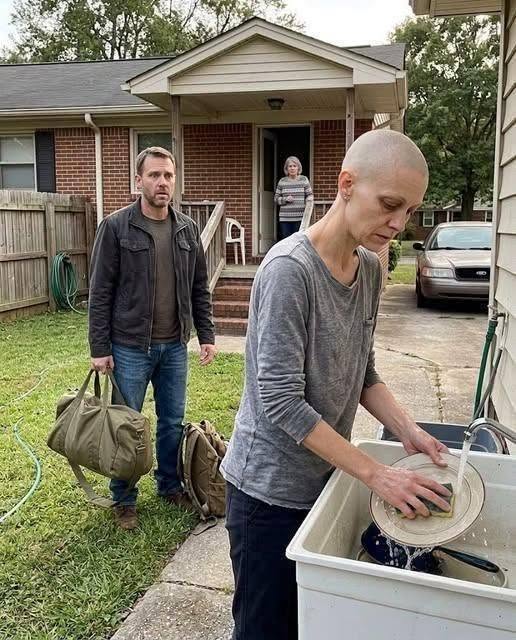
 

Je l’avais imaginée en train de m’attendre.

Je m’étais imaginé rentrer à la maison et la retrouver en bonne santé.

Je nous avais imaginés rire ensemble de toutes les choses que nous avions manquées.

À la place, je l’avais trouvée cachée dans un débarras, comme si elle était une étrangère dans sa propre maison.

Et le pire, c’était que c’était moi qui avais payé cette maison.

Près de cent mille dollars.

Chaque mois, pendant que j’étais à l’étranger, j’envoyais de l’argent à la maison.

Parfois, je renonçais à des choses dont j’avais moi-même besoin.

Parfois, je faisais des heures supplémentaires dès que j’en avais l’occasion.

Chaque fois que quelqu’un me demandait pour quoi j’économisais, je donnais toujours la même réponse.

« Ma famille. »

Je n’avais aucune idée que ma famille était justement la raison pour laquelle ma femme mourait de faim.

À 5 h 30 du matin, Gwen s’est réveillée.

Elle m’a regardé et a immédiatement essayé de se redresser.

« Tu ne devrais pas dormir ici », a-t-elle murmuré.

« Toi non plus. »

Elle a levé les yeux vers le plafond.

La peur a envahi son regard.

« Elles vont t’entendre. »

« Qu’elles entendent. »

Elle m’a attrapé le poignet.

« Non. »

Il y avait quelque chose dans sa voix qui m’a arrêté.

Ce n’était pas de la colère.

Ni de la honte.

C’était de la peur.

Une vraie peur.

J’ai baissé la voix.

« Gwen, regarde-moi. »

Elle refusait.

« Depuis combien de temps ça dure ? »

Elle a dégluti.

« S’il te plaît, ne crée pas de problèmes. »

« Depuis combien de temps ? »

Ses lèvres se sont mises à trembler.

« Presque trois ans. »

J’ai eu l’impression de recevoir un coup en pleine poitrine.

« Trois ans ? »

Elle a hoché la tête.

Je l’ai fixée.

« Pourquoi tu ne m’as rien dit ? »

« J’ai essayé. »

Mon cœur s’est arrêté.

« Qu’est-ce que tu veux dire, tu as essayé ? »

Elle a glissé la main sous le mince matelas et en a sorti un petit sac en plastique.

À l’intérieur, il y avait des morceaux de papier.

Des dizaines.

Des lettres.

Des reçus.

Des documents médicaux.

Et des photographies.

Elle les a déposés entre mes mains.

« Je t’ai écrit plus de trente fois. »

J’ai regardé la première lettre.

Mon nom était inscrit sur l’enveloppe.

C’était l’écriture de Gwen.

Mes mains se sont mises à trembler.

« Pourquoi je n’ai jamais reçu ça ? »

Elle a regardé vers la porte.

« Parce que Margaret disait qu’elle les envoyait. »

J’en ai ouvert une autre.

Gwen y avait écrit :

Je ne veux pas t’inquiéter. J’ai quelques problèmes de santé, mais j’essaie de rester forte.

Une autre disait :

Appelle-moi quand tu pourras. J’ai besoin d’entendre ta voix.

Une autre était plus courte.

Je crois que quelque chose ne va vraiment pas.

Je l’ai regardée.

« Pourquoi tu ne me l’as pas dit directement ? »

« J’ai essayé de t’appeler. »

« Combien de fois ? »

« Trop pour les compter. »

« Alors pourquoi je n’ai vu aucun de ces appels ? »

Elle a baissé les yeux.

« Paige a changé mon numéro. »

Mon estomac s’est noué.

« Quoi ? »

« Elle a dit que l’ancien téléphone était cassé. Elle m’en a donné un autre. Mais c’est elle qui le contrôlait. »

Je l’ai fixée.

« Paige contrôlait ton téléphone ? »

Gwen a hoché la tête.

« Elle me disait que tu étais occupé. Que tu étais sous pression. Elle disait que si je continuais à t’appeler, j’allais te distraire de ta mission. »

Je ne trouvais plus mes mots.

Quatre ans.

Quatre années à croire que je protégeais ma famille en restant concentré sur ma mission.

Pendant ce temps, quelqu’un décidait si ma femme avait le droit ou non de me parler.

Puis Gwen a dit quelque chose qui a rendu la pièce encore plus glaciale.

« Parfois, Paige restait debout à côté de moi pendant que je te parlais. »

Je me souvenais de ces appels.

Ces conversations trop courtes.

Ces silences étranges.

Ces moments où Gwen semblait nerveuse.

J’avais accusé la distance.

J’avais accusé la mauvaise connexion.

Je m’étais reproché de ne pas être là.

Mais maintenant, je comprenais.

Quelqu’un se tenait à côté d’elle.

Écoutait.

Contrôlait.

Surveillait.

J’ai regardé les documents médicaux.

Il y avait une date.

Cinq mois plus tôt.

Biopsie.

Examens complémentaires recommandés.

Consultation avec un spécialiste.

J’ai regardé Gwen.

« Pourquoi tu n’y es pas allée ? »

« Je n’avais pas les moyens. »

« Tu avais mon argent. »

Elle m’a adressé un sourire douloureux.

« Non. »

« Qu’est-ce que tu veux dire, non ? »

J’ai senti ma mâchoire se contracter.

« J’envoyais de l’argent tous les mois. »

« Je sais. »

« Alors où est-il passé ? »

Gwen a secoué la tête.

« Je ne sais pas. »

Cette réponse m’a dérangé.

« Tu ne sais pas ? »

« J’ai arrêté de demander. »

« Pourquoi ? »

Elle a fixé le sol.

« Parce que chaque fois que je demandais, Margaret disait que l’argent servait aux dépenses de la maison. »

« Quelles dépenses ? »

Elle a laissé échapper un petit rire.

Mais il n’y avait aucune joie dedans.

« Ses bijoux. »

Je l’ai regardée.

« Quoi ? »

« Les meubles. Le téléphone de Paige. Le pick-up. Les vêtements. Les rénovations. Le portail. »

J’ai levé les yeux vers le plafond.

Tout ce que j’avais admiré lorsque j’étais arrivé.

Le magnifique portail.

Le pick-up.

Les meubles.

Les sols brillants.

Les rideaux hors de prix.

Tout cela avait soudain une autre apparence.

Ça ne ressemblait plus à une maison.

Ça ressemblait à des preuves.

Je me suis levé.

« Où sont mes relevés bancaires ? »

L’expression de Gwen a changé.

« Pourquoi ? »

« Parce que je vais découvrir où est passé mon argent. »

Elle m’a attrapé la main.

« S’il te plaît. »

« Quoi ? »

« Ne leur dis rien pour l’instant. »

« Pourquoi ? »

Ses yeux se sont remplis de larmes.

« Parce qu’il y a autre chose. »

Je me suis rassis.

« Quoi ? »

Elle a hésité.

Puis elle a murmuré :

« Je ne pense pas que Margaret soit celle qui prenait les décisions. »

Je l’ai fixée.

« De quoi tu parles ? »

Gwen a regardé vers la porte.

« Ta mère ne savait pas tout. »

Un frisson m’a traversé.

« Alors qui savait ? »

Elle n’a pas répondu.

À la place, elle a sorti une autre enveloppe de sous le matelas.

Celle-ci était différente.

Aucun logo d’hôpital.

Aucun logo de banque.

Aucun tampon officiel.

Seulement mon nom.

Écrit à l’encre noire.

Je l’ai ouverte.

À l’intérieur se trouvait une seule photographie.

Mon cœur s’est arrêté.

On y voyait Margaret debout à côté d’un employé de banque.

Derrière eux se trouvait une pancarte portant le nom d’un établissement financier.

La photo datait de deux ans.

Et Margaret tenait un dossier entre ses mains.

Mon dossier.

Celui qui était lié à mes virements depuis l’étranger.

J’ai retourné la photographie.

Une phrase était écrite au dos.

Demande à ta mère à qui appartient vraiment le compte.

J’ai regardé Gwen.

« Qui t’a donné ça ? »

Elle a secoué la tête.

« Je ne sais pas. »

« Où l’as-tu trouvée ? »

« Quelqu’un l’a laissée devant ma porte. »

« Qui ? »

« Je n’ai jamais vu la personne. »

J’ai de nouveau regardé la photographie.

Quelque chose ne collait pas.

Si Margaret volait l’argent, pourquoi quelqu’un aurait-il laissé des preuves à Gwen ?

Et si quelqu’un voulait que je découvre la vérité…

Pourquoi attendre jusqu’à maintenant ?

J’ai entendu des pas à l’étage.

Gwen a immédiatement repris la photographie de mes mains.

« Cache-la. »

« Pourquoi ? »

« S’il te plaît. »

Je l’ai glissée dans ma poche.

Quelques secondes plus tard, la voix de Margaret a résonné dans toute la maison.

« Tout le monde est réveillé ? »

Le corps entier de Gwen s’est raidi.

Je ne l’avais jamais vue réagir de cette façon à une simple voix.

Margaret est descendue, vêtue d’un peignoir en soie.

Elle s’est arrêtée lorsqu’elle m’a vu.

Puis son expression a changé.

« Oh, mon chéri. »

Elle a souri.

Un sourire chaleureux et affectueux.

Le sourire d’une mère retrouvant son fils après des années de séparation.

Elle s’est précipitée vers moi.

Mais cette fois, je n’ai pas bougé.

Elle m’a quand même serré dans ses bras.

« Mon fils », a-t-elle murmuré. « Tu es enfin rentré. »

J’ai regardé par-dessus son épaule.

Le bracelet en or à son poignet reflétait la lumière du matin.

Je me souvenais d’avoir vu ce bracelet sur une photographie que Gwen m’avait montrée.

Cette photo datait de six mois.

Avant que Gwen ne devienne dangereusement maigre.

Avant la biopsie.

Avant le débarras.

J’ai baissé les yeux vers le bracelet.

Puis j’ai regardé ma mère.

« Joli bracelet. »

Elle a ri.

« Oh, ça ? »

Elle l’a touché fièrement.

« Paige me l’a acheté. »

Paige est apparue derrière elle.

Elle a souri.

« Maman mérite bien quelque chose de joli. »

Je lui ai rendu son sourire.

« Bien sûr qu’elle le mérite. »

Margaret m’a observé attentivement.

« Tu as dit hier que tu avais une bonne nouvelle. »

« C’est vrai. »

Ses yeux se sont immédiatement illuminés.

« L’indemnité ? »

« Oui. »

« Tu avais dit combien déjà ? »

« Presque quatre cent mille dollars. »

Paige s’est rapprochée.

« C’est incroyable. »

« Oui. »

« Qu’est-ce que tu comptes faire avec ? »

Je les ai regardées toutes les deux.

« Je n’ai pas encore décidé. »

Margaret a posé une main sur mon bras.

« Tu devrais investir dans la maison. »

J’ai souri.

« Peut-être. »

« Ou acheter une autre propriété », a proposé Paige.

« Peut-être. »

« On pourrait construire un autre étage », a ajouté Margaret.

« Peut-être. »

Puis j’ai demandé d’un ton détaché :

« Au fait, maman, tu es dans quelle banque ? »

Son sourire a disparu.

Juste une seconde.

Mais je l’ai remarqué.

« Pourquoi ? »

« J’ai besoin d’un conseil. »

Elle s’est rapidement ressaisie.

« Quelle banque ? »

J’ai cité le nom de la banque figurant sur la photographie.

Margaret est devenue parfaitement immobile.

Paige l’a regardée.

Une seule fois.

Mais ce seul regard m’a tout appris.

Elles communiquaient sans prononcer un mot.

Et soudain, j’ai compris que je me rapprochais de quelque chose.

Quelque chose de bien plus important que de l’argent volé.

J’ai passé le reste de la matinée à faire semblant que tout était normal.

J’ai pris le petit-déjeuner avec elles.

J’ai ri aux plaisanteries de Paige.

J’ai écouté Margaret décrire les rénovations qu’elle voulait faire.

Mais intérieurement, je comptais.

Chaque détail.

Chaque contradiction.

Chaque regard nerveux.

À midi, Paige a quitté la maison.

J’ai attendu dix minutes.

Puis je l’ai suivie.

Elle a pris la direction de la ville.

Je suis resté à bonne distance.

Après vingt minutes, elle s’est arrêtée devant un petit immeuble de bureaux.

Je l’ai regardée entrer.

Le bâtiment n’avait rien de particulier.

Aucune grande enseigne.

Aucun agent de sécurité.

Seulement une structure grise et ordinaire.

J’ai attendu.

Dix minutes.

Vingt.

Puis j’ai vu un homme sortir.

Il portait un dossier.

Paige a regardé autour d’elle avant de le prendre.

Puis ils se sont serré la main.

J’ai pris une photo.

L’homme s’est retourné.

Pendant une seconde, son visage était parfaitement visible.

Je l’ai reconnu.

Il était déjà venu chez moi.

Deux ans plus tôt.

Margaret me l’avait présenté comme « quelqu’un qui aide avec les finances de la famille ».

Mais je me souvenais d’autre chose.

Il portait une montre de style militaire.

Le même type de montre que certains membres du personnel avec lesquels j’avais travaillé à l’étranger.

Cela ne pouvait pas être une coïncidence.

J’ai attendu que Paige reparte.

Puis je suis entré dans le bâtiment.

La réceptionniste m’a regardé.

« Je peux vous aider ? »

« Je cherche quelqu’un. »

« Qui ? »

Je lui ai donné le nom de l’homme.

Son expression a changé.

« Je suis désolée. Il n’est pas disponible. »

« Il travaille ici ? »

Elle a hésité.

« Pas exactement. »

« Qu’est-ce que ça veut dire ? »

Avant qu’elle puisse répondre, un homme plus âgé est sorti du couloir.

Il m’a regardé.

Ses yeux se sont écarquillés.

Puis il a prononcé une phrase que je n’oublierai jamais.

« Vous êtes le fils de Margaret. »

Je me suis figé.

« Comment vous me connaissez ? »

Il n’a pas répondu.

À la place, il s’est tourné vers la réceptionniste.

« Fermez la porte. »

Elle l’a fait.

Puis il m’a regardé à nouveau.

« Vous n’auriez pas dû venir ici. »

« Pourquoi ? »

Il a baissé la voix.

« Parce que si vous commencez à poser des questions, ils sauront que vous avez découvert la vérité. »

Mon cœur s’est mis à battre violemment.

« Qui ça, ils ? »

Il m’a regardé droit dans les yeux.

« Votre mère n’est pas la seule personne à avoir utilisé votre argent. »

Je n’arrivais plus à respirer.

« Qu’est-ce que ça veut dire ? »

Il s’est rapproché.

« Votre femme n’était pas la seule personne qu’ils maintenaient malade. »

Je l’ai fixé.

« Quoi ? »

Il a jeté un coup d’œil vers la porte fermée.

Puis il a murmuré :

« Il existe un autre compte. »

« Au nom de qui ? »

Il m’a regardé d’une façon qui m’a glacé le sang.

« Au vôtre. »

Il m’a tendu une enveloppe scellée.

« Ce compte a été ouvert à votre nom il y a quatre ans. »

J’ai regardé l’enveloppe.

Mon nom était imprimé dessus.

Mais je n’avais jamais ouvert ce compte.

Je n’avais jamais donné mon autorisation.

Je n’avais jamais rien signé.

« Qu’est-ce qu’il y a à l’intérieur ? »

« Des preuves. »

« Des preuves de quoi ? »

Il a hésité.

Puis il a répondu :

« Que quelqu’un se prépare depuis longtemps au jour où vous rentreriez chez vous. »

J’ai ouvert l’enveloppe.

À l’intérieur se trouvait un relevé bancaire.

La première ligne m’a engourdi les mains.

VIREMENT : 25 000 $

Le nom du bénéficiaire n’était pas Margaret.

Ce n’était pas Paige.

Ce n’était pas Gwen.

C’était un nom que je connaissais.

Un nom auquel j’avais fait confiance.

Un nom lié à mes années passées à l’étranger.

Je le fixais.

Puis mon téléphone a sonné.

C’était Gwen.

J’ai immédiatement décroché.

Sa voix tremblait.

« Où es-tu ? »

« Je suis en ville. »

« Tu dois rentrer à la maison. »

« Pourquoi ? »

Il y a eu un silence.

Puis elle a murmuré :

« Paige sait que tu as découvert le compte. »

Mon estomac s’est noué.

« Comment ? »

« Je ne sais pas. »

« Où es-tu ? »

« À la maison. »

« Verrouille la porte. »

« Je l’ai déjà fait. »

« Gwen… »

Puis j’ai entendu un violent fracas à travers le téléphone.

Elle a crié.

La communication a été coupée.

J’ai couru.

Je me fichais de savoir qui pouvait me voir.

Je me fichais des questions que quelqu’un pourrait me poser.

Pendant quatre ans, j’avais cru que la partie la plus difficile de mon retour serait de laisser le champ de bataille derrière moi.

Je m’étais trompé.

La véritable bataille m’attendait dans ma propre maison.

Et cette fois, l’ennemi savait exactement qui j’aimais.

PARTIE 3 — LA VÉRITÉ QU’ILS NE VOULAIENT JAMAIS QUE JE DÉCOUVRE

J’ai roulé vers la maison comme un homme qui avait oublié comment respirer.

Le dernier cri de Gwen tournait encore et encore dans ma tête.

Puis l’appel s’était coupé.

Je l’ai rappelée.

Aucune réponse.

Encore une fois.

Rien.

J’ai appuyé davantage sur l’accélérateur.

Chaque seconde ressemblait à une heure.

Lorsque je suis enfin arrivé à la maison, le portail était ouvert.

Ce magnifique portail que j’avais payé.

Celui dont j’avais autrefois été fier.

Maintenant, il était grand ouvert comme un avertissement.

Je me suis précipité à l’intérieur.

« GWEN ! »

Aucune réponse.

Le salon était vide.

Les meubles hors de prix étaient toujours là.

La télévision était encore allumée.

Un verre avait été renversé sur le sol.

Puis j’ai entendu quelqu’un pleurer.

À l’arrière de la maison.

J’ai couru dehors.

Et je me suis arrêté net.

Gwen était assise par terre près de la bassine.

Ses mains tremblaient.

Il y avait du sang sur l’une de ses manches.

Mais elle était vivante.

Je me suis laissé tomber à côté d’elle.

« Qui t’a fait ça ? »

Elle m’a regardé.

« Paige. »

Tout mon corps est devenu glacé.

« Où est-elle ? »

« Elle est partie. »

« Qu’est-ce qui s’est passé ? »

Gwen a montré le débarras.

« L’enveloppe. »

J’ai suivi son doigt.

Le matelas avait été jeté sur le côté.

Les vêtements étaient éparpillés partout.

La petite cachette dans laquelle Gwen conservait ses documents avait été vidée.

La photographie avait disparu.

Les dossiers médicaux avaient disparu.

Les lettres avaient disparu.

Mais une chose était toujours là.

Un petit carnet.

Gwen l’a ramassé.

« Celui-là, je l’avais caché ailleurs. »

Je l’ai ouvert.

À l’intérieur, il y avait des dates.

Des montants.

Des noms.

Des virements bancaires.

Et à côté de chaque virement, une courte note.

Mon argent.

Mon argent avait été réparti entre plusieurs comptes.

Certains appartenaient à Margaret.

D’autres à Paige.

Mais il y avait également des virements vers une société dont je n’avais jamais entendu parler.

J’ai reconnu le nom figurant sur le relevé bancaire.

« C’est quoi cette société ? »

Gwen a secoué la tête.

« Je ne sais pas. »

J’ai tourné les pages.

Puis j’ai vu quelque chose qui m’a glacé le sang.

Cette société recevait de l’argent tous les mois depuis presque quatre ans.

Exactement pendant les mêmes mois où j’envoyais de l’argent à la maison.

Et presque exactement les mêmes montants.

Quelqu’un ne s’était pas contenté de me voler.

Quelqu’un avait tout planifié.

J’ai appelé l’homme du bureau financier.

Il a immédiatement décroché.

« Vous l’avez trouvée ? »

« Trouvé qui ? »

Il y a eu un silence.

« La personne qui a ouvert le compte. »

J’ai regardé Gwen.

« Dites-moi tout. »

Il a soupiré.

« J’espérais que vous n’auriez pas à l’apprendre de cette façon. »

« Dites-moi. »

« Il y a quatre ans, quelqu’un a utilisé vos documents d’identité pour créer un compte financier secondaire. »

« Qui ? »

« Je n’en suis pas absolument certain. »

« Mais vous avez des dossiers. »

« Oui. »

« Alors dites-moi. »

Un nouveau silence.

Finalement, il a répondu :

« Les documents d’autorisation ont été signés par votre mère. »

J’ai fermé les yeux.

Margaret.

Pendant quelques secondes, je n’ai pas pu bouger.

Gwen a pris ma main.

Je l’ai serrée.

« Ma signature a été falsifiée ? »

« Oui. »

« Et l’argent ? »

« Il a transité par plusieurs comptes avant d’être transféré vers une société d’investissement. »

« Quelle société ? »

Il m’a donné son nom.

C’était la même société que celle inscrite dans le carnet de Gwen.

J’ai senti quelque chose se briser en moi.

Ma mère n’avait pas simplement dépensé mon argent.

Elle avait construit tout un système financier autour de cet argent.

Mais une question restait sans réponse.

« Pourquoi ? »

L’homme a hésité.

« Vous devez demander à Margaret. »

J’ai raccroché.

Lorsque je suis retourné à l’intérieur, Margaret se tenait dans le couloir.

Elle avait tout entendu.

Pour la première fois depuis mon retour, elle ne faisait plus semblant.

Plus de sourire élégant.

Plus d’étreinte maternelle.

Plus d’excuses.

Seulement du silence.

Paige se tenait derrière elle.

Ses yeux étaient rouges.

Je les ai regardées toutes les deux.

« Depuis combien de temps ? »

Margaret a baissé la tête.

« S’il te plaît, écoute-moi. »

« Depuis combien de temps ? »

« Quatre ans. »

J’ai laissé échapper un rire amer.

« Quatre ans. »

Margaret s’est mise à pleurer.

« Ça ne devait pas se passer comme ça. »

« Tu as volé mon argent. »

« Nous l’avons investi. »

« Tu as volé mon argent. »

« J’essayais de protéger la famille. »

J’ai montré Gwen du doigt.

« De qui ? D’elle ? »

Margaret n’a rien répondu.

Je me suis rapproché.

« Elle était en train de mourir dans un débarras pendant que vous viviez à l’étage. »

« Nous ne savions pas que c’était aussi grave. »

Gwen a parlé pour la première fois.

« Je te l’ai dit. »

Margaret a détourné le regard.

« Tu m’as suppliée de te donner de l’argent. »

« Oui. »

« Tu as dit que tu avais besoin d’un spécialiste. »

« Oui. »

« Et j’ai refusé. »

La voix de Gwen s’est brisée.

« Tu m’as traitée de menteuse. »

Margaret s’est mise à pleurer encore plus fort.

Mais je n’arrivais plus à éprouver de compassion pour elle.

Plus maintenant.

Puis Paige a parlé.

« On pensait que tu ne reviendrais jamais. »

La pièce est devenue silencieuse.

Je l’ai regardée.

« Quoi ? »

Elle a couvert son visage de ses mains.

« On pensait que tu resterais à l’étranger. »

« Pourquoi ? »

« Parce que tout était devenu compliqué. »

« Compliqué ? »

Elle a regardé Gwen.

« Maman disait que si tu revenais, tu commencerais à poser des questions. »

J’ai fixé ma sœur.

« Alors pourquoi avez-vous gardé la maison ? »

« Parce que l’argent était déjà investi. »

« Combien ? »

Elle n’a pas répondu.

« COMBIEN ? »

Margaret a finalement murmuré :

« Presque trois cent mille dollars. »

Mes jambes ont failli lâcher.

« Trois cent mille dollars ? »

« L’argent de départ », a expliqué Margaret. « Il a fructifié. »

Je l’ai fixée.

« Combien y a-t-il maintenant ? »

Elle n’a rien dit.

J’ai compris.

« Il reste encore de l’argent. »

Paige a hoché la tête.

« Oui. »

« Où ? »

Elle s’est mise à pleurer.

« À l’étranger. »

J’ai regardé Gwen.

Puis ma mère.

Puis ma sœur.

Et soudain, j’ai compris la véritable raison pour laquelle elles s’étaient montrées si enthousiastes lorsque je leur avais annoncé les 400 000 $ supplémentaires.

Elles n’étaient pas heureuses que je sois rentré.

Elles étaient heureuses parce qu’elles croyaient que l’argent allait continuer d’arriver.

Je me suis approché de Margaret.

Elle a reculé.

« N’aie pas peur de moi », ai-je dit.

« Je sais que tu es en colère. »

« Je ne suis pas en colère. »

J’ai regardé Gwen.

« J’ai le cœur brisé. »

Ces mots lui ont fait plus mal que n’importe quel cri.

Le lendemain matin, j’ai emmené Gwen à l’hôpital.

Cette fois, elle n’y est pas allée seule.

Je suis resté à ses côtés pendant chaque examen.

Chaque scanner.

Chaque consultation.

Lorsque le médecin est finalement entré avec les résultats, Gwen a serré ma main si fort que ses doigts sont devenus blancs.

Le médecin nous a regardés.

« La tumeur peut être traitée. »

Gwen s’est mise à pleurer.

J’ai fermé les yeux.

Pour la première fois depuis des années, je me suis autorisé à pleurer moi aussi.

Pas parce que tout était réglé.

Ce n’était pas le cas.

Mais parce que, pour la première fois, nous avions de l’espoir.

Le traitement serait difficile.

Il y aurait des opérations.

Des mois de convalescence.

Des factures.

Mais Gwen allait se battre.

Et j’allais me battre à ses côtés.

L’enquête sur l’argent a commencé peu après.

Les documents falsifiés ont été signalés.

Les comptes ont été gelés.

La société d’investissement a fait l’objet d’une enquête.

Une partie de l’argent a été récupérée.

Pas tout.

Mais suffisamment.

Margaret et Paige ont dû répondre de leurs actes.

La magnifique maison a finalement été vendue.

Le pick-up a été vendu.

Les bijoux ont été vendus.

Les meubles coûteux ont disparu les uns après les autres.

Tout ce qu’elles avaient construit avec mon argent leur a été retiré.

Mais je n’ai pas gardé la maison.

Je n’en voulais pas.

Cette maison contenait trop de souvenirs.

Trop de mensonges.

À la place, j’ai loué un petit appartement pour Gwen et moi, près de son centre de traitement.

Ce n’était pas magnifique.

Il n’y avait pas de portail.

Il n’y avait pas deux étages.

Aucun meuble hors de prix.

Mais chaque soir, Gwen dormait dans une vraie chambre.

À côté de moi.

Et cela valait plus que n’importe quelle maison.

Quelques mois plus tard, ses cheveux ont commencé à repousser.

La première fois que j’ai remarqué les minuscules mèches apparaissant sur son cuir chevelu, j’ai souri.

Elle m’a surpris en train de la regarder.

« Quoi ? »

J’ai doucement touché sa tête.

« Rien. »

Elle a ri.

« Tu continues de me regarder comme si j’étais bizarre. »

« Non. »

J’ai embrassé son front.

« Je te regarde comme quelqu’un qui a failli te perdre. »

Elle est devenue silencieuse.

Puis elle a murmuré :

« Tu es rentré. »

Je l’ai serrée contre moi.

« J’aurais dû rentrer plus tôt. »

Elle a secoué la tête.

« Tu es revenu au moment où tu devais revenir. »

J’ai repensé à mes quatre années à l’étranger.

À l’argent.

Aux lettres qui ne m’étaient jamais parvenues.

Aux appels surveillés.

Aux visites à l’hôpital qu’elle avait faites seule.

Aux cheveux qu’elle avait vendus pour 150 $.

Et à ce débarras dans lequel ma femme avait appris à devenir invisible.

Pendant des années, j’avais cru que protéger ma famille signifiait envoyer de l’argent à la maison.

J’ai enfin compris quelque chose.

L’argent peut construire une maison.

Il peut acheter des meubles.

Il peut acheter des voitures.

Il peut mettre de l’or autour du poignet de quelqu’un.

Mais il ne peut pas racheter les années perdues à faire confiance aux mauvaises personnes.

Un soir, Gwen et moi étions assis devant notre appartement.

Ses cheveux avaient commencé à repousser de façon irrégulière.

Elle les a touchés nerveusement.

« J’ai l’air affreuse. »

J’ai souri.

« Tu as l’air vivante. »

Elle m’a regardé.

Puis elle a souri.

« Ça me va. »

Nous sommes restés assis en silence.

Pour une fois, ce silence ne faisait pas peur.

Il était paisible.

Mon téléphone a vibré.

J’avais reçu un nouveau message.

Il provenait d’un numéro inconnu.

Je l’ai ouvert.

Il n’y avait qu’une seule phrase :

Tu as récupéré l’argent, mais tu ne sais toujours pas qui a lancé tout ça.

J’ai fixé l’écran.

Mon cœur s’est mis à battre plus vite.

J’ai regardé Gwen.

Elle a remarqué mon expression.

« Qu’est-ce qu’il y a ? »

J’ai verrouillé mon téléphone.

« Rien. »

Elle a froncé les sourcils.

Je me suis forcé à sourire.

Parce qu’il y avait encore une chose que je ne lui avais pas dite.

L’homme du bureau financier avait raison.

Margaret avait falsifié les documents.

Paige avait aidé à déplacer l’argent.

Mais quelqu’un d’autre avait élaboré le plan initial.

Quelqu’un qui savait exactement quand j’allais être envoyé en mission.

Quelqu’un qui savait exactement combien d’argent j’allais recevoir.

Quelqu’un qui savait que Gwen était malade avant même que moi, je ne le sache.

Et maintenant, cette personne savait que j’avais découvert la vérité.

J’ai regardé les cheveux de Gwen qui repoussaient.

Son sourire fatigué, mais rempli d’espoir.

Puis j’ai supprimé le message.

Pas parce que j’avais peur.

Mais parce que cette fois, je savais exactement ce qui comptait vraiment.

Gwen.

Ma femme.

Ma famille.

La femme qui avait survécu quatre ans sans moi.

J’étais rentré en pensant retrouver la vie que j’avais laissée derrière moi.

À la place, j’avais découvert que les personnes en qui j’avais confiance l’avaient détruite.

Mais elles avaient oublié une chose.

Elles pouvaient voler mon argent.

Elles pouvaient me mentir.

Elles pouvaient cacher la vérité.

Mais elles ne pourraient jamais m’enlever la raison pour laquelle j’étais rentré.

Et tandis que Gwen posait sa tête contre mon épaule, j’ai enfin compris la plus grande vérité de toutes :

Parfois, rentrer chez soi ne signifie pas retrouver la vie que l’on imaginait.

Parfois, cela signifie retrouver la personne que l’on était censé sauver.

Et pour la première fois depuis quatre ans…

Je savais que j’étais exactement là où je devais être.

Pendant quatre ans, j’ai envoyé près de 100 000 $ Read More
Ma fille m’a enfermée dans ma chambre le jour de mes 80 ans

PARTIE 3

Je les ai fixées pendant plusieurs secondes.

Je n’avais pas touché à ces clés depuis des années.

Mais je me souvenais parfaitement de ce que chacune d’elles ouvrait.

La clé en laiton appartenait au portail latéral.

La clé argentée ouvrait l’ancien bureau.

Et la clé noire…

La clé noire ouvrait la pièce dont Lauren avait oublié l’existence.

La pièce qui contenait la seule chose qu’elle essayait depuis trois ans de me convaincre d’abandonner.

Mes dossiers.

Les documents originaux de mon entreprise.

Les titres de propriété.

Mes anciens contrats.

Mes relevés financiers.

Et surtout, les documents prouvant que Lauren n’avait jamais possédé cette maison.

Pas une seule brique.

Pas une seule fenêtre.

Pas même un seul brin d’herbe du jardin.

Elle s’était simplement installée dans ma vie si progressivement qu’elle avait fini par se comporter comme si elle avait déjà hérité de tout alors que j’étais encore en vie.

J’ai pris la clé noire.

Puis j’ai de nouveau regardé par la fenêtre.

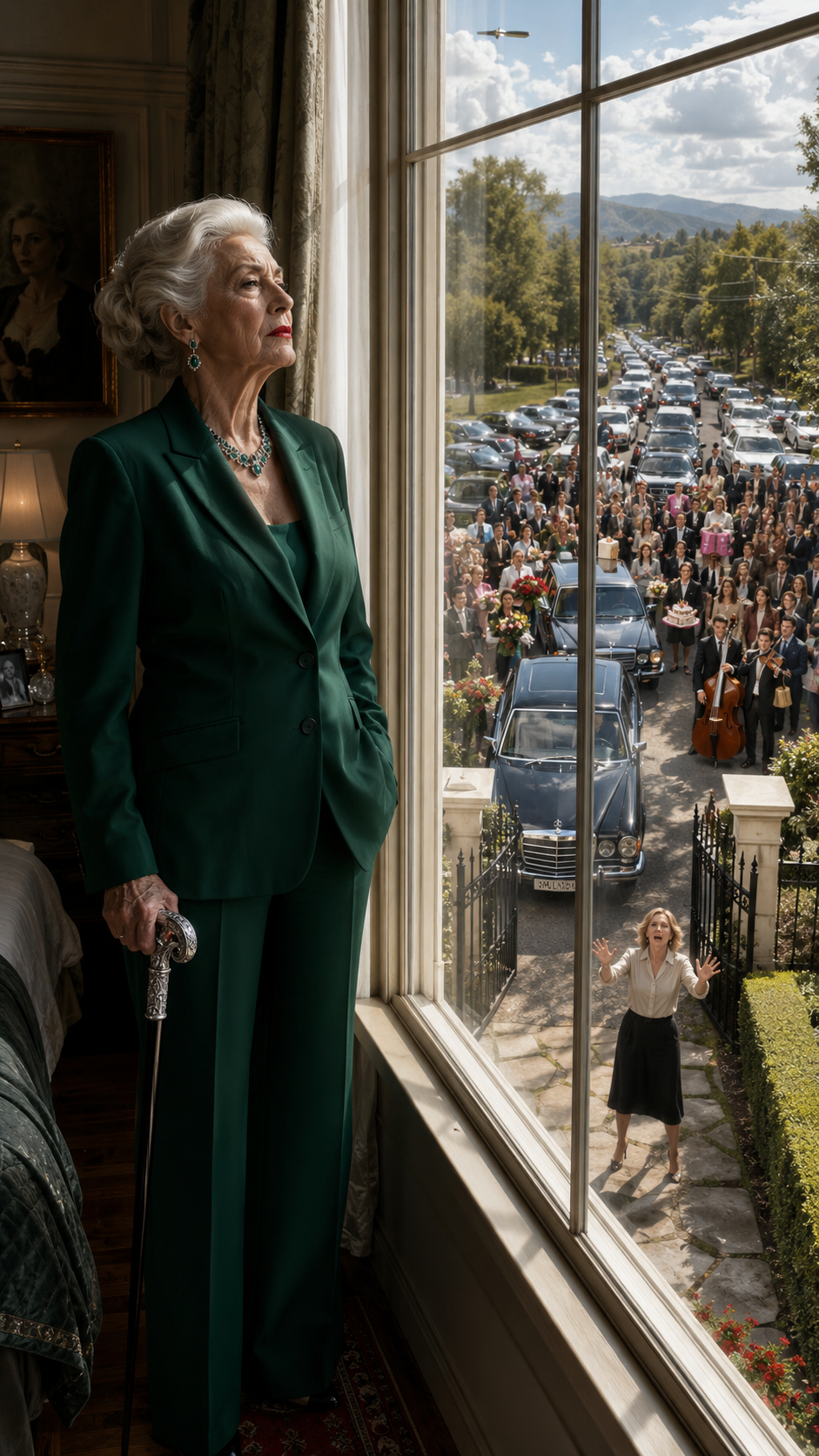
La rue était presque entièrement bloquée.

Les gens sortaient de leurs voitures.

Certains portaient des fleurs.

D’autres des cadeaux emballés.

Un homme transportait une énorme boîte blanche qui, je le savais immédiatement, contenait l’un de mes gâteaux préférés.

Une femme que je reconnaissais d’il y a vingt ans se tenait près du portail en pleurant.

Puis j’ai aperçu quelque chose qui m’a serré le cœur.

Une petite fille tenait un bouquet presque aussi grand qu’elle.

À côté d’elle se trouvait un homme âgé avec un déambulateur.

M. Gregory.

Mon plus ancien fournisseur.

Il a levé les yeux vers ma fenêtre.

Et malgré la distance, j’ai su qu’il me voyait.

Il a levé une main.

J’ai levé la mienne.

Puis il a montré la porte d’entrée.

Il était en train de me dire :

Nous sommes là.

N’aie pas peur.

J’ai souri.

Pour la première fois de cette matinée, j’ai souri.

Puis j’ai entendu quelqu’un frapper violemment.

« Maman ! »

Lauren.

Sa voix venait du couloir.

« Maman, reste dans ta chambre ! »

J’ai glissé les clés dans ma poche.

« Maman ! »

Elle a secoué la poignée.

« Tu dois m’écouter ! »

Je me suis dirigée vers la porte.

« Lauren. »

Silence.

« Je sais que tu es contrariée, a-t-elle dit rapidement. Mais c’est exactement pour ça que je t’ai demandé de rester à l’étage. »

J’ai posé la main sur la poignée verrouillée.

« Ouvre la porte. »

« Non. »

« Ouvre-la. »

« Tu es confuse. »

Ce mot.

Encore.

Toujours ce mot.

Confuse.

J’ai regardé le plafond.

Puis j’ai ri doucement.

Pas parce qu’il y avait quoi que ce soit de drôle.

Mais parce que soudain, toute la situation me paraissait absurde.

Ma fille avait enfermé une femme de quatre-vingts ans dans une chambre le jour de son anniversaire.

Et elle croyait encore que c’était elle qui contrôlait la situation.

« Lauren, ai-je dit calmement, ouvre cette porte. »

« Tu dois te reposer. »

« Ouvre-la. »

« Maman… »

« J’ai dit : ouvre-la. »

Elle ne l’a pas fait.

Alors j’ai reculé.

J’ai regardé le vieux panneau de bois sur le mur, à côté de ma coiffeuse.

Puis j’ai souri.

« Très bien. »

« Quoi ? »

« Rien. »

Je me suis éloignée de la porte.

J’entendais Lauren murmurer quelque chose à quelqu’un en bas.

Elle disait probablement aux invités que je dormais.

Probablement que j’étais devenue instable.

Probablement qu’elle essayait de me protéger.

Elle n’avait aucune idée de ce qui allait se passer.

Je me suis dirigée vers le petit meuble sous la fenêtre.

Derrière se trouvait un autre compartiment.

À l’intérieur, il y avait un vieux téléphone.

Pas un smartphone.

Pas un appareil moderne.

Un téléphone fixe.

Je l’avais conservé et maintenu en service pour les urgences.

Lauren l’avait oublié parce qu’elle pensait que personne ne connaissait le numéro.

J’ai décroché le combiné.

Puis j’ai composé un numéro.

La personne a répondu à la deuxième sonnerie.

« Adelaide ? »

J’ai souri.

« Bonjour, Thomas. »

Il y eut une pause.

Puis une profonde inspiration.

« On commençait à s’inquiéter. »

« Je sais. »

« Est-ce que ça va ? »

« Maintenant, oui. »

« La porte est toujours verrouillée ? »

« Oui. »

« Tu veux qu’on appelle la police ? »

J’ai regardé vers le couloir.

Puis vers la fenêtre.

« Non. »

Silence.

« Tu es sûre ? »

« J’ai passé quatre-vingts ans à apprendre à gérer les gens difficiles. »

J’ai souri.

« Cette fois, il se trouve simplement que c’est ma fille. »

Thomas a laissé échapper un petit rire.

Puis sa voix est redevenue sérieuse.

« Qu’est-ce que tu veux qu’on fasse ? »

J’ai regardé les cinquante voitures devant la maison.

« Rien, pour l’instant. »

« Adelaide… »

« Je veux que tout le monde attende. »

« Attende quoi ? »

J’ai regardé la clé noire dans ma main.

« Moi. »

À 10 h 17, Lauren a finalement déverrouillé la porte.

Elle ne l’a ouverte que de quelques centimètres.

« Tu es plus calme ? »

J’étais assise sur le bord de mon lit.

Ma canne reposait à côté de moi.

Mon sac à main était posé sur mes genoux.

Elle m’a regardée avec méfiance.

« Où as-tu trouvé ce sac ? »

« Il est à moi. »

« Tu n’en as pas besoin. »

« Je ne suis pas d’accord. »

Elle a poussé la porte.

« Maman, s’il te plaît, ne rends pas les choses difficiles. »

Je l’ai regardée.

« Qui sont tous ces gens dehors ? »

Son visage a changé.

Seulement pendant une fraction de seconde.

Mais je l’ai vu.

La peur.

Puis elle s’est ressaisie.

« Ce sont des voisins. »

« M. Gregory n’est pas mon voisin. »

« Il passait dans le coin. »

« La famille Ramirez non plus. »

« Maman, les gens ont entendu parler de la fête et sont venus quand même. »

« Donc, il y a des invités. »

« Non. »

Elle avait répondu trop vite.

J’ai souri.

« Intéressant. »

« Quoi ? »

« Tu viens de dire que des gens sont venus. »

« Oui, mais… »

« Donc, il y a des invités. »

« Non. Ils n’entreront pas. »

« Pourquoi ? »

« Parce que je leur ai dit que tu ne te sentais pas bien. »

Je l’ai fixée.

« Vraiment ? »

« Oui. »

« Tu leur as dit que j’avais annulé la fête ? »

Son regard a vacillé.

« Je leur ai dit que la fête n’aurait pas lieu. »

« Tu leur as dit pourquoi ? »

« Je ne voulais pas t’humilier. »

Je me suis levée.

Elle s’est immédiatement avancée.

« Maman, assieds-toi. »

Je l’ai ignorée.

Elle a essayé de me saisir le bras.

Je me suis dégagée.

Pour la première fois depuis des années, j’ai vu un véritable choc sur son visage.

« Tu me fais mal », ai-je dit.

« J’essayais seulement de t’aider. »

« Non. »

J’ai pris ma canne.

« Tu essayais de me contrôler. »

Sa mâchoire s’est crispée.

« Tu es devenue très difficile ces derniers temps. »

« Et toi, tu as pris beaucoup trop l’habitude de me donner des ordres. »

« Parce qu’il faut bien que quelqu’un prenne les choses en main. »

« C’est moi qui t’ai élevée. »

« Ça ne veut pas dire que tu sais tout. »

« Non, ai-je répondu. »

« Ça veut dire que je te connais. »

Elle m’a fixée.

Je me suis dirigée vers la porte.

Elle s’est placée devant.

« Tu ne descendras pas. »

« Pousse-toi. »

« Non. »

« Lauren. »

« Tu vas te ridiculiser. »

Je l’ai regardée.

Puis j’ai baissé les yeux vers mon tailleur vert émeraude.

« Je suis déjà habillée pour mon anniversaire. »

« Tu ne comprends pas. »

« Oh, je comprends parfaitement. »

Je me suis rapprochée.

« Tu as dit à cinquante personnes que je n’avais personne. »

Elle a dégluti.

« Tu m’as enfermée dans ma chambre. »

« J’essayais de te protéger. »

« Tu as annulé mon repas. »

« Tu n’aurais pas pu supporter autant de monde. »

« Tu as fait retirer les tables. »

« Parce qu’il n’y avait plus de fête. »

« Tu m’as dit que personne ne voulait voir une vieille femme. »

Son visage est devenu pâle.

J’ai baissé la voix.

« Et maintenant, cinquante voitures sont garées devant ma maison. »

Elle n’a rien répondu.

« Pousse-toi. »

Elle n’a pas bougé.

Alors j’ai glissé la main dans ma poche.

J’ai sorti la clé en laiton.

Et je l’ai levée devant elle.

Ses yeux se sont écarquillés.

« Qu’est-ce que c’est ? »

« La clé du portail latéral. »

« Et alors ? »

« Alors je vais sortir. »

« Tu ne peux pas. »

« Si. »

« Tu as quatre-vingts ans. »

« Je sais. »

« Tu pourrais tomber. »

« Peut-être. »

« Il faut que quelqu’un soit avec toi. »

J’ai souri.

« Cinquante personnes m’attendent. »

Puis je suis passée devant elle.

Elle a essayé de m’arrêter.

Mais cette fois, elle a hésité.

Et cette hésitation m’a suffi.

J’ai atteint l’escalier.

Soudain, la maison me semblait différente.

C’était toujours ma maison.

Mais pendant des années, Lauren avait réussi à me faire sentir comme une invitée chez moi.

Plus maintenant.

Je suis descendue lentement.

Une marche.

Puis une autre.

Quand j’ai atteint le hall, j’entendais les voix dehors.

Des rires.

Des gens qui criaient mon nom.

Quelqu’un applaudissait.

Puis quelqu’un a crié :

« Joyeux anniversaire, Adelaide ! »

Mes yeux se sont remplis de larmes.

Lauren descendait derrière moi.

« Maman… »

Je me suis retournée.

« Non. »

Elle s’est arrêtée.

Puis la porte d’entrée s’est ouverte.

Et la première personne est entrée.

M. Gregory.

Il portait un immense bouquet de roses blanches.

Il m’a regardée.

Puis a regardé Lauren.

Puis de nouveau moi.

« Joyeux anniversaire, patronne. »

J’ai ri.

« Patronne ? »

« Tu seras toujours ma patronne. »

Il m’a embrassée sur la joue.

Puis il a murmuré :

« On t’attendait. »

J’ai regardé derrière lui.

Tout le jardin était rempli de monde.

Pas cinquante personnes.

Davantage.

Il y avait d’anciens employés.

D’anciens clients.

Des familles dont j’avais organisé les repas de mariage.

Des enfants qui autrefois s’étaient assis dans ma cuisine pour manger les restes de gâteau.

Des gens que je n’avais pas vus depuis dix, quinze, parfois même vingt ans.

Et il y avait des tables.

Des dizaines.

Déjà décorées.

Quelqu’un avait réussi à apporter des fleurs.

Quelqu’un d’autre avait apporté de la musique.

Il y avait de la nourriture.

Des gâteaux.

Des photographies suspendues à des fils entre les arbres.

Des photographies de ma vie.

De mon entreprise.

De mes enfants.

De mes petits-enfants.

De ma cuisine.

De mon premier camion de livraison.

De ma minuscule boutique.

De ma vieille enseigne.

Et juste au centre se trouvait une immense photo de moi à vingt-neuf ans, debout devant la toute première cuisine professionnelle que j’avais louée.

En dessous, quelqu’un avait écrit :

« Elle a nourri toute une ville avant même que la ville comprenne à quel point elle avait besoin d’elle. »

J’ai porté une main à ma bouche.

« Qui a fait tout ça ? »

Une voix derrière moi a répondu :

« Nous. »

Je me suis retournée.

Thomas.

Mon ancien associé.

Il s’est avancé vers moi avec sa propre canne.

Je ne l’avais pas vu depuis six ans.

« Toi… »

Il a souri.

« Joyeux anniversaire. »

Je l’ai serré dans mes bras.

Pendant quelques instants, j’ai tout oublié.

La porte verrouillée.

Les insultes.

Les années de contrôle.

Tout a disparu sous les acclamations.

Puis quelqu’un a crié :

« Un discours ! »

Tout le monde a ri.

J’ai secoué la tête.

« Non. »

« Si ! »

« Pas de discours. »

M. Gregory a levé son verre.

« Tu as fait des discours à trois cents mariages. »

« Ça ne veut pas dire que j’aimais ça. »

Tout le monde a de nouveau ri.

J’ai regardé autour de moi.

Puis j’ai remarqué Lauren.

Elle se tenait près de la porte.

Seule.

Personne ne lui parlait.

Personne ne la regardait.

Et j’ai compris quelque chose.

Elle n’était pas furieuse parce que la fête avait réussi.

Elle était terrifiée parce que les personnes qui venaient d’entrer dans mon jardin étaient précisément celles qu’elle essayait depuis des années de convaincre que j’étais incapable de prendre des décisions.

Ils me voyaient.

Clairement.

Et pour elle, c’était dangereux.

La première personne à venir me voir après le gâteau fut mon ancien comptable, Walter.

Il avait maintenant quatre-vingt-trois ans.

Il m’a tendu une enveloppe.

« Je ne savais pas si je devais apporter ça aujourd’hui. »

« Qu’est-ce que c’est ? »

« Quelque chose que tu m’avais demandé de conserver. »

J’ai froncé les sourcils.

« Quand ? »

« Il y a vingt ans. »

Il a jeté un regard vers Lauren.

Puis vers moi.

« Tu m’avais dit de ne jamais le sortir sauf si tu étais convaincue que quelqu’un essayait de prendre le contrôle de tes affaires. »

Mon cœur s’est arrêté.

J’ai regardé l’enveloppe.

Mon nom était écrit dessus.

De ma propre écriture.

ADELAIDE — À OUVRIR UNIQUEMENT SI NÉCESSAIRE.

Je l’ai fixée.

Puis j’ai regardé Walter.

« Qu’est-ce qu’il y a dedans ? »

« Tu le sauras en le lisant. »

J’ai regardé vers Lauren.

Elle nous observait.

Son visage avait perdu toute couleur.

J’ai compris immédiatement.

Elle savait.

Peut-être pas tout.

Mais suffisamment.

J’ai ouvert l’enveloppe.

À l’intérieur se trouvait une lettre.

Je l’ai dépliée.

Et dès la première ligne, mes mains ont commencé à trembler.

Si tu lis ceci, Adelaide, cela signifie que quelqu’un a commencé à prendre à ta place des décisions que tu n’as jamais autorisées.

J’ai cessé de respirer.

J’ai lu la ligne suivante.

Ne confronte pas cette personne sous le coup de l’émotion. Ne la menace pas. Ne la préviens pas. Laisse-la croire qu’elle contrôle la situation. Puis ouvre le dossier bleu dans l’ancien bureau.

J’ai relevé les yeux.

L’ancien bureau.

La pièce dans laquelle Lauren n’était jamais entrée.

La pièce que la clé noire ouvrait.

Mes doigts se sont refermés autour de la clé.

J’ai regardé Walter.

« Tu savais ? »

Il a hoché la tête.

« Tu m’avais demandé de tout préparer. »

« Quand ? »

« Il y a trois ans. »

Trois ans.

C’était exactement à cette époque que Lauren avait commencé à contrôler mes finances.

Quand elle avait commencé à dire que j’étais oublieuse.

Quand elle m’avait convaincue d’ajouter son nom à certains comptes.

Quand elle avait commencé à dire aux gens que je n’étais plus capable de gérer l’entreprise.

J’ai regardé la maison.

Puis Walter.

« Qu’est-ce qu’il y a dans le dossier bleu ? »

Il a baissé la voix.

« Des preuves. »

« Des preuves de quoi ? »

« Que ta fille te ment. »

Mon estomac s’est noué.

« À propos de quoi ? »

Walter a regardé autour de lui.

« Pas ici. »

« Alors où ? »

Il a montré la maison.

« Dans le bureau. »

J’ai regardé Lauren.

Elle venait déjà vers nous.

« Maman. »

Sa voix avait changé.

Ni furieuse.

Ni douce.

Effrayée.

« De quoi vous parlez ? »

J’ai plié la lettre.

« De rien. »

« Qui est Walter ? »

« Mon comptable. »

« Je sais qui il est. »

« Alors pourquoi as-tu posé la question ? »

Elle m’a fixée.

J’ai souri.

« Profite de la fête. »

Puis je suis partie.

Derrière moi, je l’ai entendue murmurer :

« Maman, attends. »

Je ne me suis pas arrêtée.

Pour la première fois depuis des années, je ne me suis pas arrêtée.

L’ancien bureau se trouvait à l’autre bout de la maison.

Il était fermé depuis presque dix ans.

La poussière recouvrait les étagères.

D’anciennes factures étaient empilées dans des cartons.

Des photos encadrées de mes premiers employés étaient encore accrochées aux murs.

Un calendrier de 1998 y pendait toujours.

Lauren n’avait jamais compris pourquoi je conservais cette pièce.

Un jour, elle l’avait appelée « le musée ».

Mais lorsque j’ai introduit la clé noire dans la serrure, je me suis souvenue exactement pourquoi je l’avais gardée.

Cette pièce n’était pas un musée.

C’était ma mémoire.

Mon histoire.

Mes preuves.

La porte s’est ouverte dans un long grincement.

Walter m’a suivie.

Thomas est resté dehors.

Je me suis dirigée vers le bureau.

Derrière une rangée de vieux livres de recettes se trouvait un petit coffre-fort.

J’ai composé le code.

La serrure a cliqué.

À l’intérieur se trouvait un dossier bleu.

Exactement comme Walter l’avait dit.

Mes mains tremblaient lorsque je l’ai pris.

Le premier document était un relevé bancaire.

Puis un autre.

Puis encore un autre.

Je les ai feuilletés.

Des virements.

Des retraits.

Des paiements.

Des sommes importantes.

Très importantes.

Tous provenaient de comptes que Lauren gérait.

J’ai plissé les yeux.

« Walter… »

« Je sais. »

« Combien ? »

Il a hésité.

« Presque 180 000 dollars. »

Je me suis assise.

Pendant plusieurs secondes, je n’ai pas réussi à parler.

Cent quatre-vingt mille dollars.

De l’argent que j’avais économisé pour ma retraite.

De l’argent que je comptais laisser à mes petits-enfants.

De l’argent dont Lauren m’avait affirmé qu’il servait aux dépenses de la maison.

J’ai tourné une autre page.

Il y avait des relevés de cartes de crédit.

Des achats de luxe.

Des factures d’hôtels.

Des bijoux.

Une nouvelle voiture.

Des adhésions à des clubs privés.

Rien de tout cela ne m’appartenait.

Mes mains ont commencé à trembler.

Puis j’ai trouvé quelque chose de pire.

Un document portant ma signature.

Je l’ai fixé.

« Je n’ai jamais signé ça. »

Walter a hoché la tête.

« Je sais. »

« Qu’est-ce que c’est ? »

« Une procuration. »

Je l’ai regardé.

« C’est impossible. »

« Tu as signé quelque chose il y a trois ans. »

« J’ai signé une autorisation limitée aux urgences médicales. »

« Celle-ci n’est pas limitée. »

J’ai de nouveau regardé le document.

Il donnait à Lauren un pouvoir très large sur mes affaires financières.

Mes biens.

Mes comptes.

Mes investissements.

Et presque tout ce que je possédais.

J’ai eu la nausée.

« Pourquoi tu ne m’as rien dit ? »

« Parce que tu m’avais demandé de ne pas intervenir tant que ce ne serait pas nécessaire. »

Je l’ai regardé.

« Et maintenant ? »

« Maintenant, c’est nécessaire. »

J’ai tourné la page.

Un autre document.

Puis un autre.

Et enfin…

Un compromis de vente.

Pour ma maison.

Je l’ai fixé.

« Qu’est-ce que c’est ? »

L’expression de Walter s’est durcie.

« Ta fille préparait la vente de la propriété. »

Je n’arrivais plus à respirer.

« À qui ? »

Il a montré le bas de la page.

Il y avait le nom d’une entreprise.

Je la connaissais.

Tout le monde en ville la connaissait.

Une société de promotion immobilière.

Depuis des années, elle rachetait des propriétés historiques.

Ma maison se trouvait sur un vaste terrain.

Les promoteurs la convoitaient depuis longtemps.

J’avais toujours refusé.

Mais à présent, je voyais le prix de vente proposé.

Mon cœur s’est serré.

Lauren comptait vendre ma maison.

La maison où je l’avais élevée.

La maison où son père était mort.

La maison où mes enfants avaient fait leurs premiers pas.

La maison depuis laquelle j’avais bâti mon entreprise à partir de rien.

Et elle comptait la vendre alors que j’y vivais encore.

J’ai murmuré :

« Quand ? »

Walter m’a regardée.

« Lundi. »

J’ai regardé le calendrier.

Samedi.

Deux jours.

Puis j’ai entendu des pas devant le bureau.

Lents.

Prudents.

Lauren.

J’ai refermé le dossier.

Mais elle a parlé avant même d’entrer.

« Maman… »

J’ai regardé vers la porte.

Sa voix tremblait.

« Tu dois me donner les clés. »

Je me suis levée.

« Quelles clés ? »

« Toutes. »

Je l’ai fixée.

Elle a dégluti.

« Cette maison n’est plus sûre pour toi. »

J’ai failli rire.

« Non, Lauren. »

J’ai levé le dossier bleu.

« Cette maison n’est plus sûre pour toi. »

Son visage est devenu complètement blanc.

Et pour la première fois depuis qu’elle m’avait enfermée dans ma chambre ce matin-là…

Ma fille avait peur de moi.

Pas parce que j’étais puissante.

Pas parce que j’étais riche.

Mais parce qu’elle venait enfin de comprendre quelque chose qu’elle aurait dû comprendre depuis des années :

Elle avait pris mon silence pour de la faiblesse.

Et maintenant, mon silence était terminé.

PARTIE 4

Lauren n’a pas bougé.

Moi non plus.

Pendant plusieurs secondes, le seul son dans l’ancien bureau fut celui de l’horloge murale.

Tic.

Tac.

Tic.

C’était la même horloge qui était accrochée là depuis presque trente ans.

Autrefois, je l’entendais pendant que je faisais mes comptes à deux heures du matin, alors que mes enfants dormaient à l’étage et que j’essayais de trouver comment payer le prochain fournisseur.

À cette époque, chaque tic signifiait un nouveau problème à résoudre.

Aujourd’hui, elle ressemblait à un compte à rebours.

Lauren fixait le dossier bleu entre mes mains.

« Maman », a-t-elle murmuré.

Je n’ai rien dit.

Elle a fait un pas vers moi.

« Tu ne comprends pas ce que tu regardes. »

« J’en comprends suffisamment. »

« Non. Tu ne comprends pas. »

« Je comprends que tu as pris de l’argent sur mes comptes. »

Ses lèvres se sont entrouvertes.

« Je comprends que tu as utilisé ma signature. »

« Je n’ai rien volé. »

« Tu as transféré presque cent quatre-vingt mille dollars. »

« C’était pour des dépenses. »

« Des hôtels de luxe ? »

Elle s’est figée.

« Des bijoux ? »

Silence.

« Une nouvelle voiture ? »

Elle a détourné le regard.

« Des adhésions privées ? »

« Tu n’utilisais pas cet argent. »

Je l’ai fixée.

« Ça ne le rend pas tien pour autant. »

Elle s’est soudain mise en colère.

« Tu sais quoi, maman ? Il fallait bien que quelqu’un fasse quelque chose ! »

Sa voix a résonné dans le bureau.

« Il fallait que quelqu’un s’occupe de tout parce que toi, tu ne le faisais plus ! »

« J’ai dirigé mon entreprise pendant quarante ans. »

« C’était avant ! »

« Avant quoi ? »

« Avant que tu deviennes vieille ! »

Ces mots sont restés suspendus entre nous.

Ils m’ont blessée plus profondément que toutes les insultes qu’elle m’avait lancées ce matin-là.

Pas parce que je n’avais jamais entendu le mot auparavant.

Mais parce que, cette fois, il n’était accompagné d’aucun déguisement.

Pas de « pour ta sécurité ».

Pas de « parce que je m’inquiète pour toi ».

Seulement la vérité.

Elle pensait que mon âge avait effacé mon droit de décider.

J’ai lentement refermé le dossier.

« Sors. »

Elle a cligné des yeux.

« Quoi ? »

« Sors de mon bureau. »

« Maman… »

« Tu m’as entendue. »

« Cette maison est aussi la mienne. »

« Non. »

Son visage s’est durci.

« Tu ne peux pas simplement dire ça. »

« Si. »

« Je vis ici depuis douze ans. »

« Je t’ai autorisée à vivre ici. »

« Je me suis occupée de toi ! »

Je l’ai regardée droit dans les yeux.

« Vraiment ? »

Ça l’a arrêtée net.

J’ai continué.

« Tu contrôlais mes comptes. »

Elle n’a rien dit.

« Tu contrôlais mon téléphone. »

Rien.

« Tu décidais quels amis j’avais le droit de voir. »

Ses yeux se sont remplis de colère.

« Tu m’as enfermée dans ma chambre le jour de mon anniversaire. »

« Parce que tu allais te ridiculiser ! »

« Non. »

J’ai secoué la tête.

« Tu avais peur que je parle. »

Elle m’a fixée.

Je me suis rapprochée.

« Tu n’avais pas peur que je me ridiculise, Lauren. »

J’ai baissé la voix.

« Tu avais peur que quelqu’un m’écoute. »

Son visage a changé.

Et j’ai su que j’avais raison.

Dehors, la fête d’anniversaire continuait.

La musique entrait par les fenêtres ouvertes.

Les enfants riaient.

Quelqu’un criait que le gâteau était prêt.

Je sentais l’odeur du poulet rôti et du pain frais.

Ma nourriture.

Ma cuisine.

Mes proches.

Ma vie.

Et pour la première fois depuis des années, j’avais l’impression que la maison m’appartenait de nouveau.

Lauren a quitté le bureau sans ajouter un mot.

Mais elle n’a pas quitté la maison.

Elle est montée à l’étage.

Je savais pourquoi.

Elle passait un coup de téléphone.

Probablement au promoteur.

Probablement à un avocat.

Probablement à n’importe qui capable de l’aider à conserver son contrôle.

Je ne l’ai pas poursuivie.

Je n’en avais pas besoin.

Le dossier bleu avait tout changé.

Mais je ne cherchais pas à me venger.

Je voulais la vérité.

Et la vérité exige de la patience.

J’ai passé le reste de l’après-midi à parler avec des gens que je n’avais pas vus depuis des années.

Certains avaient voyagé pendant des heures.

Un ancien employé avait roulé six heures avec sa femme.

Une autre femme m’a apporté une photographie de son mariage, en 1994.

« C’est vous qui aviez préparé le repas », m’a-t-elle dit.

J’ai ri.

« Je me souviens du gâteau. »

« Vous vous souvenez du gâteau ? »

« Tu t’étais plainte que les roses étaient trop sucrées. »

Elle a ri à travers ses larmes.

« J’avais vingt-trois ans. »

« Tu étais impossible. »

« Vous aussi. »

Nous nous sommes prises dans les bras.

Un autre invité s’est approché.

Un jeune homme d’une trentaine d’années.

Je ne le reconnaissais pas.

« Mme Adelaide ? »

« Oui ? »

« Ma mère m’a demandé de vous donner ceci. »

Il m’a tendu une petite enveloppe.

« Qui est votre mère ? »

« Maria Santos. »

Mon cœur s’est arrêté.

Maria.

L’une de mes premières employées de cuisine.

Elle était morte huit ans auparavant.

J’ai ouvert l’enveloppe.

À l’intérieur se trouvait une photo.

Maria se tenait à mes côtés dans ma première cuisine.

Au dos, de son écriture, étaient inscrits ces mots :

« À la femme qui m’a donné ma première chance. »

J’ai serré la photo contre ma poitrine.

Et soudain, j’ai compris quelque chose.

J’avais passé tellement de temps à croire que j’étais en train de tout perdre.

Mais peut-être avais-je mal mesuré ce qu’était la richesse.

Je pensais que la richesse, c’était l’argent.

Les biens.

Les comptes.

La propriété d’une entreprise.

Mais debout là, entourée de personnes dont la vie avait croisé la mienne, j’ai compris.

La chose la plus précieuse que j’avais construite n’était pas l’entreprise.

C’étaient les gens.

À 19 h 30, les derniers invités ont finalement commencé à partir.

M. Gregory est resté.

Walter et Thomas aussi.

Ils se sont assis avec moi dans la cuisine.

Trois vieux hommes et une vieille femme entourés de tasses de café à moitié vides et des restes du gâteau d’anniversaire.

Thomas m’a regardée.

« Qu’est-ce que tu vas faire ? »

« Je ne sais pas encore. »

Walter a secoué la tête.

« Si, tu le sais. »

J’ai souri.

« Tu as toujours été agaçant. »

« J’ai appris avec toi. »

Nous avons ri.

Puis Walter est redevenu sérieux.

« Demain matin, nous voyons l’avocate. »

J’ai hoché la tête.

« Et la banque ? »

« Je les ai déjà contactés. »

« La procuration ? »

« On peut la contester. »

« La maison ? »

« Elle ne peut pas être vendue sans autorisation valable. »

J’ai baissé les yeux.

« Et l’argent ? »

« Nous allons retracer chaque transaction. »

J’ai pris une inspiration.

« Et si elle croyait vraiment qu’elle m’aidait ? »

Thomas m’a regardée longuement.

« Alors elle aurait dû te demander ton avis. »

J’ai hoché la tête.

C’était cela qui faisait le plus mal.

Elle n’avait rien demandé.

Elle avait décidé.

Il y avait une différence.

Le lendemain matin, Lauren était partie.

Sa chambre était vide.

La moitié de son placard avait été débarrassée.

Un mot se trouvait sur le comptoir de la cuisine.

Je l’ai pris.

Maman, j’ai besoin de temps. Je ne suis pas prête à parler.

C’était tout.

Aucune excuse.

Aucune explication.

Pas un mot sur l’argent.

Pas un mot sur la maison.

J’ai plié le mot et l’ai rangé.

Puis je me suis préparé du café.

À 9 heures, Walter est arrivé.

À 9 h 15, notre avocate est arrivée.

Elle s’appelait Evelyn Carter.

Elle avait soixante-quatre ans, le regard perçant et n’était absolument pas impressionnée par les drames familiaux.

Elle a étalé les documents sur la table de la salle à manger.

« Mme Adelaide, je vais vous poser une question difficile. »

« Allez-y. »

« Avez-vous, en toute connaissance de cause, donné à Lauren la permission de vendre votre maison ? »

« Non. »

« Avez-vous volontairement autorisé ces virements ? »

« Non. »

« Avez-vous sciemment signé cette procuration ? »

« J’ai signé un document médical limité. »

Elle a hoché la tête.

« Cela explique beaucoup de choses. »

Elle a examiné la signature.

Puis l’a comparée à celle figurant sur un autre document.

« Celui-ci semble avoir une portée beaucoup plus large que le document que vous vous souvenez avoir signé. »

« Peut-on l’annuler ? »

« Oui. »

« Aujourd’hui ? »

« Oui. »

Je l’ai regardée.

« Alors faites-le. »

Elle a légèrement souri.

« Je pensais que vous diriez ça. »

À midi, la procédure juridique avait commencé.

Les comptes bancaires avaient été gelés en attendant leur examen.

La procuration avait été révoquée.

La vente de la propriété avait été suspendue.

Et Evelyn avait envoyé des notifications officielles au promoteur.

Mais il y avait un problème.

Le promoteur possédait déjà des copies de plusieurs documents.

Et Lauren leur avait apparemment affirmé que j’étais mentalement incapable de gérer ma propriété.

Evelyn m’a regardée.

« Ça pourrait devenir désagréable. »

« J’ai survécu à pire. »

« Ils pourraient demander une évaluation de vos capacités mentales. »

J’ai souri.

« Qu’ils le fassent. »

« Vous êtes sûre ? »

« Oui. »

« Parce que ça peut être intrusif. »

« Je n’ai rien à cacher. »

Et c’était vrai.

Deux jours plus tard, un médecin m’a rencontrée.

Il m’a posé des questions.

Des dates.

Des noms.

Des décisions financières.

L’histoire de mon entreprise.

Il m’a demandé d’expliquer pourquoi je contestais la procuration.

J’ai répondu à toutes les questions.

Puis il m’a demandé :

« Quelle est votre principale inquiétude ? »

Je l’ai regardé.

« Que ma fille pense que vieillir signifie devenir incapable. »

Il a noté quelque chose.

Puis il a souri.

« C’est une réponse très claire. »


Trois semaines plus tard, l’enquête avait tout découvert.

Pas seulement les 180 000 dollars.

Il y avait d’autres comptes.

De petits virements.

Des achats dissimulés.

Des paiements effectués à une société que Lauren avait créée.

Puis quelque chose d’encore pire est apparu.

Elle préparait la vente de la maison depuis presque un an.

Le promoteur lui avait proposé une commission personnelle si la vente aboutissait.

Elle devait recevoir près de 400 000 dollars.

J’étais assise dans le bureau d’Evelyn lorsqu’elle me l’a annoncé.

Étrangement, je me sentais calme.

« Pourquoi ? »

Evelyn m’a regardée.

« Pourquoi avait-elle besoin de cet argent ? »

« Nous ne savons pas. »

« Peut-on le découvrir ? »

« Oui. »

Et nous l’avons découvert.

Lauren avait accumulé des dettes.

Beaucoup.

Des cartes de crédit.

Des prêts.

Une entreprise qui avait échoué.

Une relation qui lui avait laissé des obligations financières qu’elle ne pouvait plus assumer.

Mais rien de tout cela n’excusait ce qu’elle avait fait.

Le plus triste était de découvrir qu’elle s’était convaincue qu’elle méritait cet argent.

Elle pensait que la maison finirait de toute façon par lui revenir.

Dans son esprit, elle ne volait donc pas.

Elle prenait simplement son héritage en avance.

Cette pensée a brisé quelque chose en moi.

Parce qu’à quel moment ma fille avait-elle cessé de me voir comme sa mère…

pour commencer à me voir comme un obstacle entre elle et son héritage ?


Six semaines après mon anniversaire, Lauren est revenue.

Il pleuvait.

Elle se tenait sous le porche sans parapluie.

J’ai ouvert la porte.

Elle semblait plus mince.

Plus vieille.

Pas vieille physiquement.

Simplement épuisée.

« Je peux entrer ? »

Je me suis écartée.

Elle est entrée.

Aucune de nous n’a parlé.

Elle s’est assise à la table de la salle à manger.

J’ai préparé du café.

Je ne lui ai pas demandé si elle voulait du sucre.

Avant, elle mettait deux cuillères.

Je m’en souvenais encore.

J’ai posé la tasse devant elle.

Elle l’a regardée.

« Merci. »

Je me suis assise face à elle.

Elle fixait ses mains.

« Maman… »

J’ai attendu.

« J’avais tort. »

Les mots étaient à peine audibles.

Je n’ai rien répondu.

« Je n’arrêtais pas de me dire que je t’aidais. »

Elle a dégluti.

« Mais à un moment donné, j’ai cessé de t’aider et j’ai commencé à te contrôler. »

Je l’ai regardée.

Elle s’est mise à pleurer.

« J’avais peur. »

« De quoi ? »

« Que tu me survives financièrement. »

J’ai froncé les sourcils.

Elle a secoué la tête.

« Ça n’a aucun sens. »

« Non. »

Elle a essuyé ses larmes.

« Mais je pensais que si je ne prenais pas le contrôle, tout allait disparaître. »

« Tout ? »

« L’entreprise. La maison. L’argent. »

« Et tu pensais que tout ça allait disparaître au profit de qui ? »

Elle n’a pas répondu.

Je le savais déjà.

De mes petits-enfants.

D’associations caritatives.

De personnes extérieures à la famille.

Elle pensait qu’elle avait le droit de décider où tout irait.

Je me suis adossée à ma chaise.

« Lauren, tu sais ce qui m’a fait le plus mal ? »

Elle m’a regardée.

« Ce n’était pas l’argent. »

Elle a baissé la tête.

« Ce n’était même pas la maison. »

J’ai marqué une pause.

« C’est le fait que tu m’aies enfermée dans ma chambre. »

Son visage s’est décomposé.

« Tu m’as fait sentir comme une prisonnière. »

« Je sais. »

« Tu m’as fait croire que personne ne m’aimait. »

« Je sais. »

« Tu m’as dit que personne ne viendrait. »

Elle pleurait encore plus fort.

« Je sais. »

« Pourtant, ils sont venus. »

Elle a hoché la tête.

« Cinquante voitures. »

« Je les ai vues. »

« Non. »

J’ai secoué la tête.

« Tu n’as pas vu cinquante voitures. »

Elle m’a regardée, confuse.

« Tu as vu cinquante rappels. »

« Des rappels de quoi ? »

« De la vie que j’avais vécue avant que tu décides que j’étais trop vieille pour en avoir une. »

Elle a pleuré en silence.

Je l’ai laissée pleurer.

Après plusieurs minutes, elle m’a demandé :

« Tu me détestes ? »

J’ai regardé ma fille.

« Non. »

Elle a semblé surprise.

« Je ne te déteste pas. »

« Alors pourquoi tu ne me pardonnes pas ? »

« Je n’ai jamais dit ça. »

Elle m’a fixée.

« Pardonner n’est pas la même chose que faire confiance. »

Cette phrase est restée suspendue entre nous.

Finalement, elle a hoché la tête.

« Je comprends. »

« J’espère. »

Elle s’est levée.

« Je rembourserai tout. »

« Oui. »

« Je coopérerai avec l’enquête. »

« Oui. »

« Je quitterai la maison. »

J’ai hoché la tête.

« Ce sera peut-être mieux ainsi. »

Elle s’est dirigée vers la porte.

Puis elle s’est arrêtée.

« Maman ? »

« Oui ? »

« Tu savais vraiment que toutes ces personnes allaient venir ? »

J’ai souri.

« Non. »

« Tu ne savais pas ? »

« Non. »

« Alors comment ? »

« Je ne savais pas. »

Je l’ai regardée.

« Mais eux, ils le savaient. »


Un an s’est écoulé.

Beaucoup de choses ont changé.

Lauren a remboursé ce qu’elle pouvait.

Le reste de l’argent a été récupéré grâce à la procédure judiciaire.

La propriété a été protégée.

Et j’ai changé les serrures.

Pas parce que je détestais ma fille.

Parce que poser des limites n’est pas une punition.

C’est une protection.

Lauren a emménagé dans un appartement à l’autre bout de la ville.

Pendant des mois, nous nous sommes à peine parlé.

Puis, lentement, les choses ont changé.

Un appel téléphonique.

Une carte d’anniversaire.

Un déjeuner.

Des excuses.

Un autre déjeuner.

Il n’y a pas eu de moment magique où tout est soudain redevenu parfait.

La vie ne fonctionne pas comme ça.

La confiance se reconstruit centimètre par centimètre.

Mais elle a essayé.

Et finalement, j’ai commencé à essayer moi aussi.

Pas parce que j’avais oublié.

Mais parce que j’avais compris que le pardon peut coexister avec la mémoire.


Le jour de mes 81 ans, je me suis réveillée tôt.

J’ai remis mon tailleur-pantalon vert émeraude.

Le même.

C’était devenu une tradition.

Lorsque je suis descendue, je me suis arrêtée net.

Le jardin était couvert de fleurs.

Il y avait des tables partout.

De la musique jouait.

Et au milieu de tout cela se tenait Lauren.

Elle s’est retournée en me voyant.

Pendant un instant, aucune de nous n’a bougé.

Puis elle a souri.

« Joyeux anniversaire, maman. »

Je me suis dirigée vers elle.

« Cette année, tu ne m’as pas enfermée dans ma chambre ? »

Elle a ri à travers ses larmes.

« Non. »

« Bien. »

Elle m’a serrée dans ses bras.

Puis elle a murmuré :

« J’ai invité tout le monde. »

J’ai regardé autour de moi.

Mes anciens employés.

Mes petits-enfants.

Mes voisins.

Des gens de mon ancienne entreprise de restauration.

Et des dizaines d’inconnus.

J’ai froncé les sourcils.

« Qui sont-ils ? »

Lauren a souri.

« Des gens que tu as aidés. »

Je l’ai fixée.

« Je ne me souviens pas de tous. »

« Tu n’as pas besoin de te souvenir d’eux. »

Elle a montré le portail.

Une autre voiture arrivait.

Puis une autre.

Puis encore une.

Pas cinquante, cette fois.

Plus de cent.

J’ai ri.

« Lauren… »

« Quoi ? »

« Ça va coûter une fortune. »

Elle a souri.

« C’est déjà payé. »

Je l’ai regardée.

« Par qui ? »

Elle m’a tendu une enveloppe.

À l’intérieur se trouvait une photographie.

C’était moi, debout dans ma première cuisine.

En dessous étaient inscrits ces mots :

« À la femme qui nous a appris que nourrir quelqu’un est une autre façon de lui dire : Tu comptes. »

J’ai levé les yeux.

Lauren pleurait.

« Alors, a-t-elle dit, maintenant je comprends enfin. »

« Tu comprends quoi ? »

« Que ton plus grand héritage n’a jamais été cette maison. »

Elle a montré le jardin.

« C’étaient eux. »

J’ai regardé autour de moi.

Et ils étaient là.

Des gens.

Tellement de gens.

Des personnes qui se souvenaient de ma gentillesse.

Des personnes qui se souvenaient de mon travail.

Des personnes qui se souvenaient de moi quand j’étais jeune.

Des personnes qui se souvenaient de moi lorsque je traversais des moments difficiles.

Des personnes qui se souvenaient de moi lorsque je n’avais rien.

Et maintenant, elles se souvenaient de moi à quatre-vingt-un ans.

J’ai pris la main de Lauren.

Pendant des années, j’avais eu peur de perdre ma famille.

Mais cet anniversaire m’a appris quelque chose d’important.

Parfois, la famille n’est pas définie par le sang.

Parfois, elle est définie par ceux qui répondent présents.

Ceux qui restent.

Ceux qui disent la vérité.

Ceux qui respectent votre dignité.

Et parfois, si vous avez de la chance, la personne qui vous a blessée peut apprendre à redevenir l’une de ces personnes.

J’ai regardé vers le portail.

Puis vers ma fille.

« Viens. »

« Où ? »

Je lui ai tendu ma canne.

« Aide-moi à couper le gâteau. »

Elle a ri.

« Tu donnes toujours des ordres. »

J’ai souri.

« J’ai quatre-vingt-un ans. »

Puis je suis entrée dans le jardin.

Tout le monde s’est mis à chanter.

Et tandis que je me tenais là sous les lumières, entourée de personnes qui avaient choisi de venir — non pas parce qu’elles y étaient obligées, non pas parce que quelqu’un le leur avait demandé, mais simplement parce qu’elles en avaient envie — j’ai enfin compris la leçon que mon cœur de quatre-vingts ans essayait de m’enseigner.

Vieillir ne vous rend pas invisible.

Être gentil ne vous rend pas faible.

Et être la mère de quelqu’un ne signifie pas renoncer à votre droit d’être traité avec dignité.

Ce premier anniversaire avait commencé derrière une porte verrouillée.

Mais le suivant avait commencé devant un portail grand ouvert.

Et je savais lequel des deux je choisirais pour le reste de ma vie.

FIN

Ma fille m’a enfermée dans ma chambre le jour de mes 80 ans Read More

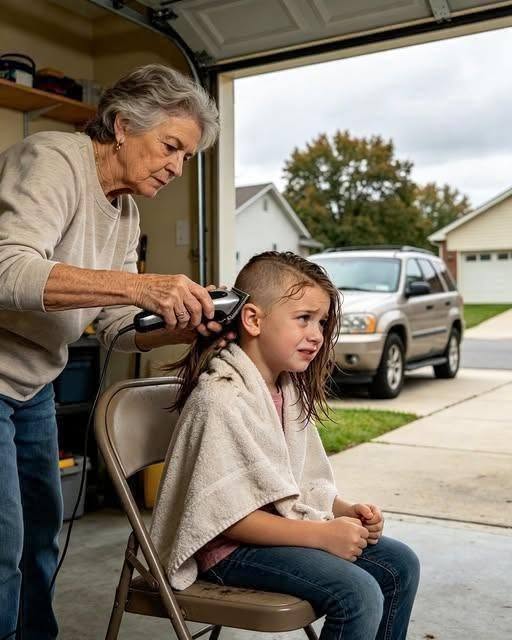
Ma belle-mère a rasé les cheveux de ma fille…


He looked away.

My daughter kept her eyes on the floor.

I could see the edge of the blanket slipping from her head. A small patch of her scalp showed beneath it.

She immediately pulled the blanket back into place.

Something inside me broke again.

I had spent years watching her take pride in her hair.

Every morning, she’d stand on the little stool in front of the bathroom mirror while I worked through the tangles. She liked braids. She liked colorful clips. She liked putting her hair into ridiculous ponytails that somehow stuck straight up from the top of her head.

She had once told me that when she grew up, she wanted hair “all the way down to my knees.”

And now she was afraid to let anyone see her.

The pediatrician slid the reporting forms into a folder.

“I need to explain something,” she said.

My husband immediately became defensive.

“Are you reporting my mother?”

The pediatrician didn’t answer right away.

“I am documenting what your daughter has told me and what I’ve observed. I also have obligations when I have reasonable concern about a child’s safety.”

“You’re making an accusation.”

“No,” she said. “I’m doing my job.”

He laughed once, but there was no humor in it.

“This is unbelievable.”

My daughter flinched.

The pediatrician noticed.

So did I.

My husband noticed too.

For the first time that morning, his expression changed.

Not guilt.

Fear.

He glanced at the folder again.

Then at his daughter.

Then at me.

“What exactly did she tell you?”

I felt my stomach tighten.

The pediatrician answered carefully.

“That she was threatened with having her hair cut. That she understood your response to the threat as approval. That she did not feel she had a choice when the haircut happened. And that she is frightened enough now that she’s avoiding mirrors and covering her head.”

My husband rubbed his forehead.

“She is eight.”

“Yes.”

“She doesn’t understand everything.”

“No,” the pediatrician said. “Which is why the adults around her have to be especially careful.”

He looked at me.

“You’re really going through with this?”

I didn’t know what he meant.

“The report?”

I swallowed.

“I didn’t make that decision.”

“You brought her here.”

“Yes.”

“You knew this would happen.”

“No.”

His eyes narrowed.

“You knew.”

I shook my head.

“I knew she was scared.”

“That doesn’t mean my mother abused her.”

The word hung in the room.

Abused.

My daughter went completely still.

I wished he hadn’t said it.

Not because the word was wrong.

Because she was hearing it.

The pediatrician noticed too.

She crouched slightly so she was closer to my daughter’s eye level.

“You don’t have to decide what anything is called,” she said. “You just have to tell the truth about what happened.”

My daughter nodded.

Then, almost inaudibly, she said, “Can I go to school?”

My husband blinked.

“School?”

She nodded.

I looked at her.

“You want to go?”

Another nod.

The pediatrician asked, “Why?”

My daughter hesitated.

Then she whispered, “Because nobody there makes me take the blanket off.”

My heart sank.

I hadn’t realized she had already figured out how to hide.

The pediatrician asked me to step into the hallway with her for a moment.

My husband stayed in the room with our daughter.

I immediately turned around.

“I don’t want them alone.”

The pediatrician understood.

“Then we’ll have someone stay with him.”

A nurse entered the room.

Only then did I follow the doctor into the hallway.

She closed the door behind us.

For a moment, neither of us spoke.

Then she said, “There are things I’m concerned about beyond the haircut.”

My throat went dry.

“What things?”

“Her reaction to your husband’s presence. Her reaction to his mother’s name. The fact that she is describing an earlier threat. And the fact that she seems to believe she isn’t allowed to say certain things.”

I stared at her.

“What do you mean?”

“She watches adults before answering.”

I thought about it.

The squeezing of my fingers.

The way she’d looked at her father before saying anything.

The way she’d stopped speaking whenever someone raised their voice.

“She may be trying to figure out which answer is safe,” the pediatrician said.

I felt cold despite the warm hallway.

“Do you think my husband hurt her?”

“I don’t know.”

The honesty of that answer scared me more than certainty would have.

“But I think,” she continued, “that you should take what she is telling you seriously.”

I nodded.

Then she added something that made me stop breathing.

“And I would not leave your daughter alone with either adult until this has been evaluated.”

“Either?”

She gave me a careful look.

“Your daughter specifically named both of them in connection with the incident.”

My mind raced.

My husband had said one word.

Good.

His mother had used the clippers.

But the pediatrician wasn’t only talking about the haircut.

“What else could there be?”

“I don’t want to speculate.”

“Please.”

She lowered her voice.

“When I asked your daughter whether Grandma had ever frightened her before, she said yes.”

I stared at her.

“When?”

“She wouldn’t answer.”

My hands began to shake.

“Then she asked me whether I would tell her dad.”

I closed my eyes.

“Did she say why?”

The pediatrician nodded.

“She said, ‘Because he’ll tell Grandma.’”

I opened my eyes.

For several seconds, I couldn’t speak.

My husband had always told me his mother was simply “old-fashioned.”

She was strict.

She had raised three children.

She didn’t tolerate disrespect.

She believed children needed discipline.

Whenever I’d complained about something she’d said to our daughter, he’d smiled and told me, “That’s just Grandma.”

But my daughter hadn’t said “Dad will be mad.”

She hadn’t said “Dad won’t believe me.”

She had said:

He’ll tell Grandma.

As if Grandma was the person who couldn’t be allowed to know.

The door opened.

My husband stepped into the hallway.

“What are you two whispering about?”

The pediatrician looked at him.

“We’re discussing your daughter’s care.”

He stared at me.

“Can I talk to you alone?”

“No.”

His face hardened.

“Seriously?”

“Our daughter doesn’t want to be separated from me.”

“She needs to hear that her father isn’t some kind of monster.”

I looked past him.

My daughter was sitting on the exam table, still wrapped in the blanket.

She was watching us.

I could see only her eyes.

And something about those eyes made my decision for me.

“Not here,” I said.

He scoffed.

“Then where?”

“I don’t know yet.”

His expression changed.

“What does that mean?”

“It means I’m taking her home.”

“Good.”

“And you’re not coming with us.”

He stared at me.

The hallway seemed to become completely silent.

“What?”

“You heard me.”

“You’re not serious.”

“I am.”

“You can’t just keep my daughter from me.”

I looked at the pediatrician.

She didn’t tell me what to do.

She simply said, “If you’re concerned about immediate safety, you can ask the appropriate authorities for guidance before leaving.”

My husband laughed bitterly.

“Authorities?”

I didn’t answer.

He stepped toward me.

The nurse moved slightly between us.

That was when I noticed something on the floor.

His hand.

He was holding our daughter’s backpack.

No.

He had been holding it when he entered.

But when my daughter took it from him, I remembered seeing him hesitate.

As though he didn’t want to give it to her.

I looked at the backpack.

There was a small zipper pocket on the front.

It was partially open.

A corner of pink paper was sticking out.

My daughter’s drawing paper.

I reached for it.

My husband immediately said, “Don’t.”

I froze.

He froze too.

The pediatrician looked at him.

“Why not?”

“It’s her private stuff.”

My husband said it too quickly.

I looked at my daughter.

“Is it okay if I check your backpack?”

She nodded.

My husband shook his head.

“You’re really going to search through her things now?”

I pulled the pink paper from the pocket.

It was folded several times.

I opened it.

At first, I didn’t understand what I was looking at.

It was a drawing.

My daughter had drawn our family.

There was me.

There was her.

There was Grandma.

There was Dad.

But the figures weren’t standing together.

I stared at the picture.

Grandma had been drawn huge.

Her arms stretched almost to the edges of the paper.

My daughter was tiny.

She was standing behind a door.

I looked closer.

There was something written above the door.

I recognized my daughter’s handwriting.

I read it twice.

Then a third time.

DON’T LET GRANDMA KNOW I TOLD.

My husband went pale.

“That’s nothing.”

I looked at him.

“Why would she draw that?”

“She’s eight.”

“You keep saying that.”

“Because she is!”

My daughter suddenly spoke.

“Mom?”

I turned toward her.

She was looking at the drawing.

Her face had gone white.

“Where did you get that?” she whispered.

I walked over.

“I found it in your backpack.”

She looked at her father.

Then back at me.

“I didn’t draw it yesterday.”

My stomach dropped.

“What do you mean?”

She pulled the blanket tighter.

“I drew it last week.”

My husband said, “Enough.”

The pediatrician raised her hand.

“Let her finish.”

My daughter swallowed.

“I was going to give it to Mom.”

“Why didn’t you?”

She looked at Dad.

“He found it.”

My husband didn’t move.

“He found it,” she repeated.

I could barely breathe.

“What did Dad do with it?”

My daughter looked down.

“He said I shouldn’t make Mom worried.”

My husband finally spoke.

“That isn’t what happened.”

My daughter flinched.

The pediatrician stepped closer to her.

“You don’t have to answer anything else right now.”

But my daughter shook her head.

“No.”

She looked at me.

“I want to tell.”

My husband stared at her.

I took her hand.

“Okay.”

She took a shaky breath.

“Dad put the picture in my backpack.”

“Why?”

“Because Grandma was coming.”

My skin prickled.

“What was Grandma coming for?”

My daughter hesitated.

Then she whispered:

“To talk to me.”

The room went silent.

I looked at my husband.

He looked at the floor.

And suddenly, I remembered something I’d dismissed three months earlier.

A Saturday morning.

My daughter had asked me whether grown-ups could make you keep secrets.

I’d laughed and told her that good secrets were okay, like birthday surprises, but scary secrets should always be told.

She’d nodded.

Then she’d asked:

“What if Dad says it’s a scary secret but Grandma says it’s normal?”

I’d thought she was talking about something she’d seen on television.

I’d forgotten about it.

Until now.

My daughter squeezed my hand.

“Mom?”

“Yes?”

“Can I tell you the other thing?”

My heart began pounding.

“What other thing?”

She looked at the pediatrician.

Then at me.

Then, finally, at her father.

“He told me not to tell you.”

My husband closed his eyes.

And for the first time that morning, I realized the haircut might not have been the beginning of this story.

It might have been the first thing he had done that I could actually see.

Absolutely. Here is Part 3, bringing the story to a tense, emotional conclusion while resolving the mystery without losing the slow-burn feeling.

Writing
Part 3 — The Thing She Was Told Not to Tell

My husband closed his eyes.

For a moment, he looked less angry than tired.

That frightened me more.

I had expected denial.

I had expected shouting.

I had expected him to say our daughter was confused, that I was twisting her words, that his mother had done nothing wrong.

Instead, he stood there silently.

The pediatrician looked at him.

“What did you tell her not to tell her mother?”

He opened his eyes.

“Nothing.”

My daughter immediately shook her head.

“You did.”

His face tightened.

“Sweetheart—”

“Don’t call me that.”

The words came out so quietly that they almost disappeared.

But everyone heard them.

My husband took a step backward.

My daughter stared at him from beneath the blanket.

“You said Mom would get mad.”

“I said she would worry.”

“You said Grandma would be angry.”

He didn’t answer.

The pediatrician pulled a chair closer to my daughter.

“Would you like to tell us what happened?”

My daughter nodded.

Then she looked at me.

“Last week, Grandma took me into the laundry room.”

My stomach tightened.

“Why?”

“She said she needed to ask me something.”

“What did she ask?”

My daughter picked at the corner of the blanket.

“She asked if I loved Dad.”

I felt something cold move through me.

My husband immediately said, “That wasn’t—”

The pediatrician held up a hand.

“Let her finish.”

My daughter continued.

“Then she asked if I loved Mom.”

I swallowed.

“She said families don’t work if people take sides.”

My husband stared at the floor.

“She told me Dad was having a hard time because Mom was always upset with Grandma.”

I looked at my husband.

He didn’t look at me.

“She said I was old enough to understand things.”

My daughter’s voice trembled.

“She said sometimes children have to help their parents.”

I felt tears burning behind my eyes.

“How?”

“She said I should tell Dad that Mom doesn’t like Grandma.”

I stared at my husband.

My daughter continued.

“She said if I did, Dad would know I was on his side.”

The room seemed to tilt.

My husband finally spoke.

“I didn’t know she was saying that.”

My daughter looked at him.

“You were there.”

His face changed.

“I was outside.”

“You were at the door.”

He went silent.

I remembered that day.

My daughter had come downstairs afterward unusually quiet.

I’d asked what was wrong.

She’d said, “Nothing.”

I’d believed her.

Or maybe I’d simply wanted to.

The pediatrician asked, “What happened after Grandma talked to you?”

My daughter looked down.

“Dad came in.”

“What did he say?”

“He asked what Grandma told me.”

My husband closed his eyes again.

“And what did you say?”

“I told him I didn’t want to talk about it.”

My daughter wiped her cheek.

“Then Dad said, ‘Good. Keep it that way.’”

I felt something inside me collapse.

Not because of one sentence.

Because suddenly dozens of small moments were rearranging themselves in my mind.

The unexplained silences.

The way my daughter sometimes stopped talking when my husband entered a room.

The drawings she hid.

The questions she asked and then pretended weren’t important.

The way she had started asking whether I would be angry if she told me something.

I had thought she was going through a phase.

She hadn’t been.

She had been testing whether it was safe to speak.

The pediatrician asked my husband, “Did you tell your daughter to keep secrets from her mother?”

He rubbed both hands over his face.

“I was trying to protect her.”

“From what?”

He looked at me.

“From you.”

I almost laughed.

Not because it was funny.

Because it was unbelievable.

“From me?”

“You were constantly fighting with my mother.”

“I disagreed with her.”

“You made everything difficult.”

My daughter covered her ears.

The pediatrician immediately said, “Stop.”

My husband looked at her.

“She doesn’t need to hear this.”

“Then don’t say it in front of her.”

He fell silent.

The pediatrician turned to me.

“I recommend that you and your daughter leave together today. I’ll document everything we’ve discussed and make the appropriate report.”

My husband stared at her.

“You’re actually doing this.”

“Yes.”

He looked at me.

“If you walk out with her, don’t expect me to just forgive this.”

I picked up my daughter’s backpack.

“I don’t need forgiveness for protecting my child.”

His expression hardened.

“You’re destroying our family.”

I looked at my daughter.

She was watching me.

Waiting.

I crouched beside her.

“We’re going.”

She nodded.

As we walked toward the door, my husband said something behind us.

“Wait.”

I stopped.

Not because I wanted to.

Because I knew that whatever came next might matter.

He spoke quietly.

“I didn’t know she was going to cut her hair.”

I turned.

He looked genuinely frightened now.

“I swear.”

The pediatrician watched him carefully.

“What did you think your mother meant when she said she would take care of the hair problem?”

He hesitated.

Then whispered, “I thought she’d scare her.”

My stomach turned.

“You knew she was threatening our daughter.”

“I didn’t think she’d actually do it.”

There it was.

Not innocence.

Not ignorance.

A choice.

He had heard the threat.

He had approved of it.

And then he had trusted his mother not to cross a line.

Except he had never bothered to find out where the line was for our daughter.

My daughter reached for my hand.

We left.

Three Days Later

The report moved faster than I expected.

There were interviews.

Questions.

More questions.

People asked me what I knew.

What I had seen.

What my daughter had told me.

I kept reminding myself not to answer for her.

Her story belonged to her.

My husband was temporarily staying elsewhere while everything was being evaluated.

His mother was not allowed to contact our daughter.

For the first two nights, my daughter slept in my room.

She kept the blanket over her head.

On the third morning, I woke up and found her standing in front of the bathroom mirror.

She wasn’t wearing the blanket.

She was wearing one of my old hoodies.

Her newly shaved head was completely visible.

She stared at herself.

I didn’t say anything.

She noticed me in the doorway.

“Mom?”

“Yeah?”

“Do you think I’ll look like me again?”

My throat tightened.

“You already do.”

She touched her head.

“I don’t feel like me.”

I walked over and stood beside her.

“You don’t have to feel like yourself today.”

She looked at our reflections.

“Can I grow it long again?”

“As long as you want.”

She smiled faintly.

“Even if it takes forever?”

“Even if it takes forever.”

She was quiet for a moment.

Then she said, “Can I brush it?”

I smiled.

“Of course.”

She picked up the brush.

There wasn’t much hair to brush.

But she ran it gently over her scalp anyway.

Slowly.

Carefully.

Like she was taking something back.

Then she looked at me.

“Mom?”

“Yes?”

“Next time Grandma tells me to keep a secret…”

She stopped.

I waited.

“…I can tell you?”

I put my arms around her.

“Every time.”

She hugged me tightly.

And that was the first morning since the haircut that she didn’t pull the blanket over her head.

Two Weeks Later

The investigation eventually confirmed what my daughter had told us.

There had been more than one conversation.

More than one secret.

Nothing my daughter had done had caused any of it.

She hadn’t been difficult.

She hadn’t been dramatic.

She hadn’t misunderstood.

She had been eight years old and had been placed in the middle of adult problems she never should have been asked to carry.

My husband admitted that he had known his mother was pressuring our daughter to take sides.

He said he thought it would stop.

He said he didn’t believe it was serious.

He said he was sorry.

Maybe he was.

But being sorry didn’t erase what happened.

It didn’t erase the fear in our daughter’s face when Grandma’s name was mentioned.

It didn’t erase the drawing.

It didn’t erase the word “Good.”

And it certainly didn’t make me forget the moment my daughter walked across that exam room, took her backpack from her father, and placed it in my hands.

That was the moment I understood something.

Children don’t always know how to say, “I don’t feel safe.”

Sometimes they say it with silence.

Sometimes they say it by hiding.

Sometimes they say it by refusing to look in a mirror.

And sometimes they say it by reaching for the one person they still believe will listen.

My daughter couldn’t control what happened to her hair that morning.

But she could decide what happened next.

And this time, someone finally listened.

A month later, her hair had begun to grow back.

One afternoon, she stood in front of the mirror and ran her fingers over the soft fuzz covering her head.

Then she smiled.

“Mom?”

“Yeah?”

“I think I’m ready.”

“For what?”

She picked up the brush.

“To start over.”

I smiled through my tears.

“Okay.”

She handed me the brush.

And for the first time in weeks, I brushed my daughter’s hair.

There wasn’t much of it.

But she sat still.

She didn’t flinch.

She didn’t cover her head.

And when she looked into the mirror, she didn’t look away.

Ma belle-mère a rasé les cheveux de ma fille… Read More