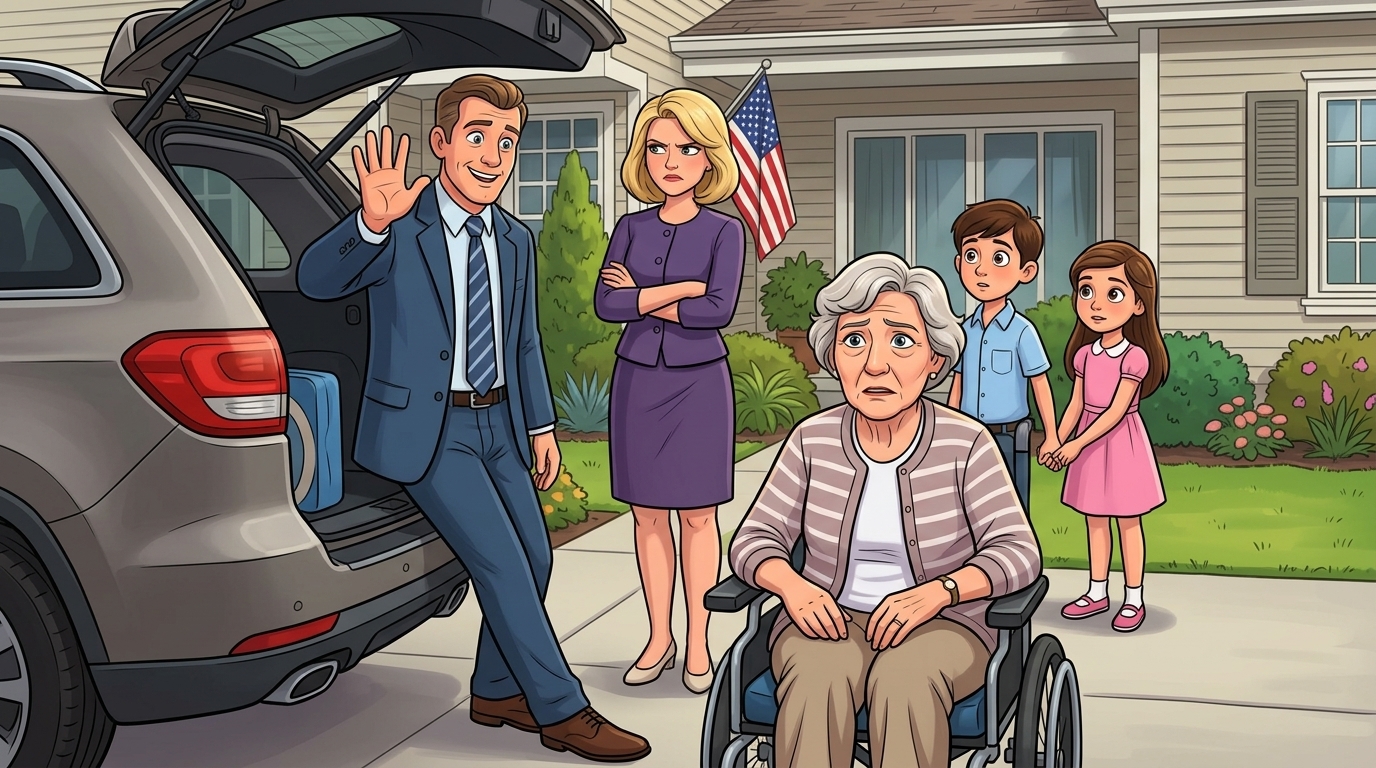
At Sunday dinner, my son said if I had a problem watching his kids for free, “the door is right there.” I stood up, folded my napkin, and said, “Perfect. I’m leaving.” Then I walked back to the storage room they called my bedroom, where my suitcase had already been packed. By the next morning, he finally understood I wasn’t the only one leaving that house.
At Sunday dinner, my son Michael looked across the table and said, “Your job is to watch my kids while I enjoy my life with my wife. It’s that simple. If you have a problem with it, the door is right there.”
The roast chicken I had cooked all afternoon sat untouched on my plate. The dining room in their quiet New York suburb was warm and painfully ordinary: good plates, cloth napkins, a pitcher of iced tea sweating on the table. Through the front window, the porch light shone over the small American flag Michael had left hanging since Memorial Day.
For a second, nobody moved.
Jessica, my daughter-in-law, stared down at her salad as if silence could make her innocent. Owen and Caleb, my eight-year-old twin grandsons, froze with their forks in their hands.
Only Clare, my sixteen-year-old granddaughter, looked straight at me.
And in her eyes, I saw something I had not expected.
Pride.
I placed both hands on the edge of the table and stood up.
“Perfect,” I said. “I’m leaving. And you two can start paying your own bills. It’s that simple.”
Michael stopped chewing.
Jessica dropped her fork.
The sound of metal hitting porcelain cut through the room.
I did not raise my voice. I did not cry. At seventy-two, I had finally learned that a quiet sentence can break a house open better than shouting ever could.
I folded the cloth napkin from my lap, set it beside my untouched plate, and walked toward the hallway.
Behind me, Michael’s chair scraped against the hardwood floor.
“Mom, wait,” he said. “It wasn’t a big deal.”
But it was.
Because my suitcase was already packed.
It was waiting in the small room at the end of the hall, the room they called my bedroom, though everyone knew what it really was. A storage room. Christmas decorations still filled one side of the closet. Old electronics sat beneath the window. Boxes of things Jessica no longer wanted were stacked beside my twin bed.
There was no room for my rocking chair.
No room for my framed photos.
No room for the life I had sold to come here.
Three months earlier, I still had my own little house near Hudson, New York. Cream-colored walls, a front porch, basil growing behind the kitchen, and a wooden chair where I drank coffee every morning after my husband died. It was not fancy, but it was mine. I had lived alone there for years, and I had never felt lonely.
Then Michael called.
“Mom, I need you.”
Those four words were enough.
He told me Jessica was exhausted. He told me the twins were too much. He told me Clare needed stability. He told me his job kept him traveling across the country, and they only needed temporary help until they found a nanny.
So I sold my house for less than it was worth because Michael said the money would help us all get organized.
I arrived with two suitcases, three boxes, and the foolish hope that I was becoming part of a family again.
The first week, they made me believe it.
Jessica hugged me and said, “Eleanor, I don’t know what we’d do without you.”
Michael came home to clean floors, folded laundry, dinner on the stove, children bathed, homework finished, and lunch boxes ready for the next morning.
I woke before dawn. I packed sandwiches. I walked the boys to school. I washed clothes, scrubbed counters, ironed shirts, and ate most lunches standing at the kitchen sink. I told myself this was love. I told myself this was what mothers did.
Then the trips began.
First Albany. Then another client meeting. Then a weekend business event. Then Miami. Every time Michael and Jessica left, I stayed behind with the children. Every time they returned, they were tanned, rested, and carrying shopping bags.
The suitcases by the front door stopped looking like luggage.
They started looking like a warning.
I noticed hotel tags that did not match the cities they named. Receipts tucked into jacket pockets. Photos Jessica deleted too late. And Clare noticed even more.
She watched her parents whisper in the living room.
She watched me wash their dishes after they came home late.
She watched Michael call me “Mom” only when he needed something.
That Sunday afternoon, before dinner, I had gone into the storage room and packed quietly. Clothes. Documents. My husband’s photo. My mother’s recipe book. The few pieces of myself I had left.
I did not know exactly when I would leave.
I only knew I would not stay forever.
Then Michael said what he said at dinner, and the decision became simple.
Now I stood in the doorway of that little room, staring at my suitcase.
Packed.
Ready.
Before I could reach for the handle, Clare appeared behind me.
Her face was pale, but her voice was steady.
“Grandma,” she whispered, glancing toward the dining room, “before you leave… you need to know what they were planning to do next.”